U.S. Larak Island Strike Hits IRGC Launchers
U.S. forces struck two IRGC launchers on Iran’s Larak Island after detecting preparations to deploy sea mines into the Strait of Hormuz

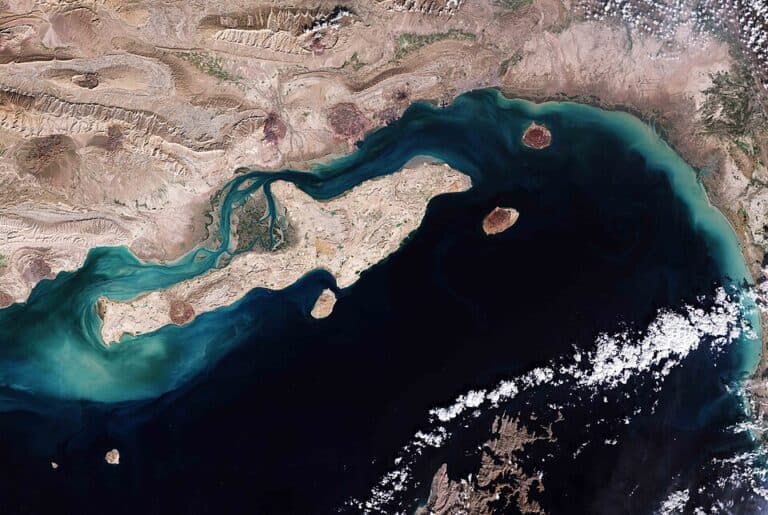
The U.S. Larak Island strike targeted two Iranian Revolutionary Guard Corps launchers after forces were observed preparing to deploy sea mines into the Strait of Hormuz, according to a U.S. official. The attack marked the first known American strike inside Iran in several weeks and immediately drew a threat of retaliation from the IRGC.
The confrontation brings renewed weight to Proverbs 21:31: “The horse is prepared for the day of battle, but victory belongs to the Lord.” Preparedness does not remove faith or moral responsibility. It recognizes that nations must be ready to defend lives, commerce, and freedom before a threat becomes a catastrophe.
U.S. Larak Island Strike Stops Mine Launch
A U.S. official told Axios that American forces struck two launchers on Larak Island on Sunday. IRGC personnel had been seen preparing rockets carrying sea mines toward the Strait of Hormuz, the official said. American forces remain prepared to protect the free flow of commerce through the waterway.
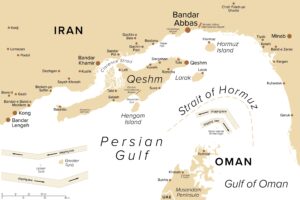
The strike followed an American effort to clear mines from the strait’s main shipping lane. President Donald Trump had warned Iran that Washington would maintain “zero tolerance” for new mine placement. He said vessels attempting to deploy additional mines would be destroyed.
Iran’s Fars news agency initially reported that an explosion had been heard near Larak Island without identifying its cause. The IRGC later confirmed that the island had been attacked and said several soldiers and civilians were killed or injured. Tasnim cited preliminary reports of two dead and two wounded.
The IRGC accused what it called the “American-Zionist enemy” of carrying out the attack. It vowed that the strike “will be responded to” and that the aggressor would face punishment. Iran had not released a final casualty count at the time of reporting.
Hormuz Remains a Strategic Flashpoint
Larak Island sits directly in the Strait of Hormuz, one of the world’s most important maritime energy corridors. Iran’s ability to threaten shipping there has remained a central issue throughout the conflict, even after major losses to its military infrastructure.
The latest strike therefore carries significance well beyond two launchers. Sea mines can threaten commercial vessels, disrupt energy markets, and force international shipping away from crucial routes. The American action signals that Washington intends to enforce its warning against renewed Iranian efforts to obstruct the strait.
The military action also comes as Trump hardens his negotiating position toward Tehran. In “Trump Iran Talks Stall Over June Deal,” the president rejected a return to the preliminary U.S.-Iran memorandum reached in June and chose stronger economic pressure instead. The Larak Island strike now shows that the administration’s strategy is not limited to sanctions and diplomacy. Washington is also prepared to use force when Iranian activity directly threatens strategic waterways or American interests.
The episode also comes as the Trump administration has increasingly emphasized economic pressure on Tehran. However, Sunday’s strike shows that Washington remains willing to use military force when Iranian activity directly threatens the shipping route. AP described it as the first American military action against Iran in roughly a month.
Israel has an equally direct interest in preventing Iran from controlling the regional environment through missiles, mines, drones, and proxy forces. Tehran’s repeated use of the phrase “American-Zionist enemy” also reflects how closely the regime views the United States and Israel as part of the same strategic front.
Keeping the Waterways Free
America and Israel share a covenantal understanding that freedom carries responsibilities before God. Both nations place value on defending life, resisting aggression, protecting sovereignty, and using national strength to prevent hostile powers from imposing their will through violence.
That shared responsibility is especially visible around the Strait of Hormuz. America has long defended freedom of navigation and the principle that international waterways cannot become tools of coercion. Israel’s experience with Iranian missiles, drones, and regional proxies reinforces the same lesson: deterrence only works when threats carry consequences.
The Larak Island strike reflects that principle in practical terms. American forces did not wait for sea mines to reach crowded shipping lanes before acting, according to the U.S. account. They struck while the weapons were reportedly being prepared.
Iran has now promised retaliation, making the coming days important for both Washington and Jerusalem. The question is whether Tehran will absorb the warning or risk another escalation in a conflict that has already tested military stockpiles, energy markets, and regional stability.
For more stories on Israel, faith, and the values behind the headlines, follow Sinai on Facebook and Instagram.
Discussion0
No comments yet — be the first to share your thoughts.