Abu Shehadeh Disqualification Divides Arab Parties
Segalovich opposes legally barring Sami Abu Shehadeh while urging him not to run, exposing a deeper debate over representation and election limits

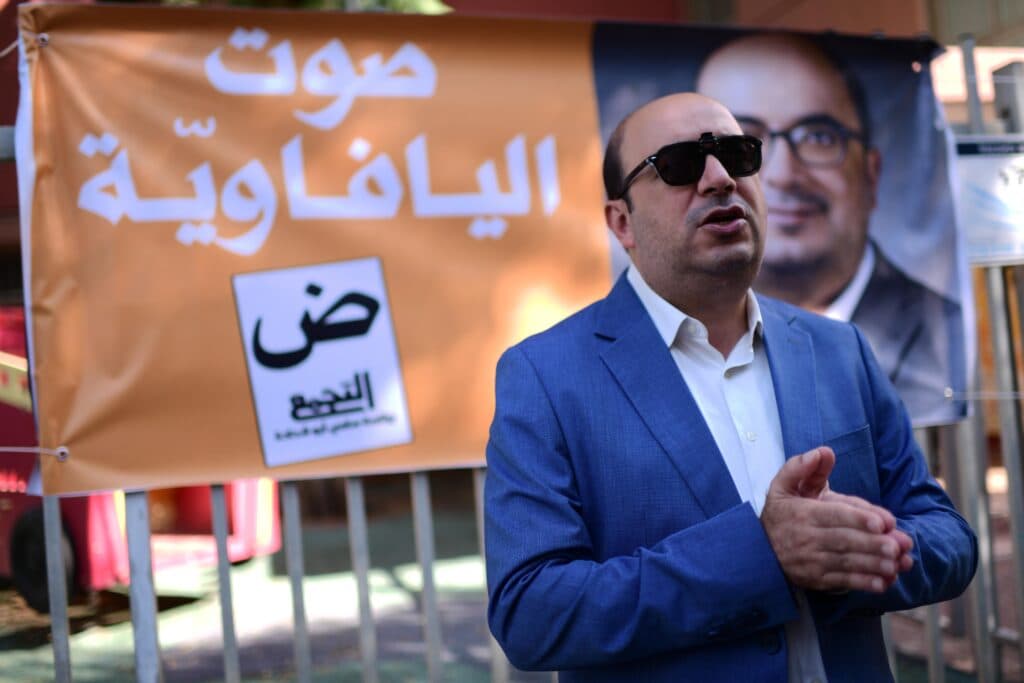
The Abu Shehadeh disqualification debate has developed into an unusually revealing dispute inside Israel’s Arab political camp. The Joint List accused Ra’am candidate Yoav Segalovich of joining a campaign by Itamar Ben-Gvir and the Israeli right to silence Arab political representation. Segalovich responded with a different position: he believes Sami Abu Shehadeh should not run, but he opposes legally disqualifying him.
That distinction is important. It does not settle wider accusations of discrimination in Israel’s election system. However, it complicates the argument that opposition to Abu Shehadeh’s candidacy comes only from anti-Arab or far-right politics.
Deuteronomy 16:20 commands, “Justice, justice shalt thou pursue.” In an election dispute, that principle applies not only to the result but also to the process. A democracy can draw boundaries around participation, but those boundaries require evidence and consistent legal standards.
An Argument Inside Arab Politics
The Joint List accused Segalovich of effectively supporting “racist exclusion” after he said Abu Shehadeh had crossed a line and should not run. It also argued that his comments violated an agreement among the Arab parties to avoid attacks and accusations of betrayal.

Segalovich then issued an explicit clarification through Ra’am. “I am fundamentally opposed to the disqualification of Sami Abu Shehadeh,” he said. He maintained that his personal belief that Abu Shehadeh should withdraw is separate from whether the state should remove him from the ballot.
Segalovich also pointed to Arab academics, legal experts and political figures who have questioned Abu Shehadeh’s candidacy. His argument therefore places the dispute partly inside Arab society itself, rather than solely between Jewish and Arab political camps.
The broader election process nevertheless gives the Joint List grounds for concern about unequal treatment. The Central Elections Committee also voted to disqualify Ra’am and the entire Joint List. According to The Times of Israel, those party-level decisions are widely expected to face intense Supreme Court scrutiny because Israel’s courts historically set a high threshold for exclusion.
Why Abu Shehadeh’s Case Is Different
Abu Shehadeh’s individual case has drawn a broader coalition of support than the attempts to exclude the Arab parties as a whole. The Central Elections Committee voted 30-4 to disqualify him. All opposition parties supported the move, while Attorney General Gali Baharav-Miara also said his exclusion should be seriously considered. Supreme Court Justice Noam Sohlberg took the unusual step of supporting the disqualification as committee chairman.
The case centers partly on an article Abu Shehadeh published on October 8, 2023, one day after the Hamas massacre. The attorney general and state attorney argued that passages could meet the legal standard for supporting armed struggle against Israel. Abu Shehadeh disputes that interpretation, and the Supreme Court must approve any individual disqualification before it takes effect.
That distinction also relates directly to “Jewish Power Disqualification Bid Tests Election Limits.” The Central Elections Committee heard petitions against Jewish Power, Religious Zionism and The Democrats as well. It ultimately allowed all three Jewish-majority parties to run after the attorney general concluded that the evidence did not meet the strict threshold for exclusion.
The cases are not identical, so their different outcomes do not by themselves prove either equal or unequal treatment. What they do show is that Israel’s disqualification mechanism is formally aimed at specific conduct and legal criteria, rather than written around a candidate’s ethnicity.
Equal Citizenship and Democratic Defense
The United States handles this balance differently. American constitutional protections generally create a much higher barrier against excluding candidates for political expression. Israel’s Basic Law expressly allows disqualification in cases involving support for armed struggle against the state, reflecting a political system shaped by repeated wars and terrorism.
Israel nevertheless carries two responsibilities at once. As the Jewish state, it must protect its citizens and democratic institutions from those who support armed violence. At the same time, Arab citizens are citizens of Israel and must retain meaningful political representation without being judged collectively for the words of individual politicians.
Those responsibilities also reflect Israel’s covenantal mission before God: Jewish sovereignty carries obligations of both self-defense and justice. America’s national covenantal tradition developed differently, but it likewise links liberty with constitutional restraint and equal protection under law. Neither principle works well when political identity substitutes for evidence.
The Abu Shehadeh disqualification dispute therefore presents a more complicated picture than either side’s campaign language suggests. The wider disqualification of Arab parties has fueled serious concerns about exclusion. Yet Abu Shehadeh’s individual case has also drawn support from opposition parties, senior legal officials and critics beyond the Israeli right.
The Supreme Court will now decide whether the evidence crosses Israel’s deliberately high legal threshold. That legal test, rather than whether a candidate is Jewish, Arab, right-wing or left-wing, is the central issue the court must resolve.
For more stories on Israel, faith, and the values behind the headlines, follow Sinai on Facebook and Instagram.
Discussion0
No comments yet — be the first to share your thoughts.