Rubio Far-Left Terror Sanctions Target Antifa Network
Marco Rubio said the U.S. sanctioned transnational far-left terrorist networks, including Autistici/Inventati, over alleged support for violent Antifa cells

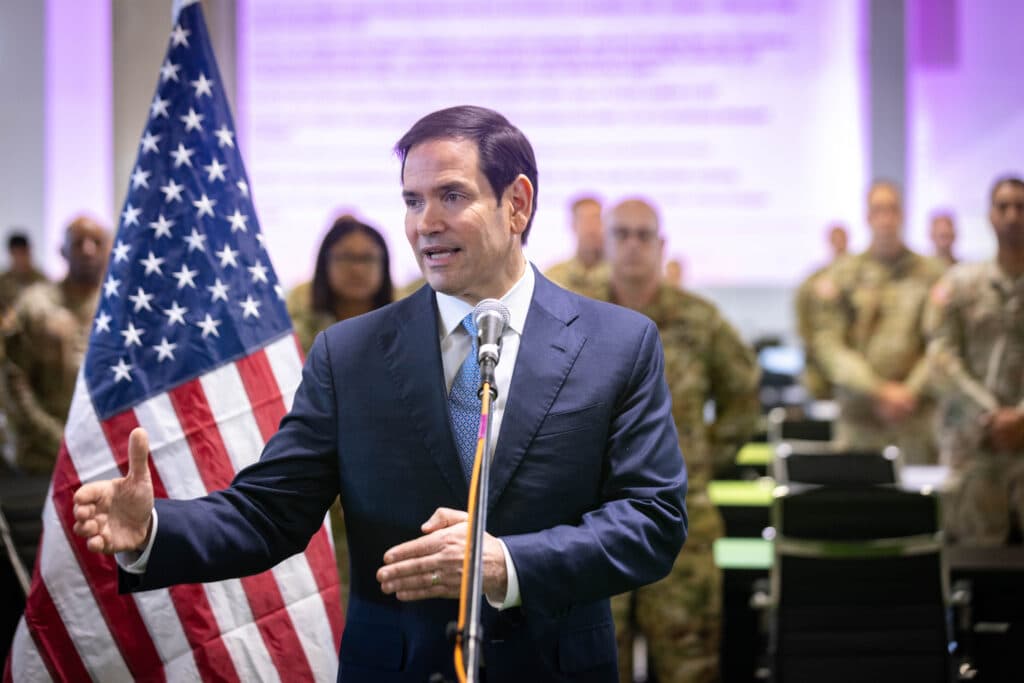
Rubio far-left terror sanctions are now targeting several transnational networks, including Autistici/Inventati, which Secretary of State Marco Rubio described as a major far-left tech collective used by active and violent Antifa cells in the United States and abroad. Rubio said far-left terrorism poses a “profound threat” to the United States and the broader West, framing the move as part of a wider campaign to protect law and order, critical infrastructure, and political life from extremist coercion.
According to Rubio, the sanctioned networks help violent extremists communicate, organize, conceal activity, and support cells across borders. He said there would be “no refuge” for extremists who wage war on Western civilization, assault political opponents, plot attacks on infrastructure, or conspire to hide crimes from authorities. Proverbs says, “When justice is done, it is a joy to the righteous, but terror to evildoers.” In this case, the administration is casting sanctions not as a symbolic gesture, but as a tool to disrupt networks before political violence becomes harder to contain.
Rubio Far-Left Terror Sanctions
The focus on Autistici/Inventati points to a modern security problem: extremist movements no longer need a traditional headquarters to operate across borders. Digital services, encrypted channels, fundraising tools, and ideological networks can allow decentralized cells to function internationally while avoiding ordinary law enforcement pressure.
That is why Rubio’s statement emphasized transnational organization. His argument is that violent extremist networks should not be treated as isolated street movements when their infrastructure, propaganda, finances, and communications cross national lines. The U.S. has already moved in recent months to build international cooperation against far-left political violence, including through a State Department ministerial focused on the resurgence of political terrorism.
The policy will likely draw criticism from civil liberties groups and political opponents who argue that counterterrorism tools must not be used too broadly. That concern deserves legal scrutiny. However, the existence of lawful protest does not erase the threat from organized violence, intimidation, sabotage, or attacks on police and political opponents.
A Western Security Test
The issue matters to Israel because many anti-Israel campaigns in the West have moved beyond criticism into intimidation, vandalism, and open support for Hamas or other terrorist movements. Not every far-left activist is violent, and not every anti-Israel protester belongs to a terror network. Still, Israeli and Jewish communities have seen how quickly radical slogans can become harassment, synagogue threats, campus intimidation, and street violence.
The story also follows “Iran Power Stations Claim Draws Scrutiny.” That article examined Iranian Energy Minister Abbas Aliabadi’s claim that Iran has too many power stations to be fully hit, amid U.S. pressure and Hormuz tensions. The connection is not ideological, but strategic. America is using sanctions pressure on multiple fronts: against hostile regimes abroad, and now against networks it says enable extremist violence inside the West.
For the United States, the sanctions frame political violence as a national security issue. For Israel, they signal that Washington may become more willing to confront ideological movements that overlap with anti-Israel extremism, antisemitism, and support for hostile actors. The key will be enforcing the policy carefully, with evidence and due process, while refusing to normalize violence under the language of activism.
Civilization, Order And Covenant
The United States and Israel carry separate covenantal missions before God, and this sanctions campaign touches both through the defense of ordered liberty. America’s responsibility is to protect free speech and protest while drawing a hard line against violence, coercion, and attacks on civic life. Israel’s responsibility is to defend Jewish life against those who turn ideology into terror, whether that threat comes from Iran-backed proxies abroad or antisemitic movements inside Western societies.
That distinction is central. A free society must tolerate sharp political disagreement. It cannot tolerate organized intimidation dressed up as politics. Rubio’s message is that the U.S. will treat transnational extremist infrastructure as a security threat, not merely as online activism.
The broader West now faces a test of seriousness. If extremist networks can coordinate across borders, hide behind digital platforms, and encourage violence while governments look away, democratic order weakens. If sanctions and law enforcement tools expose the networks without criminalizing ordinary dissent, they can strengthen public safety and protect political freedom at the same time.
For Israel and Jewish communities abroad, the question is practical. Will Western governments act only after violence erupts, or will they disrupt networks that help turn hatred into action? Rubio’s announcement suggests Washington is choosing the second path.
For more stories on Israel, faith, and the values behind the headlines, follow Sinai on Facebook and Instagram.
Discussion0
No comments yet — be the first to share your thoughts.