
Red Sea Tanker Attack Hits Saudi Route
A tanker was struck by an unknown projectile west of Yanbu, Saudi Arabia, causing a fire and raising new concerns over Red Sea shipping security

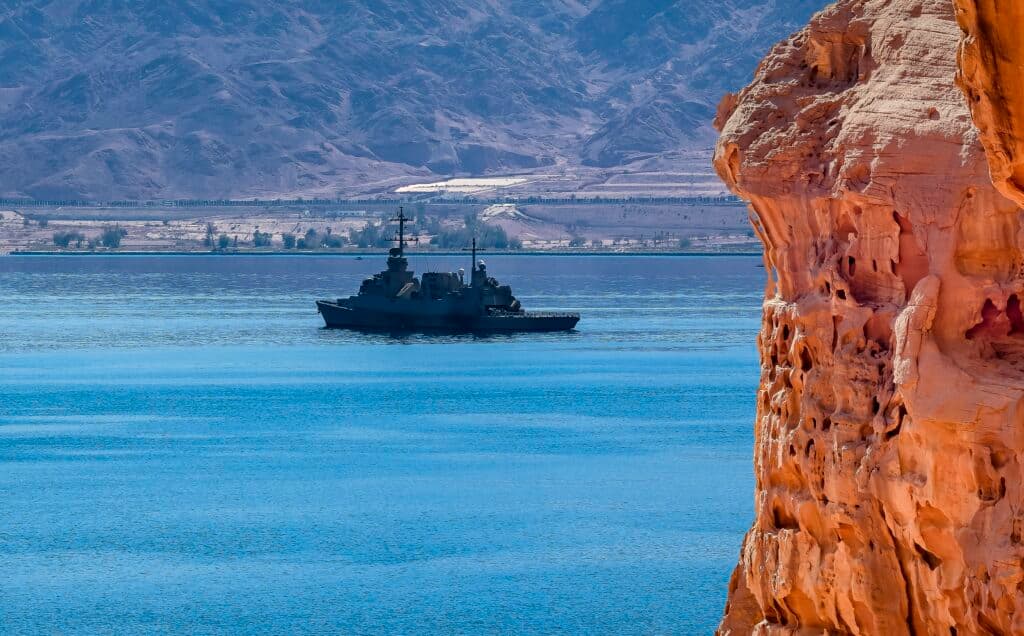
A Red Sea tanker attack west of Yanbu, Saudi Arabia, added another warning sign Monday as Iran-aligned pressure on Middle East shipping routes continued to expand.
According to UK Maritime Trade Operations, a company security officer reported an incident 63 nautical miles west of Yanbu. The report said a tanker had been struck by an unknown projectile.
UKMTO said the tanker was struck by an unknown projectile, causing a fire on the vessel’s main deck. All crew were reported safe and accounted for, and no environmental impact had been reported.
The provided brief attributed the strike to Yemen’s Ansarallah, commonly known as the Houthis. UKMTO’s public warning did not name the attacker, but the location and method fit the wider pattern of Red Sea maritime threats linked to the Iran-backed Yemeni group.
Psalm 107 speaks of those “that go down to the sea in ships, that do business in great waters.” The verse gives this story a concrete frame. Maritime security is not abstract strategy. It concerns workers, trade, fuel, food, insurance, ports, and the fragile routes that keep nations functioning.
Red Sea Tanker Attack
The reported attack took place far north in the Red Sea, near Saudi Arabia’s western coast. Yanbu is one of the kingdom’s major Red Sea port and energy areas, making any tanker incident there strategically sensitive.
The Red Sea has already become a battlefield for shipping pressure. Houthi attacks from Yemen have targeted vessels, disrupted maritime traffic, and forced many companies to reroute around Africa instead of using the Suez Canal and Bab al-Mandab route.
A strike near Yanbu expands the concern. It suggests that threats are not limited to the southern Red Sea or the Bab al-Mandab Strait. They can reach deeper into routes connected to Saudi energy exports and global trade.
That is why even an attack with no fatalities and no environmental impact still matters. A projectile strike that starts a fire on a tanker changes risk calculations for shipowners, insurers, energy traders, and naval planners.
From Hormuz To The Red Sea
The incident also follows “Hormuz Non-Compliance List Targets Gulf Ships.” That article reported that Iran’s Persian Gulf Strait Authority warned vessels on a Hormuz non-compliance list that they could face fines, detention, seizure, or confiscation if they violate Iranian transit rules.
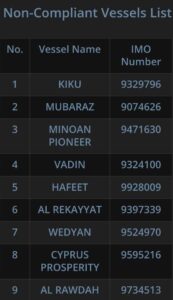
Taken together, Hormuz and the Red Sea show two sides of the same pressure campaign. In the Gulf, Iran is trying to use regulation, threats, and IRGC-linked enforcement to control shipping behavior. In the Red Sea, Yemen’s Ansarallah can pressure traffic through drones, missiles, and projectile attacks.
For Washington, the map is clear. American deterrence now has to protect more than one chokepoint. The United States must think about Hormuz, Bab al-Mandab, the Red Sea, the Suez route, Saudi ports, Gulf energy flows, and the insurance systems that support global commerce.
Israel also has a direct stake. The Red Sea connects to Eilat, regional energy routes, and the broader Iranian proxy network that already threatens Israel from Gaza, Lebanon, Syria, Iraq, and Yemen. When the Houthis attack shipping, they are not only attacking commerce. They are reinforcing Iran’s attempt to stretch Israeli and Western attention across multiple fronts.
Sea Lanes And Covenant Responsibility
The United States and Israel carry separate covenantal missions before God, and maritime security now tests both in a practical arena. America’s mission requires defending free passage, resisting piracy and terror-backed coercion, and keeping hostile regimes from turning trade routes into instruments of blackmail. Israel’s mission requires guarding Jewish sovereignty against the same Iranian-backed network that uses rockets, drones, tunnels, cyber tools, and now sea lanes to threaten civilian life.
This does not make every shipping incident an Israeli story. It means the same strategic architecture keeps appearing from different directions. Iran threatens Hormuz. Its partners threaten the Red Sea. The result is a regional system designed to make free nations pay a price for resisting Tehran.
The attack west of Yanbu therefore belongs to a wider file. It is about oil, shipping, and insurance, but also deterrence, allied resolve, and the question of whether terror-backed forces can dictate movement through international routes.
For the United States, Israel, Saudi Arabia, and other regional partners, the answer must be coordinated and firm. A tanker fire in the Red Sea is not only a maritime incident. It is another test of whether the free world will keep its sea gates open.
For more stories on Israel, faith, and the values behind the headlines, follow Sinai on Facebook and Instagram.
Discussion0
No comments yet — be the first to share your thoughts.