Hormuz Non-Compliance List Targets Gulf Ships
Iran’s PGSA warned vessels on a Hormuz non-compliance list that they could face fines, detention, seizure, or confiscation if they violate Iranian transit rules

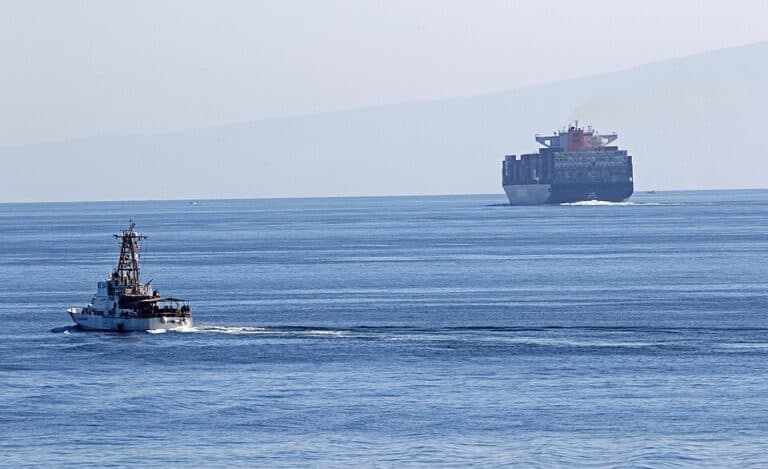
The Hormuz non-compliance list is now part of Iran’s attempt to assert control over shipping through the Strait of Hormuz, as pressure on Tehran continues to rise.
The Persian Gulf Strait Authority, known as the PGSA, announced that vessels violating Iranian arrangements for crossing the strait will face future restrictions. Those restrictions could include fines, seizure, detention, or confiscation by the IRGC.
According to the report, the non-compliance list has already been created. Most of the vessels listed are reportedly Emirati or Qatari-owned, though the image circulating online shows only part of the list.
Proverbs says, “The wicked flee when no man pursueth, but the righteous are bold as a lion.” Iran’s move reads like pressure dressed as regulation. Instead of showing confidence, Tehran is trying to turn one of the world’s most important sea lanes into a tool of fear.
Hormuz Non-Compliance List
The PGSA said cargo owners should consult an updated list of vessels classified as non-compliant before conducting voyages involving the Persian Gulf.
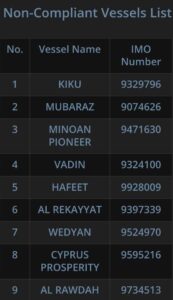
The authority also warned that ships conducting ship-to-ship transfers or transshipment operations with listed vessels would also join the restricted list. That expands the pressure from individual ships to wider shipping networks, traders, cargo owners, and insurers.
Vessels seeking removal from the list must submit a request to Iranian maritime authorities, along with relevant explanations.
Reuters reported that the PGSA is a new Iranian body established to manage the strait. However, the United States has already taken a clear position on the organization. OFAC listed the PGSA as linked to the Islamic Revolutionary Guard Corps and blocked its property under U.S. jurisdiction.
That detail matters. Iran is not only issuing a maritime notice. A body linked by Washington to the IRGC is trying to determine which ships can move easily through a global energy chokepoint.
Iran Tries To Recover Leverage
The move follows “Vance Hormuz Remarks: Iran Losing Leverage Under Pressure.” In that article, Vice President J.D. Vance said Iran’s ability to use Hormuz as leverage is weakening as American pressure supports the goal of preventing Tehran from acquiring nuclear weapons.
Iran’s new warning looks like a direct answer to that claim. If Tehran cannot fully close the strait, it can still try to complicate shipping, threaten owners, and create fear around future voyages.
That is why the non-compliance list matters. It gives Iran a bureaucratic tool for intimidation. Instead of only using missiles, mines, drones, or naval harassment, Tehran can pressure commercial actors through paperwork, threats, and seizure risk.
The target list also sends a message to Gulf states. If most listed vessels are Emirati or Qatari-owned, Iran may be signaling that Gulf shipping cannot operate freely without considering Tehran’s demands.
This fits Iran’s wider pattern. When military pressure rises, Tehran looks for softer pressure points: shipping lanes, energy markets, insurance, ports, cargo transfers, and diplomatic ambiguity.
A Strait, A Threat, And A Global Test
The Strait of Hormuz is not a regional side issue. It is one of the most important energy routes in the world. Oil and gas moving through the strait affect prices, supply chains, and national security far beyond the Middle East.
That is why the United States has an immediate stake. Washington cannot allow an IRGC-linked body to normalize Iranian control over an international chokepoint. If Iran can fine, detain, or confiscate ships under its own invented system, it gains leverage over allies, energy markets, and sanctions enforcement.
Israel also has a direct interest. Iran’s maritime pressure is part of the same strategic system that funds Hezbollah, Hamas, the Houthis, and other terror proxies. Money, shipping, oil, and weapons all connect inside Tehran’s regional strategy.
A weaker Iran has less room to fund war. A stronger Iran can use every channel, from Hormuz to Lebanon to Gaza, to pressure Israel and the West.
The PGSA warning therefore should not be treated as a technical shipping notice. It is part of Iran’s effort to recover bargaining power while sanctions, oil restrictions, and American pressure tighten.
Covenant At The Sea Gate
The United States and Israel carry separate covenantal missions before God, and Hormuz now tests both in practical terms. America’s mission requires defending free passage, protecting allied commerce, and refusing to let hostile regimes turn global trade into ransom. Israel’s mission requires confronting the same Iranian system before it turns money, fuel, and maritime leverage into weapons against Jewish life.

The sea gate matters because open routes are part of ordered freedom. When a terror-linked regime claims the right to seize ships at will, it challenges more than shipping schedules. It challenges the principle that commerce should not submit to revolutionary blackmail.
Iran wants the world to ask permission. Washington and Jerusalem cannot accept that premise.
The next phase will show whether this non-compliance list becomes a real enforcement tool or another Iranian pressure tactic. Either way, the message is clear. Tehran is trying to prove that Hormuz still gives it leverage.
The answer from the United States, Israel, and their partners must be just as clear: Iran does not get to turn the world’s energy arteries into IRGC checkpoints.
For more stories on Israel, faith, and the values behind the headlines, follow Sinai on Facebook and Instagram.
Discussion0
No comments yet — be the first to share your thoughts.