October 7 Anniversary: Hamas Celebrates Attack
Hamas marked October 7 by praising the 2023 attack as a military achievement, while Hamas-linked imagery and pro-resistance rhetoric continue to appear at U.S. demonstrations
Sinai Desk
The October 7 anniversary message made clear how the terrorist organization views the attack that began the current war. Three years after Hamas-led terrorists crossed into Israel, brutally murdered about 1,200 people and abducted 251, Hamas again praised the assault rather than mourning its victims. Israelis, meanwhile, gathered Wednesday to remember the dead and the communities devastated that morning.
The contrast is especially stark on October 7 itself. Palestinians in Gaza are also mourning enormous losses from the war that followed, and that suffering is real. Yet Hamas continues to celebrate the attack that triggered the conflict as an achievement. AP reported Wednesday that Hamas still praises the assault for restoring international attention to the Palestinian cause.
Isaiah 5:20 warns, “Woe unto them that call evil good, and good evil.” The anniversary presents precisely that question of moral clarity. Grief for Palestinian civilians does not require rewriting how the war began, nor does opposition to Israeli policy require celebrating the murder and abduction of civilians.
Hamas October 7 Anniversary Praises the Attack
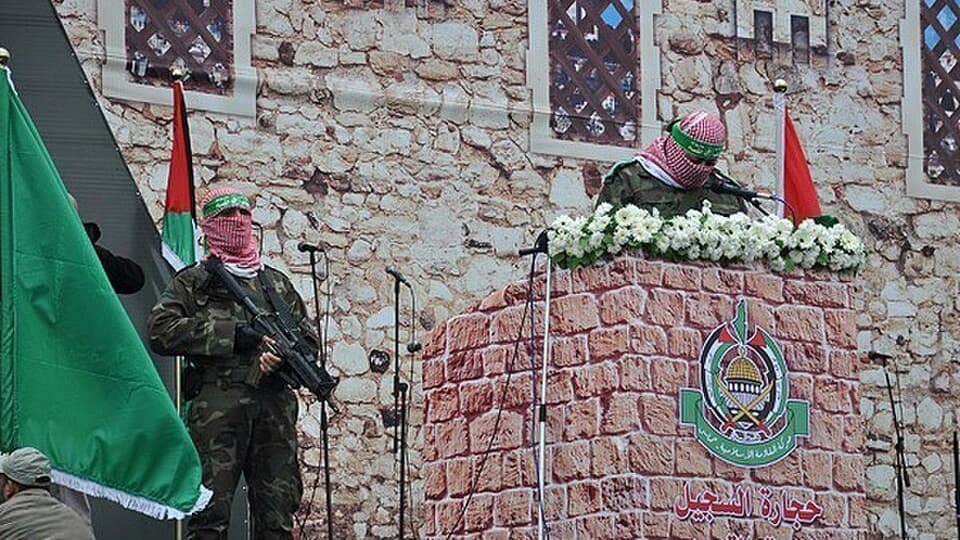
In a statement marking three years since the massacre, Hamas military spokesman Abu Obeida described October 7 as a “military miracle.” He praised the attackers and referred to the invasion of Israel as the “sacred crossing” and “great crossing.” He also claimed the assault shattered Israel’s security doctrine and changed the regional balance of power.
Abu Obeida went further. He praised Iran-backed and allied fronts that attacked Israel and called attention to Yemen, Lebanon, Iraq and Iran. He then asked what would happen if another front opened against Israel “from the west.” The remark appeared to frame further external pressure on Israel as part of the same regional struggle.
That message matters because October 7 was not an Israeli attack on Gaza. Hamas and other armed groups crossed into southern Israel first, murdering civilians and taking hostages. The U.S. State Department describes Hamas as a Foreign Terrorist Organization and says its October 7 assault killed more than 1,100 people, including at least 31 U.S. citizens.
The distinction does not erase Palestinian suffering that followed Israel’s military response. It does, however, establish the chronology. Hamas launched the October 7 assault, and Hamas continues to praise that decision three years later.
That creates an unavoidable contradiction when October 7 commemorations present the date only as an anniversary of "Palestinian suffering". Palestinians can mourn the destruction and deaths that followed the war. But Hamas itself is simultaneously celebrating the attack that set the conflict in motion.
When Protest Crosses Into Praise for Hamas
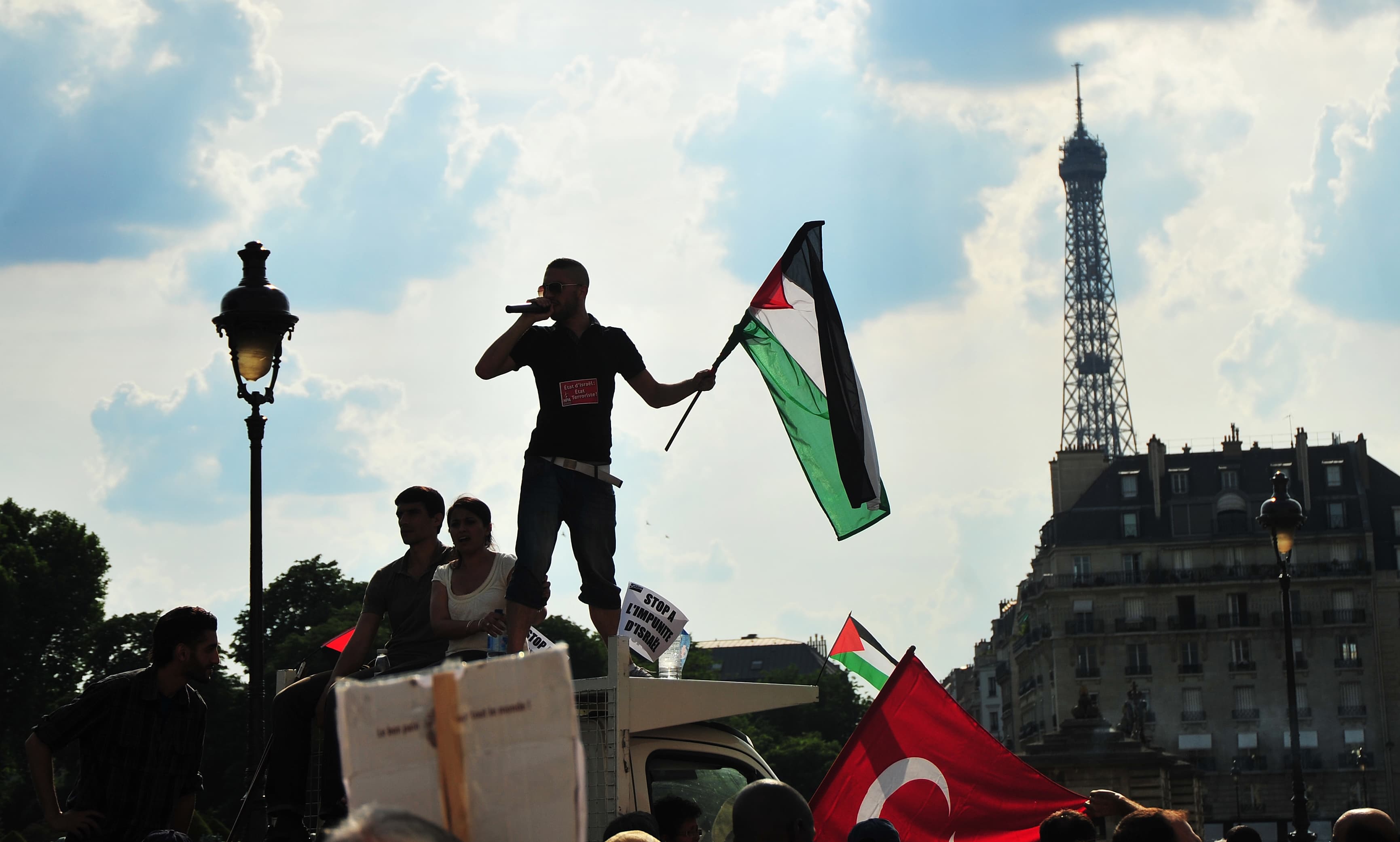
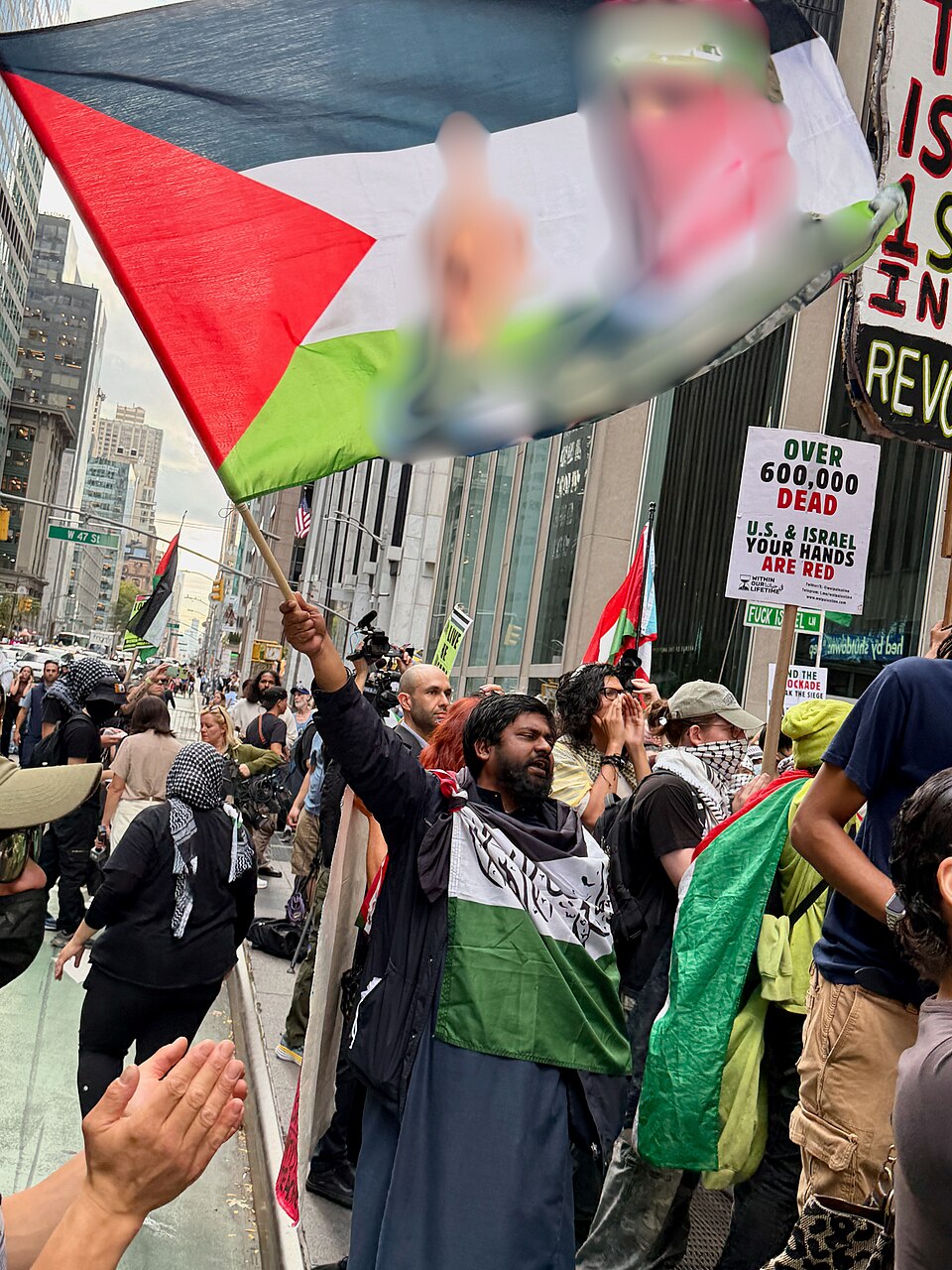
The issue reaches directly into the United States. U.S. protests have featured Hamas symbols, praise for the October 7 attack and rhetoric celebrating armed “resistance.”
Wikimedia Commons documents a 2025 New York demonstration categorized as a rally supporting Hamas’s October 7 attack. Images from the event show Palestinian flags alongside imagery associated with Abu Obeida. Separately, reporting from New York has documented demonstrators carrying Hamas and Hezbollah symbols and chanting slogans praising “resistance.”
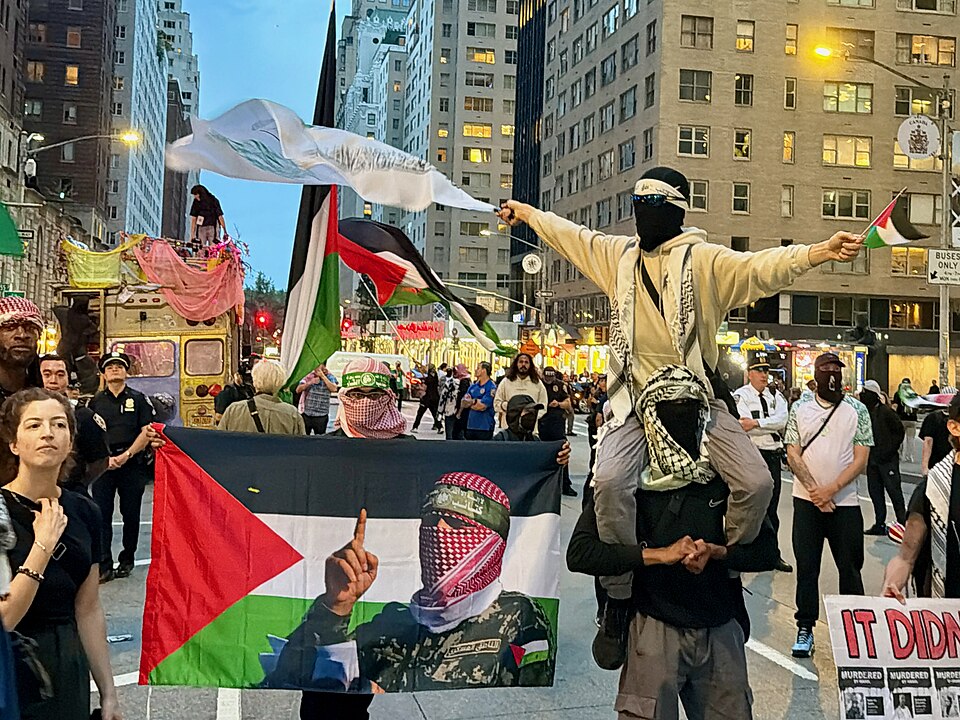
Other demonstrations have gone further. Protesters outside the Nova massacre exhibition in Manhattan carried flags associated with Hamas’s Al-Qassam Brigades and Hezbollah. Some participants displayed slogans including “Long live October 7,” according to reporting from the scene.
New York activists also organized demonstrations specifically for the October 7 anniversary. A 2025 rally used “flood” language that echoed Hamas’s name for the attack, “Al Aqsa Flood.” Organizers called on participants to “resist for Palestine.”
Similar rhetoric has continued into this year. Organizers advertising an October 7, 2026, New York rally used the phrase “victory to the resistance” and imagery associated with Hamas. Their announcement framed the anniversary around Palestinian suffering while also describing October 7 as a moment when “resistance” changed history.
None of this means every pro-Palestinian demonstrator supports Hamas, nor does it make criticism of Israel synonymous with extremism. The distinction is essential. However, public displays of Hamas imagery and explicit praise for October 7 cross a different line from humanitarian advocacy or political criticism.
That line matters particularly in America because Hamas is not merely controversial under U.S. policy. Washington formally designated it a terrorist organization in 1997. The State Department has documented Hamas attacks against civilians, Americans and Israelis for decades.
The appearance of Hamas-linked symbolism within parts of the American protest movement therefore raises a serious domestic question. Political activism can defend Palestinian rights without celebrating an organization that deliberately attacked civilians. When those boundaries disappear, radical Islamist narratives can enter spaces that otherwise describe themselves in the language of human rights or progressive politics.
The concern should remain specific rather than indiscriminate. Muslim Americans, Palestinians and left-wing activists encompass many political views. The evidence here concerns organizations and demonstrators who explicitly use Hamas symbols, praise the October 7 attack or glorify armed groups. Treating an entire religious or political community as interchangeable with those actors would obscure rather than clarify the problem.
Memory Requires Naming Who Started the War
That distinction becomes especially important on the anniversary itself. Israelis are mourning people murdered at homes, roads, kibbutzim, Zikim Beach and the Nova festival. Gaza’s civilians are mourning years of devastating warfare. Both realities can exist without reversing the order of events.
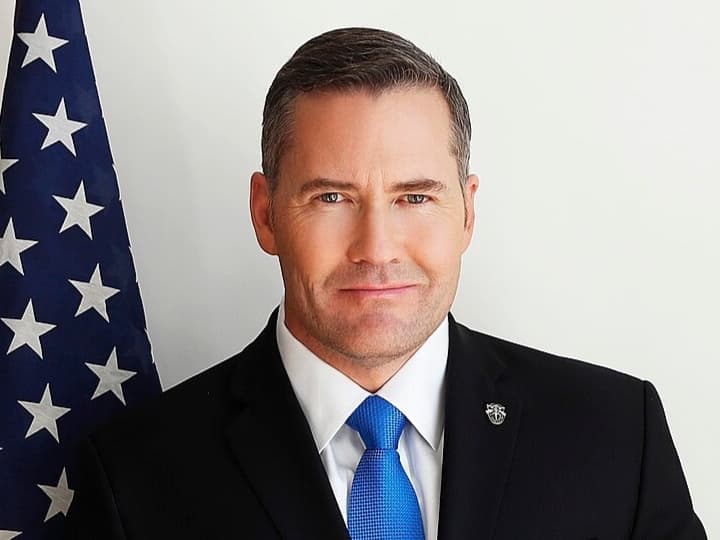
In “Mike Waltz: October 7 Can Never Happen Again,” U.S. Ambassador Mike Waltz marked the anniversary by honoring hostages and massacre survivors. He argued that Hamas and Iran’s regional strategy had ultimately backfired. His message centered the alliance between the United States and Israel around preventing another October 7.
Abu Obeida’s anniversary statement offers the opposite vision. Rather than treating October 7 as a catastrophe, Hamas presents it as a model of military achievement. Its message honors the attackers and imagines additional fronts against Israel.
That is why the language surrounding October 7 matters. Calling for humanitarian protection in Gaza is one political position. Celebrating the attack that murdered civilians, praising Hamas fighters or displaying the symbols of designated terrorist organizations is another.
The Covenant to Defend Truth
Israel’s covenantal mission before God includes protecting Jewish life, preserving sovereignty and refusing to allow the murder of civilians to become morally inverted. Memory is part of that responsibility. A nation that cannot clearly name what happened on October 7 cannot adequately defend against its repetition.
America’s covenantal tradition carries a different but related responsibility. The United States protects freedom of speech, including deeply offensive political speech. At the same time, its national institutions have an obligation to distinguish lawful protest from ideological support for organizations that target civilians and Americans.
That distinction strengthens rather than weakens democratic debate. Americans can argue fiercely over Israeli policy, Palestinian rights and the conduct of the war. What should remain historically clear is that Hamas initiated the October 7 attack and continues to celebrate it three years later.
On the anniversary of the massacre, that fact is central. Israelis are mourning the people Hamas killed. Palestinians are mourning the consequences of a devastating war. Hamas, by its own words, is celebrating the attack that began it.
For more stories on Israel, faith, and the values behind the headlines, follow Sinai on Facebook and Instagram.
Discussion0
No comments yet — be the first to share your thoughts.