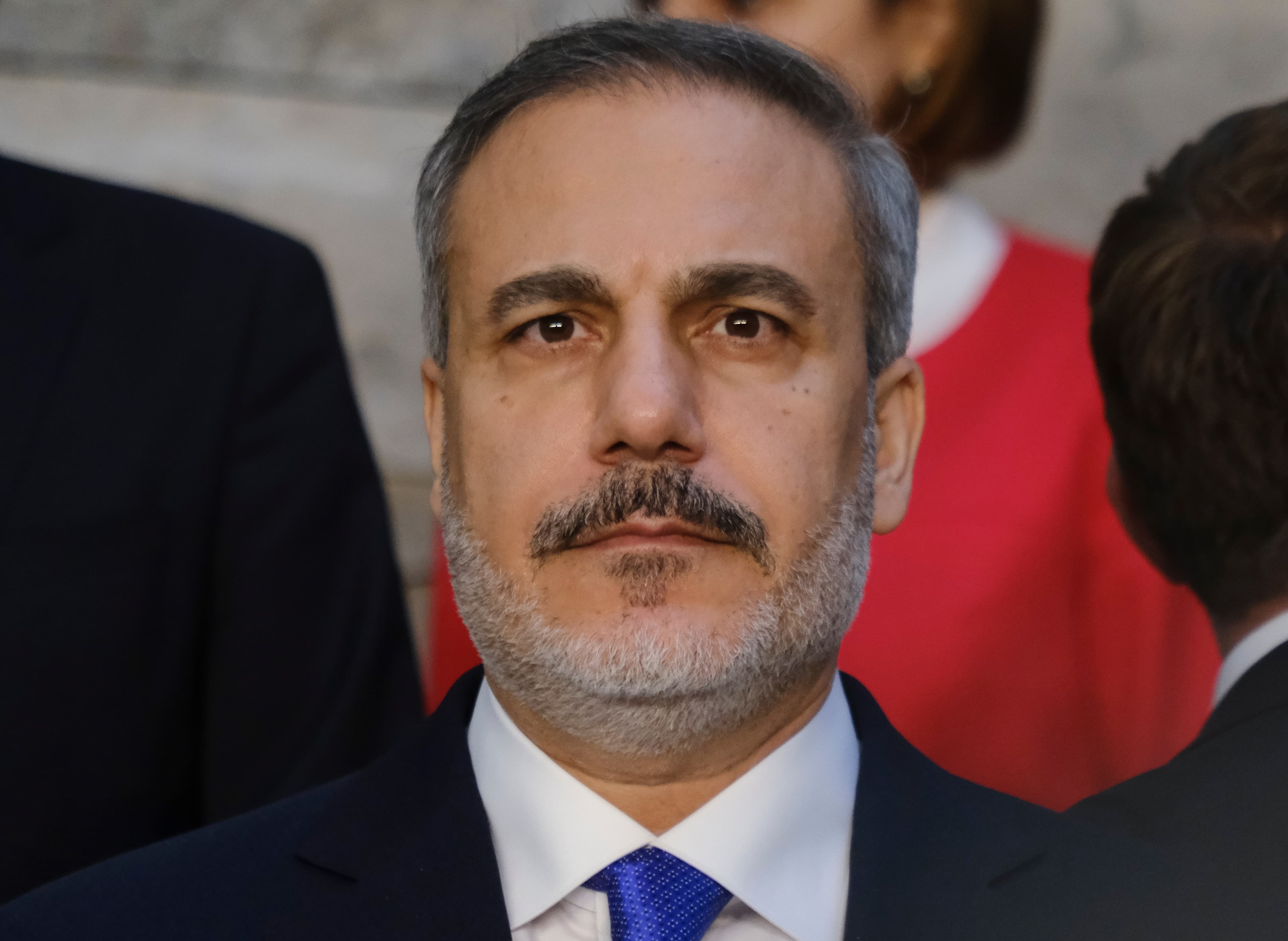
Putin-Al-Sharaa Call Deepens Russia-Syria Track
Putin and Ahmed al-Sharaa discussed deeper Russia-Syria ties and the reorganization of Khmeimim and Tartus, raising new questions for U.S. policy and Israeli security

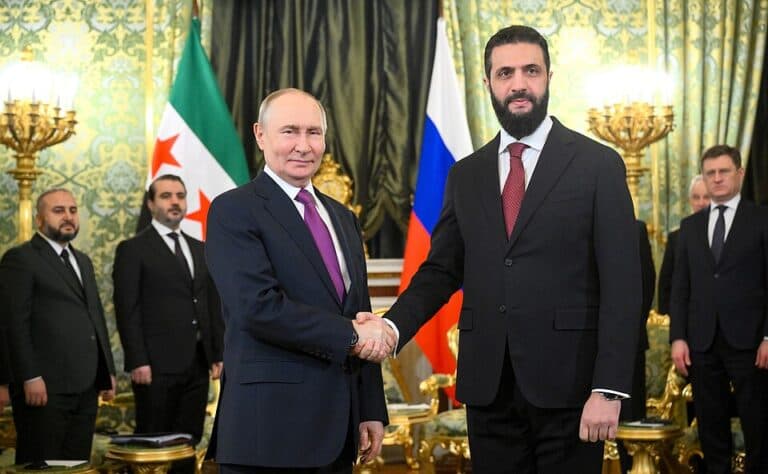
The Putin-Al-Sharaa call signaled another step in Russia’s effort to preserve its role in Syria after the fall of Bashar al-Assad. According to Kremlin news, Russian President Vladimir Putin held a telephone conversation with Syrian President Ahmed al-Sharaa, during which both leaders discussed the current state of Russia-Syria relations and the prospects for deeper cooperation.
The two leaders expressed readiness to expand political dialogue and cooperation in trade, the economy, humanitarian affairs, and other areas. Putin also reaffirmed Russia’s support for Syria’s unity, territorial integrity, and sovereignty, as well as efforts to create conditions for lasting stability and post-conflict recovery. Proverbs says, “By wise counsel thou shalt make thy war.” In Syria, the question now is whether diplomacy will produce real order, or simply reorganize old power structures under new names.
Putin-Al-Sharaa Call
The call comes as al-Sharaa continues to consolidate authority inside Syria and seek international legitimacy abroad. Once better known as Abu Mohammad al-Julani, he now presents himself as the head of a Syrian state trying to rebuild after years of war, fragmentation, and foreign intervention. That shift has already produced major diplomatic openings, including renewed engagement with Washington and Moscow.
The most sensitive part of the call involved Russia’s military footprint in Syria. Both sides emphasized the importance of the August 9 memorandum on reorganizing the Khmeimim Air Base and the Tartus material-technical support point. Those facilities have long given Moscow strategic depth on the Mediterranean, and their future now sits at the center of Russia’s attempt to preserve influence in post-Assad Syria.
Reports on the memorandum suggest that Syria will take a stronger role over the sites, while Russia seeks to maintain access through a reorganized arrangement. That makes the deal important for every regional actor watching Syria’s next phase. Moscow may have lost Assad, but it has not given up on Syria.
Syria’s New Power Map
The timing also matters because the call followed “SDF Dissolution Hands Al-Sharaa Major Syria Victory.” That article reported that Mazloum Abdi announced the SDF’s dissolution as an independent force and its integration into Syrian state institutions, giving al-Sharaa and Turkey a major strategic win.
Taken together, the SDF development and the Putin call show how quickly Syria’s balance is changing. Damascus is absorbing former rivals, Ankara is gaining ground against Kurdish autonomy, Washington is reassessing its Syria policy, and Moscow is trying to keep a seat at the table. For Israel, that kind of fast-moving consolidation requires caution. A more unified Syria could reduce chaos, but it could also strengthen hostile forces if Damascus allows Russia, Turkey, or Islamist elements to shape security near Israel’s border.
The United States has its own dilemma. Washington wants a Syria that does not return to terror sponsorship, Iranian dependency, or mass repression. However, if America steps back too quickly, Russia and Turkey may define Syria’s new order while U.S. partners and Israeli security concerns become secondary.
Sovereignty, Bases And Covenant Duty
The United States and Israel carry separate covenantal missions before God, and the Syria file tests both through the meaning of sovereignty. America’s responsibility is to oppose terror, protect allies, and ensure that diplomatic normalization does not reward instability or abandon former partners. Israel’s responsibility is to guard Jewish life and the northern frontier, judging Syria’s new leadership by actions on the ground rather than polished statements about unity.
Russia’s language about Syria’s sovereignty sounds orderly, but Moscow’s record in Syria cannot be separated from its long support for Assad. At the same time, al-Sharaa’s government must still prove that post-war stability will not become a new form of coercion against minorities, neighbors, or political opponents.
The Putin-Al-Sharaa call therefore matters beyond protocol. It shows that Syria’s next chapter will not be written by Damascus alone. Russia, Turkey, the United States, Israel, and Syria’s minorities all have stakes in the outcome. The question is whether Syria’s new leadership builds a state that restrains threats and respects borders, or whether old foreign patrons and new power centers create a different version of the same danger.
For more stories on Israel, faith, and the values behind the headlines, follow Sinai on Facebook and Instagram.
Discussion0
No comments yet — be the first to share your thoughts.