Operation Economic Outcast Draws Netanyahu Praise
Netanyahu praised Trump and Treasury Secretary Scott Bessent after Operation Economic Outcast was announced as a new U.S. campaign against Iran’s financial lifelines

Operation Economic Outcast drew praise from Prime Minister Benjamin Netanyahu after U.S. Treasury Secretary Scott Bessent announced a new American campaign against Iran’s global financial lifelines. According to Bessent, the U.S. Treasury Department has begun “Operation Economic Outcast,” an unprecedented campaign against the Islamic Republic of Iran. He said Washington is launching a comprehensive economic offensive against Iran’s financial ties around the world, with the stated goal of severing the lifelines sustaining the regime until Tehran faces complete isolation.
Proverbs says, “The getting of treasures by a lying tongue is a vanity tossed to and fro of them that seek death.” Iran’s rulers have used money, oil smuggling, front companies, and financial networks to fund the Revolutionary Guards, terror proxies, and aggression across the region. The moral question is no longer only how Iran makes money, but what that money is used to destroy.
Operation Economic Outcast
Bessent said the Trump administration is no longer “managing” the Iranian threat. Instead, he said, it is moving to end it. Iran, he said, now faces two paths: total global isolation or a return to normalcy.
The campaign aims to block every possible source of income that funds the Revolutionary Guards and the Iranian regime. Bessent described the policy as a “zero-leak” approach, with President Trump calling world leaders and presenting specific demands to end their ties with Tehran. However, the announcement also came with an important clarification. According to the update, the Treasury Department said it had not yet implemented a full new wave of secondary sanctions and described the day as a final warning.
When asked why the administration had not yet imposed secondary sanctions on countries such as China, Bessent answered: “We don’t want to mess up the world economy.” That line shows the tension inside the policy. Washington wants to isolate Iran, but it also wants to avoid triggering a broader shock across global markets.
Netanyahu Backs The Pressure
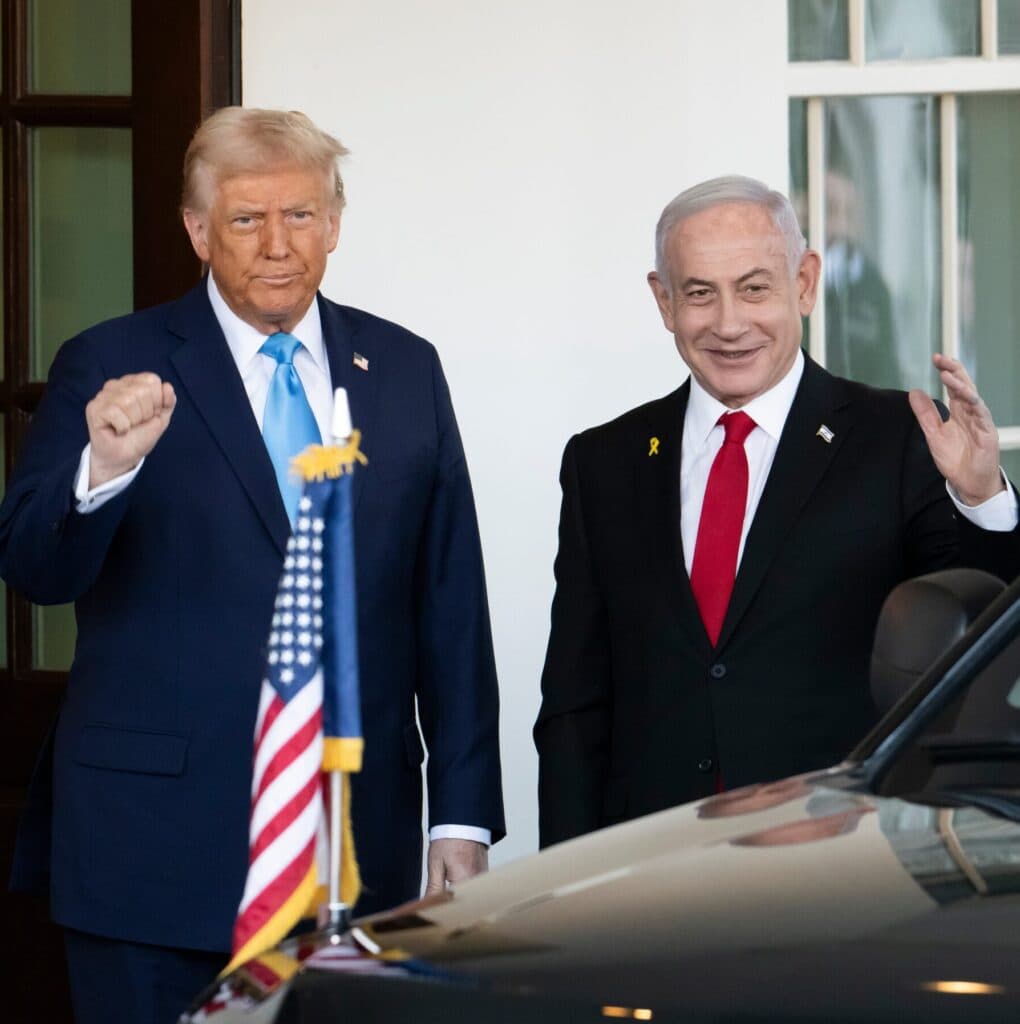
Netanyahu congratulated Trump and Bessent on the latest sanctions against the Iranian regime. “Congratulations President Donald Trump and Secretary Scott Bessent on the latest sanctions against the Iranian regime,” Netanyahu wrote. “You justly exact a steep price from that cruel dictatorship and from those who assist its continued aggression,” he added.
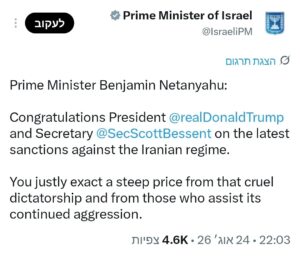
Netanyahu’s response matters because Israel views Iran not only as a sanctions problem, but as the central engine behind much of the region’s terror infrastructure. Tehran funds, arms, and supports forces that threaten Israel from Gaza, Lebanon, Yemen, Syria, and Iraq.
The move also follows “Trump Iran Collapse Claim Follows Rial Crash.” That article reported that Trump said Iran was “completely collapsing” as the rial reportedly fell near 2.03 million per dollar and U.S. pressure tightened on Tehran. Taken together, the currency crash and Operation Economic Outcast point to the same strategy: squeeze the regime’s money before it can turn that money into missiles, drones, nuclear progress, and terror salaries.
Pressure, Restraint And The Iran File
The policy matters to both Washington and Jerusalem because Iran’s economy is not separate from its war machine. The same networks that move money through oil smuggling, shell companies, cash transfers, ship registries, and exchange houses can also support the IRGC and its regional proxies.
At the same time, Bessent’s comment about not damaging the world economy shows that the United States is trying to apply pressure with discipline. That balance is central to American power. Sanctions must be hard enough to change behavior, but controlled enough to preserve allied confidence and global stability.
Israel has a different margin of error. A richer Iran means more weapons for Hezbollah, more pressure from Hamas and the Houthis, and a stronger nuclear threat. Therefore, Netanyahu’s praise reflects a strategic Israeli interest: every dollar denied to Tehran can become one less dollar available for war against the Jewish state.
A Covenant Of Accountability
The United States and Israel carry separate covenantal missions before God, and Operation Economic Outcast touches both through the question of accountability. America’s mission in this moment is to use its financial power to restrain a regime that threatens global order, freedom of navigation, nuclear stability, and American allies. Israel’s mission is to guard Jewish life against the Iranian system that converts revenue into terror, propaganda, and weapons aimed at its people.

That covenantal framework does not celebrate the suffering of ordinary Iranians. It places responsibility on the regime that chose isolation, militias, and nuclear defiance over the welfare of its own citizens. Economic pressure becomes morally serious when it targets the machinery of aggression and helps prevent wider war.
Trump’s approach now depends on follow-through. A final warning only matters if Tehran and its partners believe consequences will come next. Netanyahu’s message makes clear that Israel sees this campaign as justified, necessary, and directly tied to the fight against Iranian aggression.
If Operation Economic Outcast closes the loopholes that keep Tehran funded, it could become more than another sanctions headline. It could become a major test of whether American financial power can weaken Iran’s war machine before the regime chooses a more dangerous path.
For more stories on Israel, faith, and the values behind the headlines, follow Sinai on Facebook and Instagram.
Discussion0
No comments yet — be the first to share your thoughts.