Trump Iran Collapse Claim Follows Rial Crash
President Trump said Iran is “completely collapsing” as the rial reportedly fell near 2.03 million per dollar and U.S. pressure tightened on Tehran

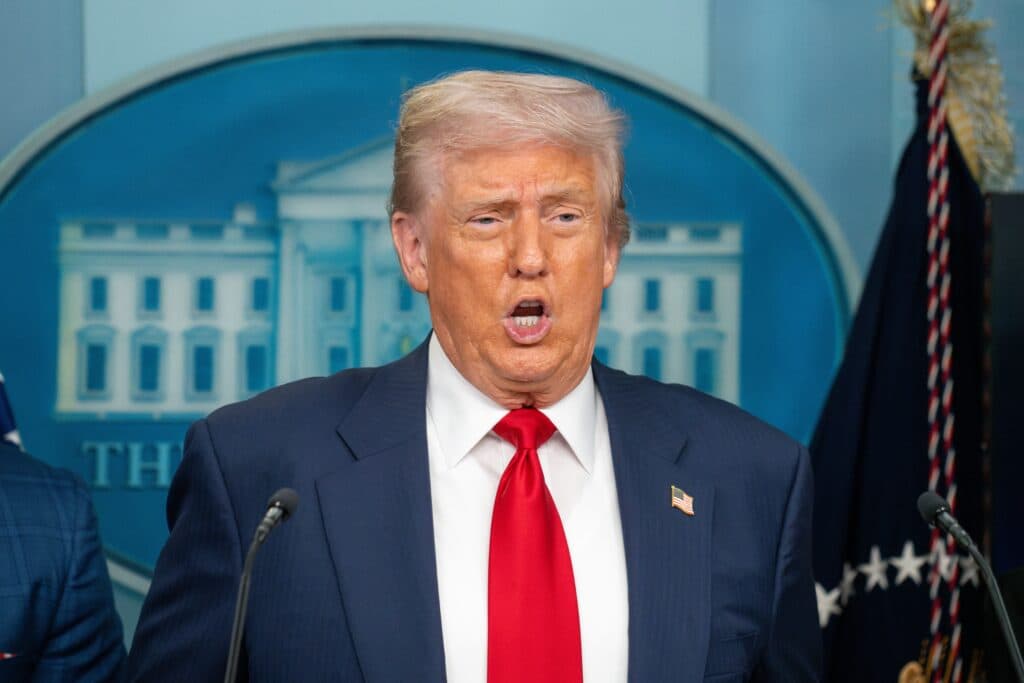
Trump Iran collapse claim followed another sharp fall in the Iranian currency, as President Donald Trump posted that “Iran is completely collapsing.”
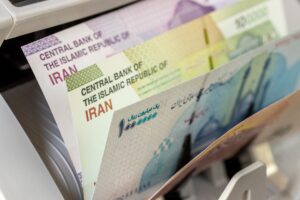
The Iranian currency, which already hit an all-time low yesterday, reportedly continued weakening today and traded near 2.03 million rials to one U.S. dollar.
Trump also shared a Newsmax headline quoting Iranian Parliament Speaker Mohammad Ghalibaf as saying, “We are hungry, we cannot survive.”
The comments came as Washington increases economic pressure on Tehran through sanctions, blockade pressure, and efforts to limit Iran’s leverage over the Strait of Hormuz.
Haggai describes a people who “earneth wages to put it into a bag with holes.” In Iran, that image now feels painfully concrete. A collapsing currency turns wages into dust, drains savings, and exposes the cost of a regime that spent national wealth on nuclear ambitions, militias, missiles, and terror.
Trump Iran Collapse Claim
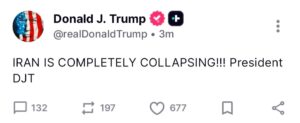
Trump’s post was blunt: “Iran is completely collapsing.” The claim came as the rial crossed deeper into record-low territory. AP reported Monday that the rial dropped to 2.02 million to the dollar as markets opened, while other tracking sources placed the rate around the same range.
The fall matters because currency collapse hits daily life fast. Food, medicine, imports, rent, fuel, and savings all become harder to manage when the national currency loses value.
Iran’s leaders have tried to project defiance. However, markets are telling a different story. The rial’s fall suggests that pressure from Washington is reaching the public economy and the regime’s financial system at the same time. That is why Trump is framing the moment as proof that his pressure campaign is working.
Rial Crash And Regime Pressure
The currency slide follows months of war pressure, sanctions, and U.S. efforts to restrict Iran’s oil and financial lifelines.
Trump’s message also fits the argument made by Vice President J.D. Vance in “Vance Hormuz Remarks: Iran Losing Leverage Under Pressure.” Vance said Iran’s ability to use the Strait of Hormuz as leverage is weakening as U.S. pressure supports the goal of preventing Tehran from acquiring nuclear weapons.
Now the rial’s fall strengthens that same narrative. If Iran cannot use Hormuz to force American retreat, and if sanctions continue to bite, Tehran has fewer cards to play.
Still, economic collapse does not automatically make Iran harmless. A regime under pressure may choose escalation, proxy attacks, cyber operations, or nuclear threats to restore fear.
That is why Israel will watch this moment with caution. A weaker Iran may have less money for Hezbollah, Hamas, the Houthis, and other terror networks. But a cornered Iran may also act more recklessly.
Hunger, Fear And Deterrence
Trump’s repost of the Newsmax headline about Ghalibaf adds another layer. Whether read as political messaging or a sign of real distress inside Iran’s ruling class, the headline points to a crisis the regime can no longer hide.
Iran’s leaders built their system on revolutionary power, anti-American ideology, and threats against Israel. Yet ordinary Iranians have paid the price for that project through inflation, isolation, and economic decay.
For the United States, the strategic goal is not poverty for its own sake. It is pressure that forces Iran away from nuclear weapons and terror financing. Washington is trying to show Tehran that rejecting limits will carry escalating costs.
Israel’s stake is even more direct. Iran is not only an economic rival or diplomatic problem. It is the central state sponsor behind many of the armed groups that threaten Israeli civilians.
Covenant Under Economic Siege
The United States and Israel carry separate covenantal missions before God, and this moment touches both through the question of power and restraint. America’s mission requires using national strength to block regimes that threaten global order, freedom of navigation, and nuclear stability. Israel’s mission requires guarding Jewish life against an Iranian system that turns money into rockets, drones, tunnels, and terror salaries.

Economic pressure becomes morally serious when it prevents greater bloodshed. If sanctions and blockade pressure can weaken Iran’s war machine without a larger military campaign, they serve a purpose beyond markets. That purpose must remain clear: the target is the regime’s power to threaten, not the suffering of ordinary Iranians.
Trump’s post may sound triumphant, but the numbers behind it tell a harder story. Iran’s currency is falling, its leverage is shrinking, and its leaders now face a public test of survival. For Israel and America, the question is whether this pressure can force real limits on Tehran before the regime chooses another dangerous path.
For more stories on Israel, faith, and the values behind the headlines, follow Sinai on Facebook and Instagram.
Discussion0
No comments yet — be the first to share your thoughts.