Netanyahu Responds to Macron Over Israel Security
Netanyahu invoked the Yom Kippur eve murder of Netanel Shukrun while challenging Macron’s criticism of Israeli policy and its security context

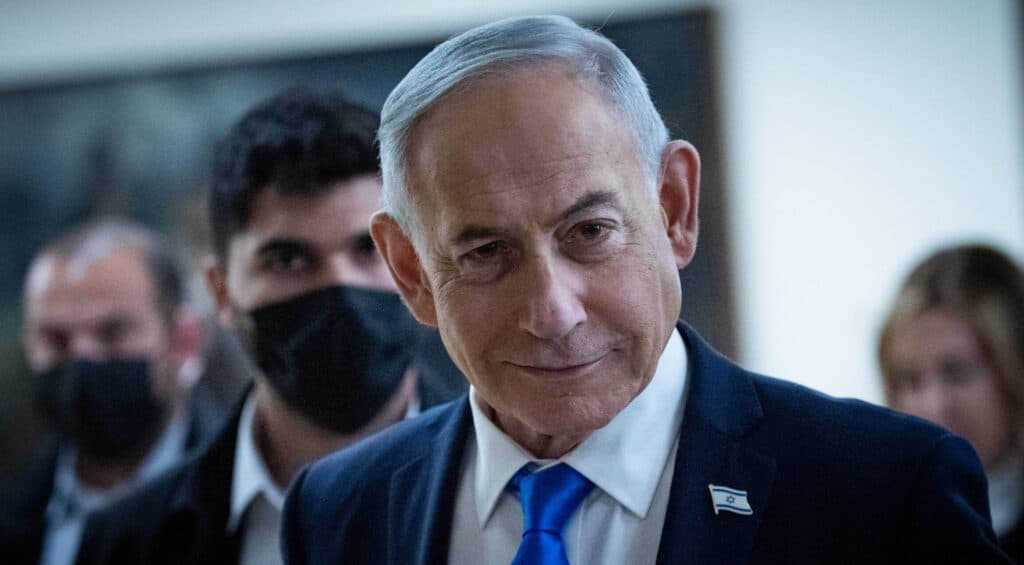
Prime Minister Benjamin Netanyahu responded to Macron after the French president used the UN podium to criticize Israeli policy. Netanyahu’s office argued that Macron’s remarks ignored the continuing terrorism faced by Israelis in Judea and Samaria. It pointed to the murder of Netanel Shukrun just before Yom Kippur as a stark example of that security reality.
Shukrun, a father of six from Alei Zahav, was shot near a natural spring outside Neve Tzuf on September 20. He had gone there with his eldest son before Yom Kippur. Family members later said Shukrun warned his son about the gunman moments before the shooting, helping him escape unharmed.
The Prime Minister’s Office identified Shukrun as a French citizen and accused Macron of overlooking Israeli victims. “Ignorance is no excuse for erasing their blood,” the statement said. France itself condemned the killing as a terrorist attack and offered condolences to Shukrun’s family.
Psalm 9:12 says that God “forgetteth not the cry of the humble.” The verse gives particular weight to a dispute centered on whose suffering receives international attention. Palestinian civilians deserve to have their suffering addressed, but Israeli victims of terrorism cannot disappear from the same conversation.
Netanyahu Responds to Macron With a Security Warning
The Israeli argument is that Judea and Samaria cannot be discussed only through settlements, checkpoints and Palestinian grievances. Israeli civilians also face shootings, attempted rammings and other attacks. Following Shukrun’s murder, Netanyahu ordered reinforced operations, arrests and additional security measures in the area.
The Prime Minister’s Office described Shukrun’s attacker as a Hamas terrorist. Reuters reported that Hamas praised the shooting but did not claim responsibility, so the attacker’s organizational affiliation should be treated separately from the confirmed facts of the attack. The essential point remains undisputed: an Israeli father was murdered in an attack that both Israel and France described as terrorism.
From the Israeli government’s perspective, that context matters when European leaders discuss Judea and Samaria. Policies can be criticized without presenting Israeli security measures as if they arose in a vacuum. Israelis living beyond the Green Line remain civilians under Israeli protection, regardless of international disputes over the legal status of their communities.
France and Israel See the Conflict Differently
Macron and his government approach the issue from another direction. France argues that settlement expansion and settler violence threaten a future two-state solution. Paris joined several governments this month in calling for restrictions on settlement-related trade while also reaffirming support for Israel’s security.
France has also repeatedly condemned October 7 and terrorism against Israelis. Its government notes that more than 50 French nationals died in the Hamas-led massacre. Paris says its criticism of Israeli policy is intended to preserve a future in which Israel and a Palestinian state can both live securely.
That makes the Netanyahu-Macron dispute more precise than a simple divide between supporting and opposing Israel. France says Israeli security and Palestinian statehood can coexist. Netanyahu’s response argues that European criticism too often underweights the terrorism Israelis face while emphasizing Israeli actions taken in response to security threats.
The disagreement follows another clash examined in “Macron Backs ICC After Trump Calls for Withdrawal.” Macron defended international judicial institutions while President Donald Trump emphasized sovereignty and challenged the authority of the ICC. Israel sits close to the center of both debates because international criticism often collides with Jerusalem’s insistence on retaining freedom to defend its citizens.
Memory Must Remain Part of Security
Israel’s covenantal tradition gives memory a public purpose. Jewish history repeatedly joins remembrance with the responsibility to defend life, preserve the nation and refuse indifference to Jewish bloodshed. That responsibility does not erase the rights of others, but it does require Israeli victims to remain visible in debates about peace and security.
The American covenantal tradition developed differently, yet it also places national freedom beside a duty to protect citizens from terrorism. That helps explain Washington’s longstanding security partnership with Israel, even when American governments disagree with particular Israeli policies.
The murder of Shukrun demonstrates why abstract discussions about Judea and Samaria can become disconnected from daily Israeli reality. Settlement policy, Palestinian rights and settler violence deserve serious scrutiny. So do Palestinian attacks against Israeli civilians and the security decisions those attacks produce.
As Netanyahu responds to Macron, the central disagreement is therefore not whether Palestinian suffering matters. It is whether international criticism gives equal weight to the violence Israelis continue to face. Any serious discussion of justice in the region has to hold both realities in view rather than allowing one set of victims to erase the other.
For more stories on Israel, faith, and the values behind the headlines, follow Sinai on Facebook and Instagram.
Discussion0
No comments yet — be the first to share your thoughts.