Iran-Iraq Flights Halt Under U.S. Sanctions
Iran-Iraq air travel has been suspended under mounting U.S. sanctions, disrupting pilgrimage, trade and one of Tehran’s most important regional links

Iran-Iraq flights have now been suspended as the effects of Washington’s sweeping aviation sanctions move deeper into one of Tehran’s most important regional relationships. Iran’s Civil Aviation Organization announced that ticket sales for Iraq routes were suspended until further notice. Najaf International Airport also ordered all flights to and from Iran halted beginning early Friday, closing the alternative route that had remained open after Baghdad stopped accepting Iranian carriers.
The disruption carries unusual weight because Iraq is not simply another foreign destination for Iranian travelers. Najaf and Karbala are among Shiite Islam’s most important pilgrimage centers, while economic ties between the neighboring states remain extensive. Iraq-Iran trade exceeded $10 billion in 2025, and Iraq also relies heavily on Iranian energy imports.
Isaiah 33:8 says, “The highways lie waste, the wayfaring man ceaseth.” The ancient image is striking in a modern sanctions dispute that is literally changing how people move across borders. With air travel restricted, much of the traffic between Iran and Iraq may now shift toward land crossings.
Iran-Iraq Flights Close After Najaf Suspension
The restrictions developed quickly. Baghdad International Airport first stopped receiving Iranian carriers after U.S. officials warned that airports and service companies assisting sanctioned airlines could face secondary sanctions. Tehran then tried to redirect some Baghdad-bound traffic to Najaf, which initially continued operating Iranian services.
That option has now closed as well. Najaf International Airport announced that all flights connecting the airport with Iran would stop from 2 a.m. Friday until further notice. Just one day earlier, 18 of 20 flights on Najaf’s schedule were reportedly bound for Iranian cities, showing the depth of the aviation link.
For religious travelers, the effect could be particularly significant. Najaf contains the shrine of Imam Ali, while nearby Karbala attracts large numbers of Iranian pilgrims throughout the year and especially during Arbaeen. Reuters documented Iranian pilgrims crossing into Iraq by land in large numbers even before the latest flight restrictions, suggesting that road travel could become increasingly important.
Business travel will also suffer. Iraqi tourism companies had already warned that interruptions to Iranian flights would affect medical travelers, students and companies whose revenues depend heavily on the cross-border market. The suspension therefore reaches ordinary passengers as well as the Iranian state.
U.S. Sanctions Target More Than Passenger Travel
Washington says the aviation restrictions serve a broader security purpose. On September 8, the U.S. Treasury sanctioned 36 aviation-related targets, including 27 Iranian airlines. Treasury says Iranian commercial aviation has helped move weapons, personnel and illicit cargo for the government and the Islamic Revolutionary Guard Corps.
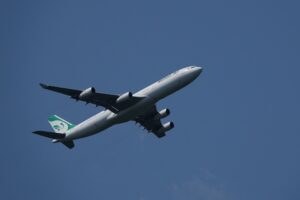
The U.S. has specifically accused Mahan Air of serving as a conduit for the IRGC-Quds Force. Treasury says the carrier has assisted the movement of operatives, military equipment and unmanned aerial vehicle systems. Those allegations explain why Washington is pressuring foreign airports, fuel suppliers, ticket sellers and ground-service companies rather than limiting sanctions to the airlines themselves.
Iraq is especially sensitive in that strategy because Tehran maintains substantial political and security influence there. Reuters reported this year that Iran-backed Shiite factions remain active across Iraq, while the IRGC has also established smaller cells that reportedly answer directly to Tehran. At the same time, Baghdad has tried to balance its relationship with Iran against its security and economic ties with Washington.
The wider escalation follows the warning detailed in “Iran Aviation Threat: Mokhber Warns Regional Airports.” Mohammad Mokhber said regional airports could face disruption if neighboring countries continued restricting Iranian carriers. The latest Iraq cancellations show the sanctions advancing despite those threats.
Movement, Sovereignty and Regional Responsibility
Israel has a direct interest in whether Iranian transportation networks can support military activity across the region. Iran-aligned Iraqi factions have launched attacks against American and regional targets, while U.S. officials have repeatedly linked Iranian aviation networks to weapons and personnel transfers. Restricting those networks can therefore affect both American force protection and Israel’s security environment.
The civilian consequences remain real as well. Pilgrims, families, students and businesses now face longer journeys and fewer options. Effective sanctions can impose costs on government-linked networks, but the widening travel restrictions also illustrate how quickly economic warfare reaches ordinary people.
Israel’s covenantal tradition places the defense of Jewish life and sovereignty among the central responsibilities of the Jewish state before God. America’s covenantal tradition is distinct, but its political culture has often connected national power with liberty, law and responsibility toward allies. In this case, both countries face the same strategic question: how to constrain hostile military networks while keeping the distinction between a government and civilian populations clear.
The suspension of Iran-Iraq flights is therefore more than another canceled route. It cuts through a major religious, commercial and political corridor between Tehran and one of its most important neighbors. Washington’s sanctions are increasingly reshaping Iran’s regional mobility, while Tehran must now rely more heavily on land routes to maintain the connections that air travel once made routine.
For more stories on Israel, faith, and the values behind the headlines, follow Sinai on Facebook and Instagram.
Discussion0
No comments yet — be the first to share your thoughts.