Mohsen Rezaei: Iran Vows to ‘Defend Lebanon’
Mohsen Rezaei vowed that Iran would defend Lebanon and tied Israeli withdrawal from Lebanon and Gaza to Tehran’s conditions with Washington

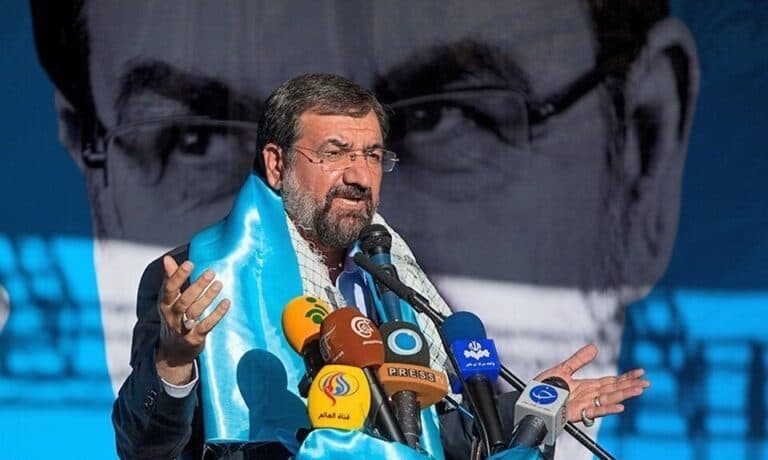
Mohsen Rezaei, secretary of Iran’s Supreme National Security Council, said Iran would defend Lebanon “with all our might” while demanding Israeli withdrawal from Lebanese territory. Rezaei also tied Lebanon and Gaza directly to Tehran’s conditions in its negotiations with the United States.
“Our relationship with the Lebanese people is historical and deep-rooted,” Rezaei said. He added that Iran would provide Lebanon with support. His remarks again place Lebanon inside Tehran’s wider confrontation with Israel and Washington.
Deuteronomy 32:8 describes the Most High as setting “the boundaries of the peoples.” The verse presents national borders and inheritance as matters carrying weight before God. That principle speaks directly to the question at the center of Lebanon’s political struggle: who has the right to decide the country’s future?
Mohsen Rezaei Links Lebanon to Iran’s Conditions
Rezaei said one condition of the U.S.-Iran Memorandum of Understanding requires America to permanently end the war across West Asia, especially in Lebanon. He also demanded that Israel withdraw from territories it has seized. According to Rezaei, Lebanese territory and Gaza must also be “liberated.”
The remarks are consistent with positions Rezaei has taken throughout the conflict. Earlier this month, he said Washington must end fighting across the region, including in Lebanon and Gaza. Iranian statements have also linked those demands to the wider dispute over the Strait of Hormuz.
Rezaei brings significant weight to those statements. Iran appointed him secretary of the Supreme National Security Council on August 10. The body coordinates major security and foreign policy decisions. Rezaei previously commanded the Islamic Revolutionary Guard Corps for 16 years.
Tehran’s Claim Meets Lebanon’s Sovereignty Debate
Iran presents its involvement as support for Lebanon. Yet that claim collides with a growing Lebanese debate over whether Tehran should have any role in deciding the country’s security arrangements.
That tension was evident in “Nadim Gemayel Says He Would Shake Netanyahu’s Hand.” Gemayel challenged Hezbollah’s anti-Israel line and argued for a Lebanon capable of making sovereign decisions outside Tehran’s regional agenda. His position represents a sharply different vision from Rezaei’s declaration that Iran will determine when and how it intervenes in Lebanon’s defense.

Gemayel has made the sovereignty argument even more explicitly in other statements. In June, he asked who gave Iran the right to speak for Lebanon and said Lebanese sovereignty cannot become a negotiating item between foreign powers.
The dispute matters directly to Israel. Iran has long treated Hezbollah as a strategic ally and has openly connected the group to its own regional deterrence. Rezaei said in June that Iran stood firmly behind Hezbollah and described the group as an Iranian ally.
For Washington, the same issue reaches beyond Lebanon. American policy toward Iran increasingly involves sanctions, regional deterrence, and efforts to limit Tehran’s ability to project military power through allied armed groups. Whether Lebanon emerges with one sovereign national authority or remains tied to Iran’s regional strategy will shape security far beyond its borders.
Sovereignty as a Sacred Trust
The American and Israeli covenantal traditions meet powerfully on the question of sovereignty. Both understand national freedom as a responsibility before God rather than permission granted by a stronger power. Liberty carries duties: protect life, resist tyranny, defend the nation, and preserve freedom for those who come after.
Israel’s struggle to secure the Jewish homeland and America’s historic commitment to ordered liberty both rest on that principle. Neither tradition treats sovereignty as something another state may simply negotiate away. National strength has meaning when it protects a people’s ability to determine its own future.
That shared conviction gives Lebanon’s sovereignty debate wider significance. A stable region requires nations that can govern themselves rather than becoming instruments of larger powers. Rezaei’s promise to “defend Lebanon” therefore raises a fundamental question: whether Lebanon’s future will be decided by the Lebanese state or remain part of Tehran’s regional strategy.
For more stories on Israel, faith, and the values behind the headlines, follow Sinai on Facebook and Instagram.
Discussion0
No comments yet — be the first to share your thoughts.