Mecca Defense Agreement: Iran Says Invitation Under Review
Iranian official Mehdi Rahimi said Tehran received an invitation to join the Mecca Defense Agreement signed by Pakistan, Saudi Arabia, and Turkey

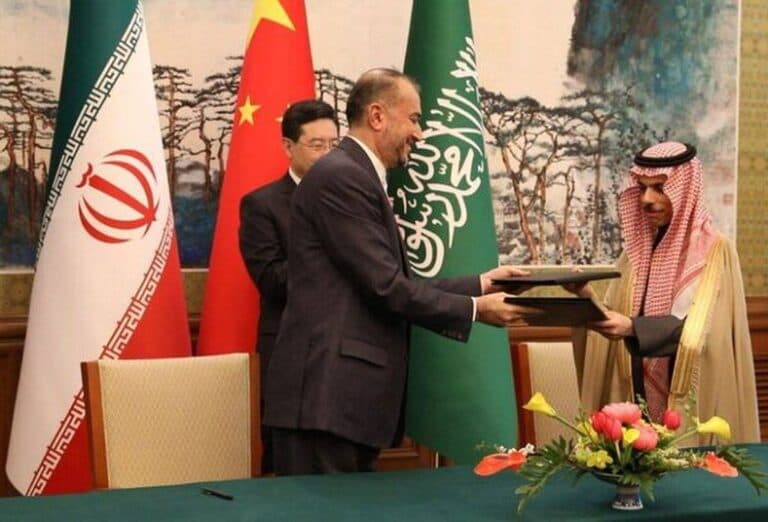
The Mecca Defense Agreement may be entering a new phase after Mehdi Rahimi, head of the Iranian Parliament’s official news agency, said Iran received an invitation to join the pact.
Rahimi made the comments in an interview with Al-Mayadeen. He said Tehran is now reviewing the proposal.
The agreement was signed by Pakistan, Saudi Arabia, and Turkey. It created a joint defense framework among three major Muslim powers: Saudi Arabia, Turkey, and nuclear-armed Pakistan.
Rahimi also praised the “efforts of states in West Asia to create a regional security umbrella.” He said Iran has long supported such an initiative.
Proverbs says, “Every purpose is established by counsel, and with good advice make war.” In the Middle East, defense agreements are never only paperwork. They shape deterrence, signal alliances, and reveal which powers are trying to set the regional order.
Mecca Defense Agreement
The Mecca Joint Defense Agreement was signed in Saudi Arabia by Crown Prince Mohammed bin Salman, Turkish President Recep Tayyip Erdogan, and Pakistani Prime Minister Shehbaz Sharif.
According to the official Pakistani statement, the agreement aims to strengthen collective deterrence. It says an armed attack against one of the three states will be treated as an attack against all of them.
That language echoes NATO-style mutual defense, though the agreement is far smaller and newer. Its meaning will depend on how the member states act during a real crisis.
The original pact already mattered because of the countries involved. Saudi Arabia is a central Gulf power and major oil exporter. Turkey has NATO’s second-largest military. Pakistan is the only Muslim-majority country with nuclear weapons.
If Iran were added, the agreement would become far more complex. Tehran is not just another regional player. It is the leading sponsor of Hezbollah, Hamas, the Houthis, and other armed groups that threaten Israel, U.S. interests, and Gulf security.
Iran Looks At The Pact
Rahimi’s statement does not mean Iran has joined. It also does not mean the founding states have publicly confirmed an invitation. For now, the claim should be treated as coming from Rahimi and the Al-Mayadeen interview.
Still, the statement is significant. Iran is trying to frame the pact as part of a regional security order that reduces dependence on the United States.
That message challenges Washington directly. For decades, America has anchored much of the Gulf security system. If regional powers create a new umbrella that includes Turkey, Saudi Arabia, Pakistan, and possibly Iran, it could weaken American influence.
The story also follows “Erdoğan Heads To Saudi Arabia Amid Defense Alliance Reports.” That article described Erdogan’s expected visit to Saudi Arabia for meetings with Mohammed bin Salman and Pakistan’s prime minister amid reports of Turkish interest in a Saudi-Pakistani defense alliance.
Now the question is sharper. Was the pact meant to deter Iran, balance Israel, reduce American leverage, or create a broader Islamic security bloc? Iran’s possible entry would make that question impossible to ignore.
A Strategic Warning For Israel
Israel will watch any Iranian involvement with concern. A defense framework that brings Iran closer to Saudi Arabia, Turkey, and Pakistan could complicate regional deterrence.
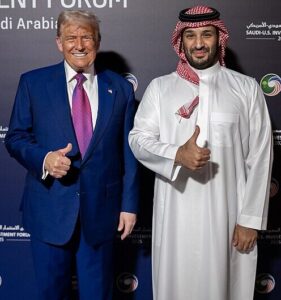
Saudi Arabia has moved carefully between security cooperation with Washington, rivalry with Iran, and cautious diplomacy. Turkey has taken an increasingly hostile public line toward Israel under Erdogan. Pakistan has no relations with Israel and carries major symbolic weight because of its nuclear status.
That combination matters. Even if the agreement claims to target no country, Israel cannot ignore a new security architecture that may include states openly critical of Jerusalem and one regime that funds Israel’s enemies.
For Washington, the concern is also practical. President Trump is using sanctions, blockade pressure, and diplomatic leverage to weaken Iran. If Iran can answer that pressure by moving toward a regional defense umbrella, Tehran will try to present itself as less isolated.
Covenant And The Test Of Alliances
The United States and Israel carry separate covenantal missions before God, and both depend on alliances that serve truth rather than illusion. America’s calling in this arena is to protect ordered freedom, keep sea lanes open, and stop hostile regimes from replacing deterrence with blackmail. Israel’s calling is to defend the Jewish people when regional power blocs form around states that deny or threaten Jewish sovereignty.
The Mecca pact may present itself as a regional security umbrella. But security cannot mean giving Iran diplomatic cover while its proxies continue threatening civilians from Gaza, Lebanon, Yemen, Iraq, and Syria.
If Iran joins, the agreement would no longer look like a simple defensive arrangement among U.S.-aligned Muslim powers. It would look like a new regional experiment in which America’s partners, Turkey’s ambitions, Pakistan’s military weight, and Iran’s revolutionary agenda all meet under one roof.
That is why this report matters. Iran is not only reviewing an invitation. It is testing whether economic pressure and military setbacks can be offset by regional diplomacy.
For Israel and the United States, the answer must be clear: any real security framework must restrain terror, not reward the regime that funds it.
For more stories on Israel, faith, and the values behind the headlines, follow Sinai on Facebook and Instagram.
Discussion0
No comments yet — be the first to share your thoughts.