Jewish Economist Leads Early Race For UN Secretary-General
Rebeca Grynspan, a Jewish economist and former vice president of Costa Rica, is emerging as a leading candidate for UN secretary-general after the first Security Council straw poll

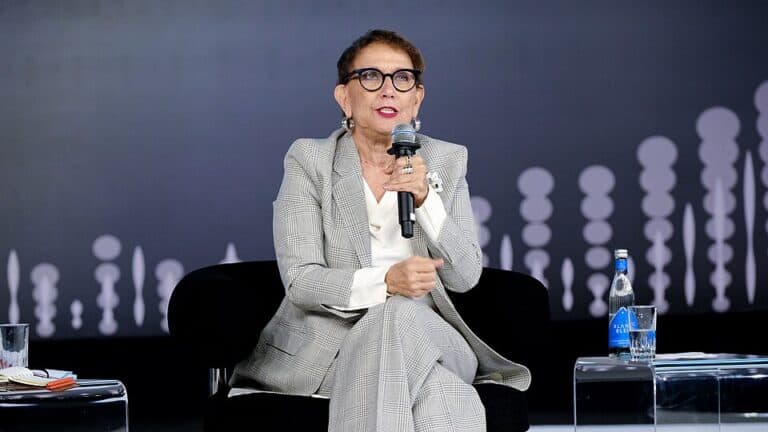
Rebeca Grynspan is emerging as a leading candidate to become the next UN secretary-general, after receiving the highest level of support in the first secret ballot held by the Security Council.
According to Reuters, Grynspan received 10 “encourage” votes out of the Security Council’s 15 members in the non-binding straw poll. The vote places the Costa Rican economist and former vice president in an early frontrunner position.
Grynspan was born in Costa Rica to a Jewish family whose parents survived the Holocaust and fled Europe. If elected, she would make history twice: as the first woman to lead the UN and the first secretary-general of Jewish origin.
The Tanakh says, “You shall not pervert justice.” That verse gives this moment its deeper frame. The UN’s next leader will inherit an institution facing serious questions about fairness, credibility, and moral consistency.
Rebeca Grynspan UN Race
Additional rounds of voting are expected in the coming weeks, ahead of a decision in September or October. However, Grynspan’s early lead does not guarantee victory. The UN selection process still depends on the Security Council and its permanent members. The United States, Britain, France, Russia, and China can block a candidate through veto power, even if that candidate receives broad support. The UN process requires Security Council agreement before the General Assembly appoints the secretary-general.
For Israel, Grynspan’s candidacy carries emotional and political weight. A Jewish woman whose family story is tied to Holocaust survival could lead an institution that has often treated Israel with hostility, disproportionate scrutiny, and moral imbalance. That does not mean she would automatically take Israel’s side. However, her background would bring an unavoidable historical resonance to the role.
For the United States, the race matters because Washington remains one of the UN’s most important players. The next secretary-general will shape debates over war, sanctions, humanitarian policy, international courts, Iran, Gaza, and Israel.
UN Credibility And Israel
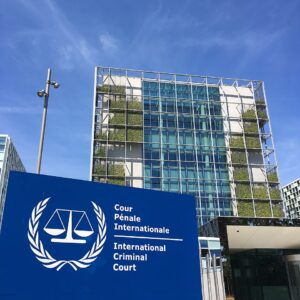
This moment connects directly to “Chad Joins African States Leaving The ICC.” Chad announced its withdrawal from the ICC, joining other African states and raising new questions about the court’s selectivity, credibility, and bias against Israel.
Across the UN system and international legal bodies, many countries now question whether global institutions still apply standards evenly. Israel has faced that problem for decades. The Jewish state often receives intense scrutiny while authoritarian regimes, terror sponsors, and mass human rights violators escape comparable pressure.
A new UN secretary-general cannot fix that alone. However, leadership still matters. Tone, priorities, public statements, appointments, and crisis framing all shape how the world understands conflict. For America and Israel, the hope would be a UN leader who treats Jewish life, Israeli sovereignty, and the fight against antisemitism with seriousness, not as secondary issues behind diplomatic fashion.
Covenant Of Memory And Justice
The United States and Israel share a covenantal understanding before God rooted in human dignity, justice, memory, and the defense of life.
America’s covenantal tradition emphasizes liberty under God, equal justice, and the moral responsibility of free nations. Israel’s covenant is ancient and unique, rooted in the God of Israel, Torah, Jewish peoplehood, Holocaust memory, and the return to the land.
America has long presented itself as a defender of a rules-based order. Israel carries the historical burden of proving that Jewish survival cannot depend on international sympathy alone. A UN race led by the daughter of Holocaust survivors therefore carries symbolism beyond normal diplomacy.
Ultimately, Grynspan’s candidacy is still only in its early stage. The veto powers, future ballots, and political bargaining will decide the outcome. Still, the possibility itself is historic. At a time when international institutions face growing distrust, a Jewish woman with deep diplomatic and economic experience could become the face of the United Nations. For Israel and the United States, the question will be whether that history translates into fairness, courage, and a more honest global conversation.
For more stories on Israel, faith, and the values behind the headlines, follow Sinai on Facebook and Instagram.
Discussion0
No comments yet — be the first to share your thoughts.