Iranian Sources Claim U.S. Strike Targets Area In Shiraz
Iranian officials said a U.S. strike targeted an area in Shiraz, southern Iran, with no casualties reported as assessment teams reviewed the damage

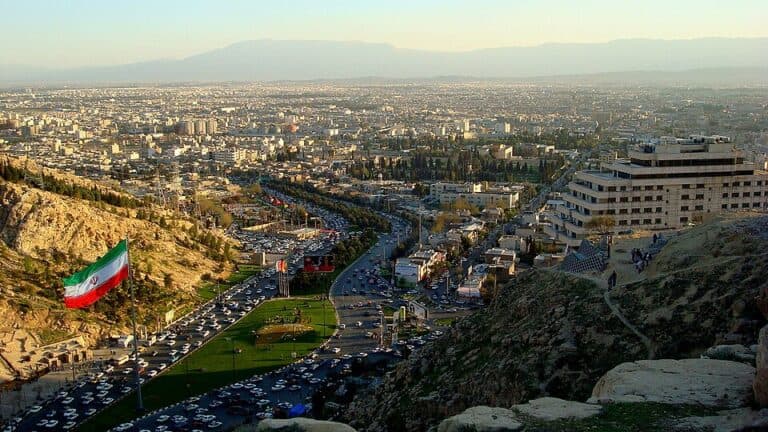
A Shiraz airstrike targeted an area in southern Iran minutes earlier, according to the deputy governor for security affairs in Iran’s Fars Province.
The official said the strike came amid ongoing American attacks against Iran’s southern provinces. According to the report by Tasnim News Agency, no casualties had been reported, and assessment teams were sent to the site to evaluate the damage. Shiraz is the capital of Fars Province in southern Iran. Its location matters because the latest report points to continued pressure on Iran’s south, an area that connects internal Iranian geography to the wider Gulf arena, maritime routes, and American military activity in the region.
The Tanakh says, “The Lord will give strength to His people; the Lord will bless His people with peace.” That verse fits this moment because real peace requires strength, clarity, and the willingness to confront those who turn the region into a battlefield.
Shiraz Airstrike Reported
The Iranian report did not identify the exact target in Shiraz or describe the scale of the damage.
However, the location itself carries strategic weight. Shiraz sits deep inside Iran, far from Israel’s border and away from the immediate Gulf coastline. Therefore, any reported American strike there signals that the confrontation is not limited to border zones, radar sites, or maritime facilities.
For the United States, a strike in southern Iran would show continued pressure after repeated Iranian escalation. Washington’s central concern remains deterrence: Iran must understand that attacks on American interests, regional partners, and allied security systems carry consequences. For Israel, the development matters because Iran’s southern and internal military infrastructure can still support the same regime network that threatens the Jewish state through missiles, drones, Hezbollah, Hamas, the Houthis, and militias in Iraq.
Iran’s Wider Escalation Pattern

This issue connects directly to “Iran Claims Attack On U.S. Radar Systems In Oman.” Iran claimed an attack on U.S. radar systems in Oman as Tehran reported new casualties from American strikes and wider regional escalation.
Iran claims it is responding to American pressure, yet its own actions have expanded the conflict across the region. Tehran has threatened U.S. assets, pressured Arab states, and used its military and proxy network to stretch the battlefield beyond Iran itself. For Israel, that pattern confirms a core security lesson. Iran rarely keeps conflict contained. It works through layers: direct threats, regional militias, terror groups, maritime pressure, and political intimidation.
Therefore, any American strike inside Iran also affects Israel’s strategic calculation. It may weaken Iran’s confidence, disrupt planning, and signal that Washington will not allow Tehran to escalate without cost.
Covenant Of Strength And Peace
The United States and Israel share a covenantal understanding before God that connects strength with the defense of peace.
Both nations believe innocent life must be protected. Both understand that liberty cannot survive when aggressive regimes use terror, missiles, and intimidation to shape the future. Both also know that peace without deterrence becomes an invitation for enemies to test every border.
America acts to protect its forces, citizens, and regional allies. Israel watches the same Iranian regime because it has spent years arming the enemies on Israel’s borders. Both nations understand that Iran’s aggression threatens more than one country. It threatens the order that allows free nations to live without constant coercion.
The reported strike in Shiraz does not end the confrontation. However, it shows that the pressure on Tehran is moving deeper and wider. Ultimately, the question is whether Iran will understand the message. If the regime continues to escalate, America and Israel will face the same strategic reality: deterrence must remain strong enough to prevent a wider war, and moral clarity must remain firm enough to identify who started this fire.
For more stories on Israel, faith, and the values behind the headlines, follow Sinai on Facebook and Instagram.
Discussion0
No comments yet — be the first to share your thoughts.