Iran Warns Trilateral Defense Alliance As Qatar Holds Back
Iran warned it would respond to any attack by members of the Saudi-Turkish-Pakistani alliance, while Qatar signaled caution about joining

The trilateral defense alliance between Saudi Arabia, Turkey, and Pakistan drew a warning from Iran, as Qatar signaled that it is not ready to join the emerging framework.
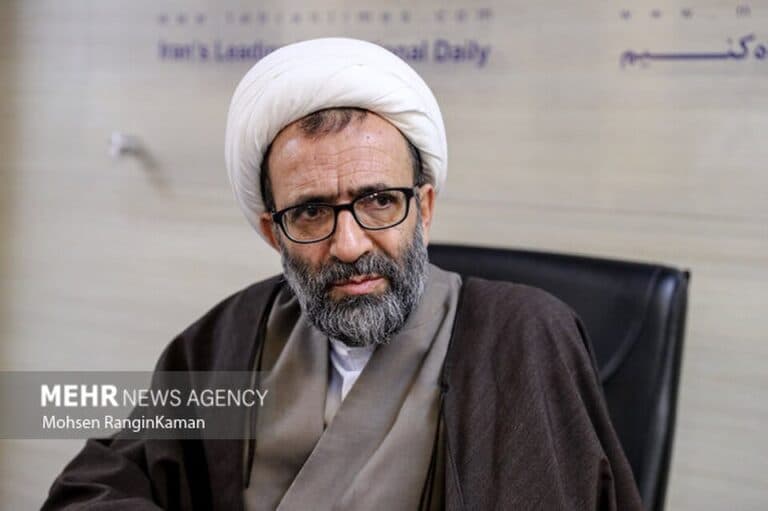
Ali Salimi, a member of the Iranian Parliament Presidium, said Iran would ignore the alliance structure if one of its members attacked the Islamic Republic.
“If any of the alliance countries attacks us, we will respond without taking the alliance into consideration at all,” Salimi said.
The Qatari foreign minister, meanwhile, pushed back politely against the idea of Qatar joining the Saudi-Turkish-Pakistani framework. “I think it is too early to talk about such or other initiatives,” he said, “because we have more than one framework for cooperation” with those countries.
The Tanakh says, “By wise guidance you shall wage your war, and in the multitude of counselors there is victory.” That verse fits the moment because the region is not only measuring weapons. It is measuring judgment, alliances, restraint, and the price of misreading another state’s intentions.
Trilateral Defense Alliance Draws Iranian Warning
Iran’s response shows that Tehran does not view the alliance as a distant diplomatic headline. Salimi’s statement makes clear that Iran reserves the right to respond directly to any participating country, without treating the alliance as a shield.
That warning matters because the alliance brings together three major Muslim powers with different regional roles. Saudi Arabia carries Gulf weight and economic influence. Turkey brings military reach and NATO experience. Pakistan adds nuclear status and long-standing defense relationships across the Islamic world.
For Israel, the alliance raises a complex regional question. Any security structure that restrains Iran could strengthen regional deterrence. However, Jerusalem will also watch whether the framework becomes a disciplined counterweight to Tehran or a more ambiguous bloc shaped by competing interests.
The United States has its own stake in the outcome. Washington wants regional partners to carry more security responsibility, but it cannot ignore what happens when new frameworks develop outside direct American control. If Iran reads the alliance as a threat, and Qatar stays cautious, the balance becomes more delicate.
Qatar Chooses Caution

Qatar’s response was careful and deliberate. The foreign minister did not attack the alliance. He simply said it was too early to discuss joining it and noted that Qatar already has multiple cooperation frameworks with the same countries.
That wording leaves Doha room to maneuver. Qatar can maintain ties with Saudi Arabia, Turkey, and Pakistan without formally entering a defense structure that could place it in a sharper confrontation with Iran.
The issue also connects to “Iranian Adviser Says Tehran Is Waiting Out Trump.” Majid Shakeri said Iran believes no agreement with Trump is possible and is trying to endure pressure until his term ends. In that environment, Tehran may see every regional alignment through the lens of survival, pressure, and time.
If Iran believes it can wait out Washington, then regional alliances become part of the same battlefield of endurance. Tehran wants to avoid isolation while deterring its neighbors from joining any structure that could restrict Iranian freedom of action.
Covenant Of Alliances And Discernment
The United States and Israel each carry a separate covenantal responsibility before God in a region where alliances can protect life or invite illusion. America’s covenantal tradition speaks through ordered liberty, deterrence, and the responsibility to stand with allies against hostile regimes. Israel’s covenant is ancient and unique, rooted in the God of Israel, Torah, Jewish peoplehood, sovereignty, and the return to the land.
This story tests those responsibilities through diplomacy rather than open war. America must understand whether new regional defense structures strengthen stability or dilute U.S. influence. Israel must judge whether the alliance helps contain Iran or creates new uncertainty on the map around it.
Iran’s warning and Qatar’s caution point to the same conclusion: the Middle East is reorganizing under pressure. Countries are forming new frameworks, avoiding formal commitments, and calculating how far they can move without triggering escalation.
For Israel, the safest path remains clear eyes and strong deterrence. For America, the challenge is to keep regional partners aligned without allowing Iran to exploit hesitation. The alliance may still be young, but Tehran’s reaction shows that it has already entered the strategic conversation.
For more stories on Israel, faith, and the values behind the headlines, follow Sinai on Facebook and Instagram.
Discussion0
No comments yet — be the first to share your thoughts.