Abbas UN Speech Warns of ‘Another Nakba’
Mahmoud Abbas warned of another Nakba, condemned E1 settlement expansion and demanded full Palestinian UN membership while challenging U.S. sanctions

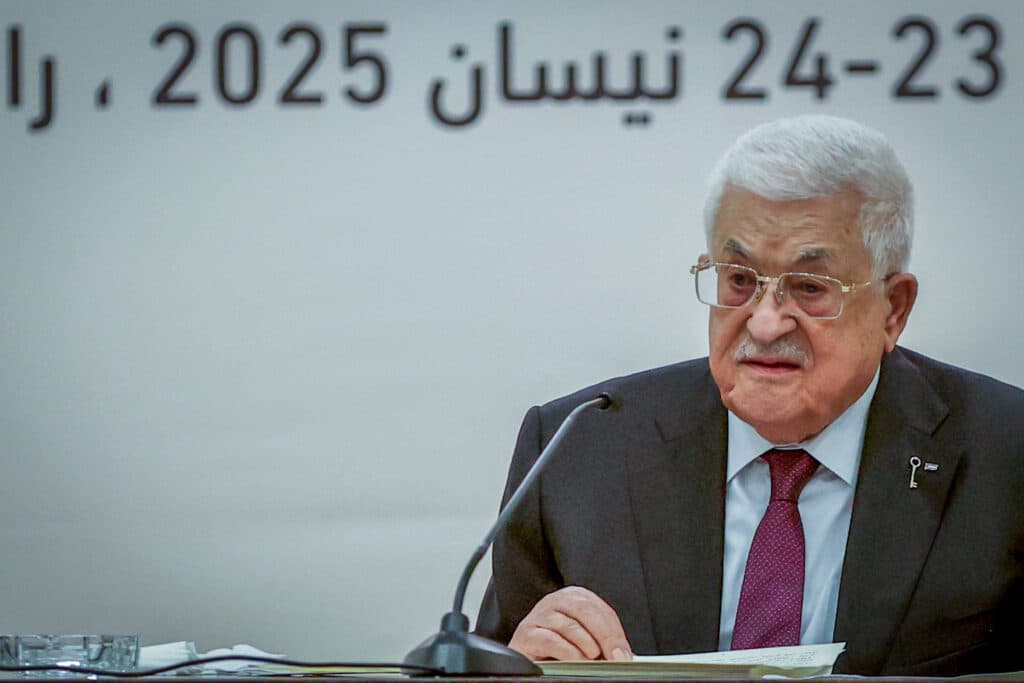
Palestinian Authority President Mahmoud Abbas used his prerecorded UN speech to warn against what he described as another Nakba, condemn Israeli settlement policy and demand full Palestinian membership in the United Nations. Abbas addressed the General Assembly remotely after the United States denied him and other senior Palestinian officials visas to attend in New York. He said the decision violated Washington’s obligations as host of UN headquarters and called on the Trump administration to reverse its sanctions.
Abbas argued that Israeli policies now threaten more than the possibility of a Palestinian state. He said they threaten the “very life and existence” of Palestinians in their homeland. His speech focused heavily on settlement expansion, settler violence, UNRWA, withheld Palestinian revenues and the future of the two-state framework.
Psalm 85:10 says, “Mercy and truth are met together; righteousness and peace have kissed each other.” The verse captures a central difficulty in this conflict. Peace cannot survive without security, but neither can it survive if either people believes justice and truth apply only to the other.
Abbas UN Speech Focuses on E1 and Statehood
One of Abbas’s most specific warnings concerned the E1 settlement project east of Jerusalem. He argued that the plan would divide the northern and southern parts of the West Bank and further undermine territorial continuity for a future Palestinian state. That concern is also shared by several Western governments and Israeli rights organizations. Reuters reported that Israel recently expanded the E1 plan to 3,401 housing units.
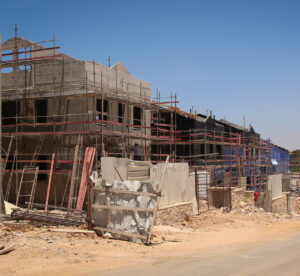
The dispute is not simply about how Palestinians characterize the project. Finance Minister Bezalel Smotrich has openly promoted E1 as a way to prevent the establishment of a Palestinian state. Supporters of the plan frame it in terms of Israeli sovereignty and control around Jerusalem, while opponents argue that it could make a contiguous Palestinian state far more difficult.
Abbas also accused settlers of escalating violence against Palestinian communities. That issue has become increasingly difficult for Israel to dismiss as solely foreign criticism. UN humanitarian monitors recorded more than 1,600 settler attacks causing casualties or property damage by mid-September, while the Israeli government itself has condemned extremist settler violence. Recent attacks have also drawn concern from U.S. Ambassador Mike Huckabee.
At the same time, the security picture in Judea and Samaria also includes persistent Palestinian attacks against Israelis. Days before Abbas’s speech, a Palestinian gunman killed Israeli father Netanel Shukrun near Neve Tzuf. Hamas praised the attack without claiming responsibility. Any serious discussion of the territory therefore has to account for violence against both Palestinian and Israeli civilians.
Washington and Ramallah Clash Over Accountability
The American visa decision added another layer to Abbas’s address. The General Assembly voted 152-3 to allow Palestine to submit his prerecorded statement after Washington blocked his attendance. The United States and Israel opposed that resolution. The U.S. representative argued that the Palestinian Authority continues policies Washington believes reward terrorism and uses international institutions to pursue unilateral action against Israel.
Abbas rejected those accusations. He said the Palestinian leadership had pursued reform, international law and diplomacy rather than violence. The disagreement is significant because Washington remains central to any future Israeli-Palestinian agreement, yet relations between the Trump administration and the Palestinian Authority remain deeply strained.
His claim that Israel is withholding more than $6 billion in Palestinian funds also requires context. Israel collects customs and tax revenues on behalf of the Palestinian Authority under existing economic arrangements. A UN report put cumulative withholding and deductions at roughly $5.09 billion by March 2026, while later Palestinian statements put the total near $6 billion. Israel has linked some deductions to PA payments involving prisoners and families of attackers, while Palestinian officials say the freeze is crippling basic government services.
That financial dispute matters to both Israeli and American security policy. A functioning Palestinian Authority helps administer major Palestinian population centers and provides security coordination that Israel has historically viewed as useful. At the same time, Washington and Jerusalem have pressed Ramallah to reform payment systems they argue can incentivize violence.
The contrast with “Netanyahu UN Speech: Israel Will Prevail” could hardly be sharper. Netanyahu framed the same regional moment through Jewish history, October 7, terrorism and Israel’s determination to defend itself. Abbas framed it through occupation, displacement, settlement growth and Palestinian statehood. Both speeches reveal how far apart the competing national narratives remain.
Two Peoples, Security and Responsibility
Israel’s covenantal tradition places Jewish survival, return and sovereignty at the center of national responsibility. After generations in which Jews lacked the power to defend themselves, the modern State of Israel treats security as inseparable from continued Jewish life in the ancestral homeland. That history explains why Israeli leaders resist political frameworks they believe could recreate strategic vulnerability.
America’s covenantal tradition developed differently, but it has also linked liberty, justice and national power with responsibility before God. That puts Washington in a difficult position. The United States remains committed to Israel’s security while also maintaining longstanding support for Palestinian self-government and a negotiated political settlement.
Those responsibilities do not require accepting every accusation in Abbas’s speech. Claims of ethnic cleansing, state terror and deliberate destruction of Palestinian existence remain highly contested, and Israel rejects them. But the underlying disputes over settlement growth, settler violence, Palestinian revenues and political geography are real and increasingly central to American-Israeli diplomacy.
Abbas’s UN speech therefore presented both a Palestinian warning and a diplomatic challenge. He argued that the remaining space for a two-state solution is rapidly disappearing. Israel responds that any future arrangement must also address terrorism, security control and the consequences of October 7.
The distance between those positions remains enormous. Yet the basic question before Washington, Jerusalem and Ramallah is increasingly concrete: whether the territory can still support two viable national projects without sacrificing Israeli security or Palestinian political rights.
For more stories on Israel, faith, and the values behind the headlines, follow Sinai on Facebook and Instagram.
Discussion0
No comments yet — be the first to share your thoughts.