Iran Complains To Red Cross Over Pilots In Qatar
Iran sent a letter to the Red Cross claiming Qatar is holding three Iranian pilots, while Qatar denies detaining them


Iran Qatar pilots claims opened a striking legal complaint from Tehran after Iran sent a letter to the presidency of the Red Cross over three Iranian pilots it says are being held by Qatar.
According to Iran, the three pilots fell into Qatari captivity after the Sukhoi-24 aircraft they were flying were shot down by Qatar at the outset of Operation “Mighty Fury.” Iran says the pilots are alive. It also claims that six months have passed since their capture and that Qatar still has not allowed any contact with them.
Qatar has denied holding Iranian pilots. According to Reuters, Qatar said the pilots violated Qatari airspace earlier this year and failed to respond to attempts to contact them. Qatar also said search and rescue teams found the remains of one pilot and contacted Iran to coordinate a handover.
The Tanakh says, “A false balance is an abomination to the Lord, but a just weight is His delight.” That verse fits the moment because Iran is now invoking prisoner rights, humanitarian access, and international law. Yet the same regime has long backed forces that turn hostages and civilians into weapons.
Iran Qatar Pilots Claim
Iran’s complaint cites Articles 70 and 78 of the Geneva Convention. Article 70 concerns capture cards, which allow prisoners of war to notify their families and the Central Tracing Agency of their capture, location, and condition. Article 78 concerns the right of prisoners to submit complaints and requests about their captivity.
Tehran argues that Qatar must allow the pilots to contact their families. It also says they must be allowed to submit complaints and requests. Iran further points to protections for prisoners in cases of serious injury.
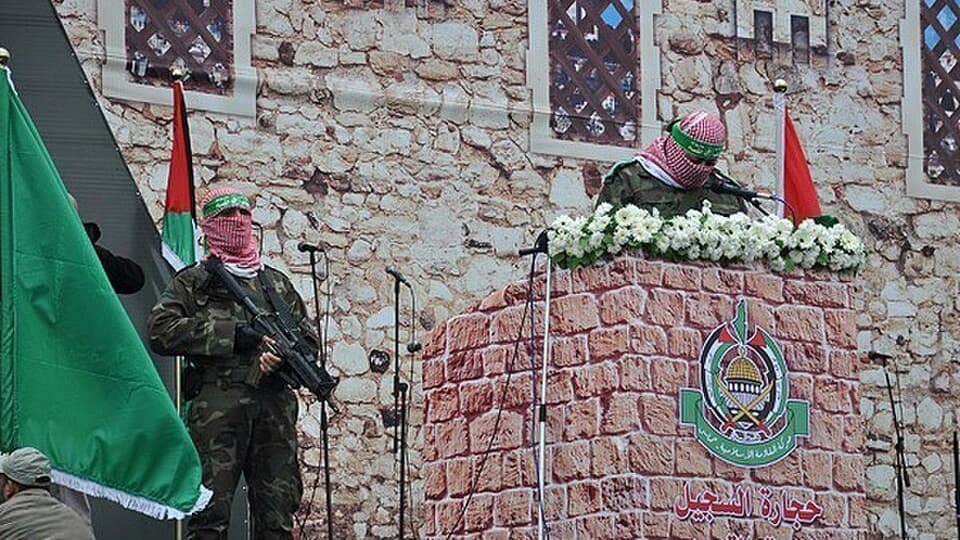
The legal language is clear. The irony is clearer. Iran is asking the Red Cross to defend rules that protect prisoners of war, family contact, and humanitarian procedures, while Iranian-backed Hamas has violated every basic moral standard in its treatment of Israeli hostages.
Tehran Discovers Geneva Rights

The complaint draws attention because Iran rarely applies the same humanitarian standards to Israel. Tehran now speaks the language of Geneva protections when its own pilots are involved. However, when Hamas abducted Israelis and foreign nationals on October 7, Iran did not pressure its proxy to follow those standards.
That hypocrisy matters. International law cannot become a tool used only when terror regimes want sympathy. If Iran demands access, contact, and legal protections for its pilots, then the same standard must apply to every Israeli hostage, every wounded captive, and every family waiting for proof of life.
The wider regional setting also appeared in “Iran Warns Trilateral Defense Alliance As Qatar Holds Back.” That article reported that Iran warned it would respond to any attack by members of the Saudi-Turkish-Pakistani alliance, while Qatar signaled caution about joining. Now, Qatar appears in another uncomfortable place: not as an Iranian partner, but as the state Tehran accuses of holding its pilots.
Covenant Of Law And Captives
The United States and Israel share a covenantal worldview that law must serve truth, not terror. Both nations, at their best, understand that captives are not bargaining chips, civilians are not shields, and humanitarian rules cannot be applied selectively.
That shared American-Israeli instinct matters here. America has a deep interest in preserving an international order where hostile states cannot use legal language as propaganda. Israel has lived the cost of that double standard through Hamas captivity, Hezbollah’s human shields, and Iran’s proxy warfare.
Iran’s letter to the Red Cross may be framed as a legal complaint. But it also exposes Tehran’s selective morality. The regime demands Geneva protections for its own pilots while backing forces that deny basic humanity to Israelis.
That is why this story is larger than Qatar. It is about whether the world will accept Iranian legal complaints at face value, or ask why Tehran only discovers humanitarian law when its own people are in captivity.
For more stories on Israel, faith, and the values behind the headlines, follow Sinai on Facebook and Instagram.
Discussion0
No comments yet — be the first to share your thoughts.