Erdoğan Jerusalem Remarks Raise Manzikert Alarm
Erdoğan linked Jerusalem and Istanbul to the faith formed at Ahlat during a Manzikert anniversary speech, raising concern over Turkey’s regional ambitions and Israel’s capital

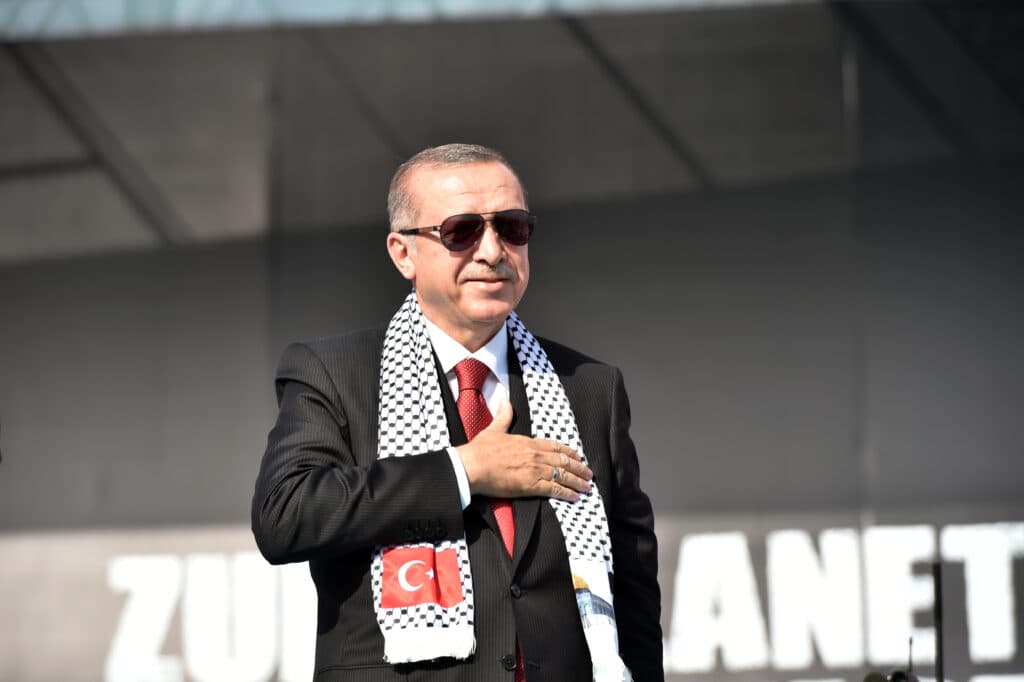
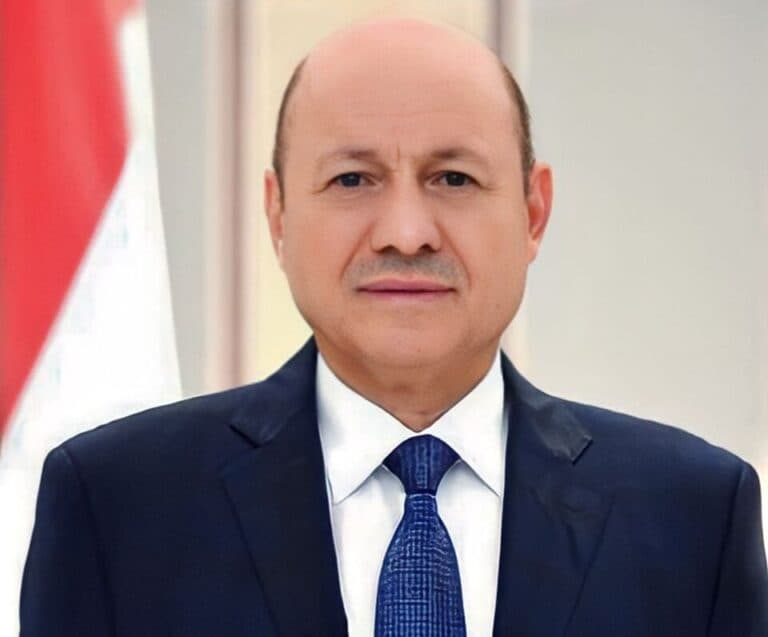
Erdoğan Jerusalem remarks at a Manzikert anniversary event in Ahlat have raised concern in Israel because of the historical language he chose. Speaking as Turkey marked 955 years since the Battle of Manzikert, President Recep Tayyip Erdoğan linked Ahlat to the later conquests of Jerusalem and Istanbul, saying, “The road to Manzikert was opened from Ahlat. The connection of Anatolia was forged in Ahlat. Jerusalem and Istanbul were conquered by the power of faith that took shape in Ahlat.”
The statement was not a formal policy announcement against Israel. However, in an Israeli context, the symbolism is difficult to ignore. Erdoğan did not speak only about Turkish history inside Anatolia. He placed Jerusalem inside a story of conquest, faith, destiny, and Turkish civilizational power. Zechariah declares, “And the Lord shall inherit Judah as His portion in the holy land, and shall choose Jerusalem again.” That verse gives the Jewish frame to a story others keep trying to claim through empire, ideology, or religious triumphalism.
Erdoğan Jerusalem Remarks
Erdoğan continued by saying that if others have their own agenda, Turkey also has “an agenda” and “a plan.” He then added, “And most importantly, Allah, Lord of the Worlds, also has a plan. And in the end, this plan will prevail.” His language moved beyond historical commemoration into a broader regional message, aimed at enemies he described as “merchants of blood,” destabilizers, and “perpetrators of genocide.”
Anadolu reported similar remarks from the same event, including Erdoğan’s claim that “Jerusalem and Istanbul were conquered with the faith that took shape in Ahlat.” It also quoted him saying that “the dawn of a great and strong Türkiye has broken” and that the construction of the “Century of Türkiye” has begun. Those phrases fit Erdoğan’s long-running political project: presenting modern Turkey as heir to a deeper Ottoman and Islamic mission.
For Israelis, that rhetoric lands differently than it may for a domestic Turkish audience. Jerusalem is not a symbolic prize in someone else’s imperial memory. It is the capital of the Jewish state and the heart of Jewish history, prayer, law, and national return.
Why Manzikert Matters
The Battle of Manzikert took place in 1071, when Seljuk forces defeated the Byzantine army. In Turkish national memory, the battle marks a turning point that opened Anatolia to Turkish settlement and helped create the historical path toward later Turkish rule in the region. Ahlat is important in that story because Turkish accounts present it as a key staging ground before the battle.
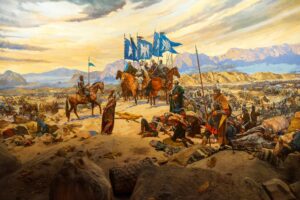
The Jerusalem reference adds another layer. In the years after Manzikert, Seljuk-linked forces captured Jerusalem, making the city part of the wider turbulence that reshaped the region before the Crusades. Erdoğan’s speech therefore did not merely celebrate a medieval battlefield. It tied Turkish national memory to Jerusalem itself.
That matters now because Turkey is not speaking from the sidelines. Ankara is seeking greater influence in Syria, building ties with Pakistan and Saudi Arabia, and positioning itself as a central power in the Muslim world. The issue also follows “Mecca Defense Agreement: Iran Says Invitation Under Review,” which reported that Tehran said it had received an invitation to join the defense agreement signed by Pakistan, Saudi Arabia, and Turkey. If Turkey presents itself as a military, diplomatic, and religious center while invoking Jerusalem in conquest language, Israel has reason to listen carefully.
Jerusalem Is Not An Ottoman Memory
Erdoğan often presents his regional posture as a defense of humanity, brotherhood, and peace. Yet his speeches regularly single out Israel while using religious and historical language that inflames the conflict rather than calming it. Calling Israel’s war against Hamas “genocide” while Hamas still holds responsibility for October 7, hostage-taking, tunnel warfare, and the militarization of Gaza is not a peace agenda. It is political theater dressed in moral language.
The United States should also watch this pattern. Turkey remains a NATO member, but Erdoğan’s rhetoric often pulls Ankara toward positions that complicate American strategy, Israeli security, and regional deterrence. Washington needs Turkey in certain arenas, including NATO and Syria diplomacy. At the same time, it cannot ignore language that treats Jerusalem as part of a future religious-political struggle rather than the sovereign capital of an American ally.
For Israel, the lesson is straightforward. Erdoğan’s words may serve his domestic base, but Israel cannot dismiss them as mere theater. In the Middle East, historical myths and religious language often shape real policy over time. When a major regional leader links Jerusalem to conquest, Israel must weigh the speech alongside Turkey’s growing ambitions in Syria, its defense alignments, and its hostility toward Israeli operations against Hamas.
Covenant And The City That Endures
The United States and Israel carry separate covenantal missions before God, and Jerusalem sits at the center of Israel’s calling in a way no foreign leader can redefine. America’s mission, at its strongest, protects the right of nations to live free from imperial intimidation and religious coercion. Israel’s mission is older and more specific: to guard Jewish life, Jewish sovereignty, and the city that has carried Jewish longing through exile, return, war, and rebuilding.

This is why Erdoğan’s remarks matter beyond one speech. They reveal a worldview in which Jerusalem can still be spoken of through conquest. Israel’s answer is not panic, but rooted confidence. Empires came and went. Seljuks, Crusaders, Mamluks, Ottomans, and British rulers all held the city for a time. The Jewish people returned, rebuilt, and made Jerusalem the living capital of their state.
Turkey can commemorate Manzikert. It can honor its history and speak to its own people. But when Erdoğan folds Jerusalem into a story of conquest and divine plans, Israel should answer with clarity: Jerusalem is not a chapter in Turkey’s imperial nostalgia. It is the eternal capital of the Jewish people and the sovereign heart of the State of Israel.
For more stories on Israel, faith, and the values behind the headlines, follow Sinai on Facebook and Instagram.
Discussion0
No comments yet — be the first to share your thoughts.