Dubai Airport Traffic Plunges 31% Amid Iran War
Dubai International Airport reported a 31.3% drop in first-half passenger traffic as the war with Iran disrupted Gulf aviation and regional confidence

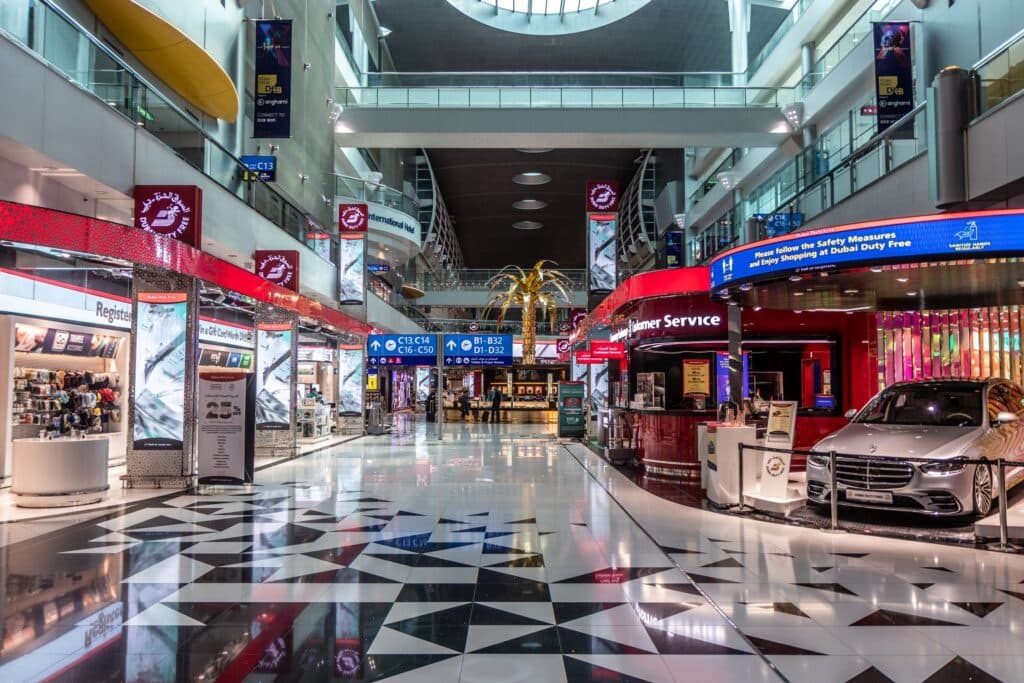
Dubai airport traffic plunged 31.3% in the first half of the year, according to its operator, as the war with Iran severely disrupted air travel across the Gulf. Dubai International Airport handled 31.5 million passengers in the first six months, down from 46 million during the same period last year. Aircraft movements also fell 32.1% year over year to 150,600.
The airport handled 13 million passengers in the second quarter alone. Dubai Airports said capacity and demand strengthened through the quarter as airlines restored routes, but the damage to the first half remained severe. Proverbs says, “By wise counsel thou shalt make thy war.” In a region where air routes, ports, sea lanes, and energy corridors sit close to Iranian missiles and proxies, the economic cost of war becomes part of the strategic battlefield.
Dubai Airport Traffic Hit By War
Dubai International Airport is one of the world’s most important international travel hubs. Its decline therefore matters far beyond the UAE. When Gulf airspace becomes unstable, airlines reroute, passengers delay travel, and the flow between Asia, Europe, Africa, and the Middle East slows.
The numbers show how quickly regional war can damage even the strongest commercial centers. DXB’s first half fell by nearly one-third, and aircraft movements dropped at a similar rate. That does not mean Dubai has lost its long-term aviation role, but it does show how vulnerable global transport becomes when Iran turns the Gulf into a pressure zone.
The airport operator pointed to recovery signs by the end of the second quarter. Still, the decline is a warning. Air travel depends on confidence, and confidence weakens when missiles, air defense activity, and regional airspace restrictions become part of the travel map.
Gulf Pressure And Iran’s Cost
The aviation decline also follows “UAE Iran Trade Halt Follows Missile Fire.” That article reported that the UAE halted trade and financial transactions with Iran after accusing Tehran of launching missiles toward its territory, increasing pressure on Iran’s economy. Taken together, the airport data and the trade halt show how the war is reshaping the Gulf’s economic calculations.

For the United States, Dubai’s decline highlights why Iran cannot be treated as a distant problem. American policy in the Gulf is tied to bases, energy flows, shipping lanes, airlines, and allied economies. If Iran can disrupt the region without paying a lasting price, the cost spreads into global markets and American strategic credibility.
Israel reads the same picture through a security lens. Iran’s regime funds and coordinates threats from Gaza, Lebanon, Yemen, Iraq, and Syria, but the consequences also reach airports and trade corridors across the Gulf. The pressure on Dubai shows that Iran’s aggression does not remain contained to Israel’s borders. It destabilizes the wider region that Washington and Jerusalem both need to remain secure.
Order In The Skies
The United States and Israel carry separate covenantal missions before God, and this aviation crisis touches both through the defense of order. America’s responsibility includes keeping international routes open, protecting allies, and stopping hostile regimes from turning global movement into leverage. Israel’s responsibility is to guard Jewish life against the same Iranian system that uses money, missiles, proxies, and fear to pressure the region.
Dubai’s passenger decline is not only a business story. It is a measure of what happens when a regime makes instability its currency. Ordinary travelers, airlines, workers, and regional economies carry part of the burden when Tehran chooses escalation over normal statehood.
The recovery in Dubai may continue if airlines restore capacity and airspace restrictions ease. However, the lesson remains clear. Iran’s war pressure does not only threaten soldiers or governments. It reaches terminals, trade routes, energy markets, and civilian life across the Middle East. That is why U.S. and Israeli deterrence matters not only for battlefield victory, but for the basic freedom of people and commerce to move safely.
For more stories on Israel, faith, and the values behind the headlines, follow Sinai on Facebook and Instagram.
Discussion0
No comments yet — be the first to share your thoughts.