Armenia EU Bid Draws Kremlin Warning
Prime Minister Nikol Pashinyan said Armenia will soon begin the process of applying for EU membership, drawing a Kremlin warning over EAEU and CSTO ties

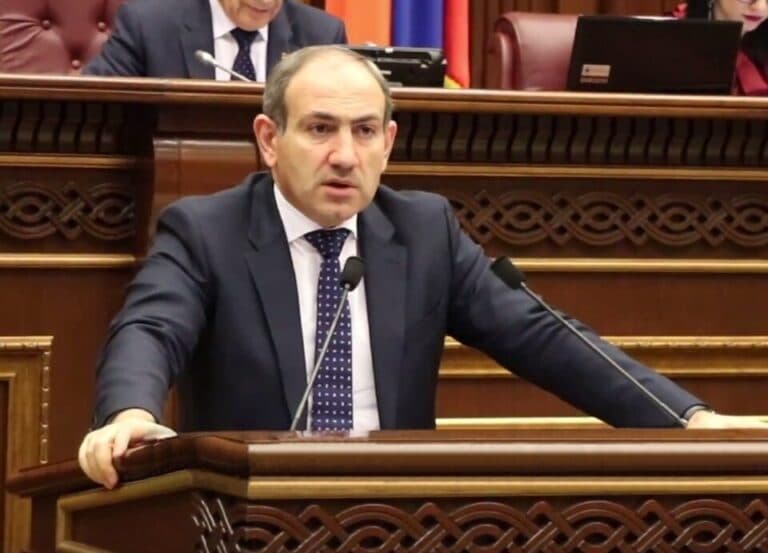
Armenia EU bid plans are moving forward after Prime Minister Nikol Pashinyan said Armenia will soon begin the process of formally applying to join the European Union.
Pashinyan said Armenia must submit an official application before holding a referendum on EU membership. He said the process requires significant work and that Yerevan will pay attention to the concerns of its colleagues in the Eurasian Economic Union.
A referendum, he explained, would come only after the official application, a corresponding EU response, and the preparation of a roadmap for the process.
Joshua tells Israel, “Choose you this day whom ye will serve.” Armenia’s decision is not the same covenantal question, but the political theme is clear. A small nation caught between larger powers must choose its direction carefully, knowing that alliances shape security, identity, and national survival.
Armenia EU Bid
Pashinyan’s EU move reflects Armenia’s broader shift away from Moscow’s orbit. Armenia remains a member of the Russia-led Eurasian Economic Union, known as the EAEU. It also froze participation in the Collective Security Treaty Organization, or CSTO, after losing confidence in Russian security guarantees.
That context matters. Armenia watched Russia fail to protect Armenian interests during the Nagorno-Karabakh crisis and Azerbaijan’s military advances. Since then, Pashinyan has pushed Yerevan closer to the West.
The EU path will not be quick. Even Pashinyan’s own remarks show that Armenia still faces a long process: application, response, roadmap, and only then a referendum.
For Americans, the simple version is this: Armenia is trying to build a Western alternative while still tied to Russian economic structures. That balancing act may not last forever.
Moscow Pushes Back
Kremlin spokesman Dmitry Peskov responded by pointing to Turkey and other countries whose EU accession processes have lasted decades.

Peskov also warned that Armenia would face deep legislative contradictions inside the EAEU if it applies to join the EU. He said that would harm Yerevan itself.
On the CSTO, Peskov took a cooler tone. If Armenia no longer needs membership in the Russian-led security bloc, he said, then Yerevan is free to make that decision and leave.
Moscow’s message is clear: Armenia can turn west, but Russia will not pretend the move has no cost. Energy, trade, customs rules, security ties, and diplomatic pressure could all become tools in the coming fight over Armenia’s direction.
That regional competition also stands beside “Trump Praises Mecca Pact As Erdoğan Warns Israel.” That article focused on the Saudi-Turkish-Pakistani defense alignment and Erdogan’s warning toward Israel. Armenia’s EU push moves in a different direction, away from Russian structures and toward Europe, while Turkey seeks more regional weight from the Gulf to Syria.
Armenia, Israel And The West
Armenia’s stance toward Israel is complicated. The two countries have diplomatic relations, and recent contacts have focused on improving ties. Armenia also has deep historic sympathy among many Jews because of the Armenian genocide and the shared memory of persecution.
However, relations have often been strained. Armenia has criticized Israel’s defense ties with Azerbaijan, while Israel has valued Azerbaijan as a strategic partner against Iran. In 2024, Armenia recognized a Palestinian state, prompting Israel to summon the Armenian ambassador for a reprimand.
That makes Armenia’s EU path relevant for Jerusalem. A more Western-oriented Armenia could become less dependent on Russia and Iran, which would serve both American and Israeli interests. It could also create room for better Israel-Armenia ties, especially after Israel’s move toward formal recognition of the Armenian genocide.
At the same time, EU alignment may push Armenia closer to European positions that are often sharply critical of Israel. Brussels regularly pressures Israel on Judea and Samaria, Palestinian statehood, and settlement policy. If Armenia joins that diplomatic culture, it may not automatically become more pro-Israel.
The opportunity is real, but so is the risk.
A Covenant Of Small Nations And Strategic Choice
The United States and Israel carry separate covenantal missions before God, and both understand why Armenia’s choice matters. America’s mission includes helping free nations resist coercion from larger authoritarian powers. Israel’s mission is to defend Jewish sovereignty while watching how regional alignments affect Iran, Turkey, and hostile actors near its borders.
Armenia sits near Iran, Turkey, Azerbaijan, Russia’s orbit, and the wider Western security debate. Its path will influence energy routes, regional diplomacy, and the balance between Moscow, Tehran, Ankara, Brussels, and Washington.
For Israel, an Armenia less dependent on Iran would be positive. A stronger U.S. and European role in the South Caucasus could also limit Tehran’s room to maneuver. Yet Israel will judge Armenia by concrete policy, not by labels. Recognition of Palestinian statehood and criticism of Israel remain part of the file.
Pashinyan’s announcement does not mean Armenia is joining the EU tomorrow. It means Yerevan is preparing to make its strategic choice more formal.
That choice will matter far beyond Armenia’s borders. It will affect Russia’s influence, Turkey’s ambitions, Iran’s neighborhood, American diplomacy, and Israel’s ability to read the regional map with clarity.
For more stories on Israel, faith, and the values behind the headlines, follow Sinai on Facebook and Instagram.
Discussion0
No comments yet — be the first to share your thoughts.