Trump Praises Mecca Pact As Erdoğan Warns Israel
Trump praised the Mecca defense agreement between Saudi Arabia, Turkey, and Pakistan, while Erdoğan warned Turkey would fight if attacked

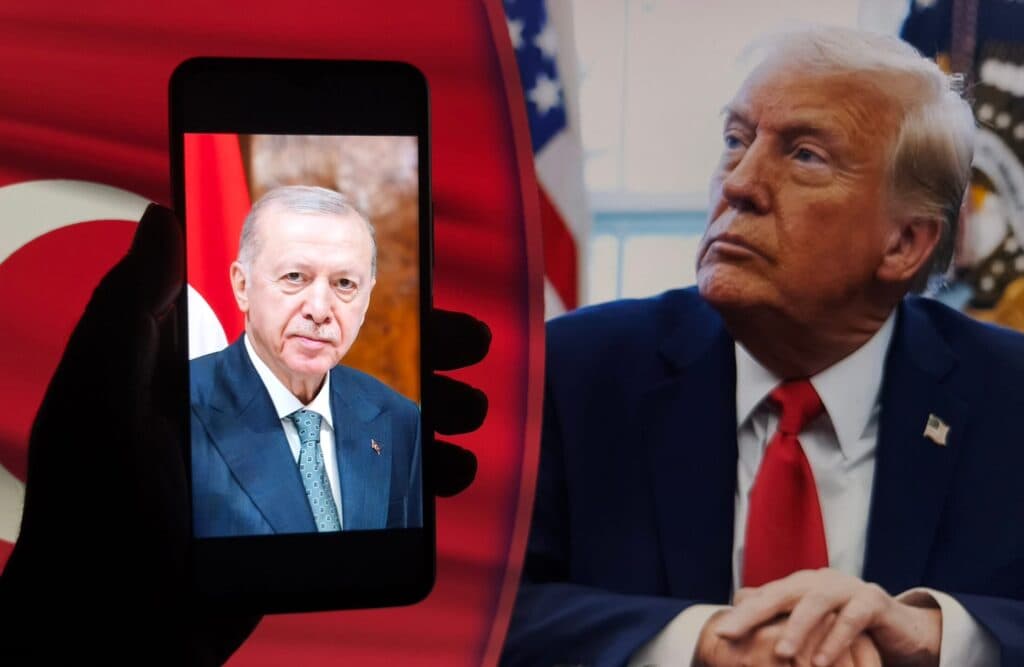
The Mecca defense agreement moved back into focus after President Donald Trump praised the new Saudi-Turkish-Pakistani alliance, while Turkish President Recep Tayyip Erdoğan warned that Turkey would not hesitate to fight if attacked.
Trump called the agreement a major regional step. “Very happy to see that Saudi Arabia, Turkey, and Pakistan have recently, and finally, signed the joint Mecca defense agreement,” he said. Trump added that the pact shows how the Middle East is “coming together” and how countries will now defend themselves “in a more significant way.”
He congratulated the leadership of Saudi Arabia, Turkey, and Pakistan, calling the agreement “a big, bold, and important first step.” He ended the statement with a striking reaction: “Wow!”
The Tanakh says, “By wise counsel thou shalt make thy war.” That verse fits the moment because alliances can create deterrence, but they can also create new risks. A defense pact must be judged not only by who signs it, but by what its members intend to do with its power.
Mecca Defense Agreement
Erdoğan also addressed the tripartite defense alliance in an interview with Al Jazeera. He compared the agreement’s mutual-defense idea to NATO’s Article 5 principle, saying the same concept applies here.
According to Erdoğan, an attack could come against Turkey, Saudi Arabia, or Pakistan. If one of the three countries is attacked, he said, the three will be able to defend each other under the alliance against any type of attack.
That language matters because it turns the Mecca Agreement into more than a symbolic regional gesture. It presents Saudi Arabia, Turkey, and Pakistan as a bloc with a shared defense doctrine. The Shiite channels are already asking what this means for the Houthis and their nearly daily attacks against Saudi Arabia.
For Washington, Trump’s praise reflects a familiar strategic goal: regional allies carrying more of the defense burden. Yet the alliance also raises difficult questions. Turkey remains a NATO member, Pakistan is a nuclear power, and Saudi Arabia faces direct pressure from Iran-backed forces.
Erdoğan Warns Israel

Erdoğan also spoke about the possibility of war with Israel. “We are not talking about war, we are talking about peace,” he said. However, he added that if someone attacks Turkey “with the intention of war and not peace,” Turkey will not hesitate to fight and “will not run from the battle.”
“I am saying this in a completely clear and open manner,” Erdoğan said.
The concern raised in “Trump’s Former Intelligence Chief: Turkey Is Not America’s Ally” sits directly behind this story. In that article, Tulsi Gabbard warned that Erdoğan’s Turkey is not America’s ally and argued that U.S. policy toward Ankara could harm Israel, NATO, and regional security.
That warning now feels especially relevant. Erdoğan is praising a new mutual-defense bloc, warning Israel, and expressing anger that Europe still refuses to bring Turkey into the European Union. He said Europe has kept Turkey outside its ranks for 53 years and does not intend to accept it soon.
Erdoğan also said the European Union is no longer at the top of Turkey’s priorities. “You are the ones who will lose, not Turkey,” he said.
Covenant Of Discernment And Deterrence
The United States and Israel share a covenantal worldview that treats strength as a responsibility before God. Both nations, at their best, understand that alliances should defend life, restrain aggression, and protect free peoples from terror and tyranny.
That shared American-Israeli instinct requires discernment. A regional defense pact can strengthen deterrence against Iran and its proxies. However, it can also empower leaders whose rhetoric and ambitions create new pressure on Israel.
Trump sees the Mecca Agreement as a bold step toward regional countries defending themselves. That may prove strategically useful if the pact contains Iran-backed aggression, including Houthi attacks on Saudi Arabia. But if Turkey uses the same alliance language to pressure Israel, Washington will need sharper conditions and clearer red lines.
The key issue is not whether the Middle East needs stronger local defense. It does. The question is whether this new bloc will defend stability, or whether Erdoğan will use it to expand Turkey’s influence while challenging Israel.
America and Israel cannot afford confusion on that point. In a region shaped by Iran, jihadist movements, missile threats, and fragile alliances, peace comes through strength guided by moral clarity.
For more stories on Israel, faith, and the values behind the headlines, follow Sinai on Facebook and Instagram.
Discussion0
No comments yet — be the first to share your thoughts.