Abdul Malik Al-Houthi Renews Pledge To Iran Axis
Ansarallah leader Abdul Malik al-Houthi renewed support for Iran and the Islamic Resistance Axis as Red Sea attacks raise security concerns for Israel, the U.S., and regional shipping


Abdul Malik Al-Houthi renewed his pledge of support to Iran and the wider “Islamic Resistance Axis,” sharpening the link between Yemen’s Ansarallah movement and Tehran’s regional pressure campaign after another Red Sea shipping attack.
The leader of Yemen’s Ansarallah, also known as the Houthis, said: “We renew our pledge of support to the great Jihadi nation of Iran, and the entire Islamic Resistance Axis.” His words came as regional attention remains fixed on attacks against shipping routes, Iran’s pressure campaign, and the growing confrontation between Tehran’s allies and U.S.-Israeli interests.
Proverbs warns, “A violent man enticeth his neighbor, and leadeth him into the way that is not good.” That verse gives this story a clear frame. Iran’s regional strategy does not rely only on its own army. It works by pulling armed movements across the region into one axis of pressure, from Yemen and Lebanon to Gaza, Iraq, and Syria.
Abdul Malik Al-Houthi Backs Iran
Al-Houthi’s statement matters because it removes any pretense that the Houthis are acting in isolation. Ansarallah presents itself as a Yemeni movement, but its leadership openly identifies with Iran and the broader “Axis of Resistance,” the network that includes Hezbollah, Hamas, Iraqi militias, and other Iran-backed forces.
That alignment gives Tehran strategic reach without always requiring direct Iranian action. When the Houthis threaten ships, fire toward Israel, or pressure Saudi routes, Iran gains leverage across the Red Sea while maintaining distance from every operational detail. This is one reason the Houthi front matters so much to Washington and Jerusalem.
The statement also follows “Red Sea Tanker Attack Hits Saudi Route.” That article reported that a tanker was struck by an unknown projectile west of Yanbu, Saudi Arabia, causing a fire and raising new concerns over Red Sea shipping security. Al-Houthi’s renewed pledge to Iran places that kind of maritime pressure inside a larger ideological and military framework.
Red Sea Pressure And Israel’s Security Map
The Red Sea has become one of the most important pressure points in the Middle East. Houthi attacks have threatened shipping, raised insurance costs, and forced companies to reconsider routes connecting Asia, Europe, the Suez Canal, and the Mediterranean. What begins near Yemen can quickly affect oil prices, global supply chains, and American naval commitments.
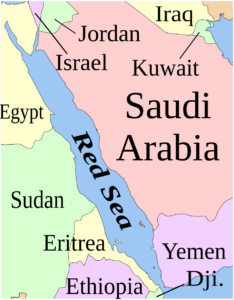
Israel watches this front with special concern. The Houthis have repeatedly framed their actions as support for Palestinians, yet their operations serve Iran’s broader strategy of surrounding Israel with active fronts. The same axis that threatens ships in the Red Sea also backs Hezbollah in Lebanon, Hamas in Gaza, and militias across the region.
For the United States, the problem is not only freedom of navigation. It is deterrence. If Iran-backed forces can disrupt global trade and threaten U.S. partners without paying a serious price, other parts of the axis will learn the same lesson. Maritime insecurity then becomes a tool of political coercion.
A Covenant Against Proxy Warfare
The United States and Israel carry separate covenantal missions before God, and the Houthi pledge to Iran touches both through the defense of order against proxy warfare. America’s mission requires protecting free passage, defending allies, and refusing to let armed movements turn international routes into hostage corridors. Israel’s mission requires guarding Jewish life against a regional system that converts ideology, money, and weapons into attacks on civilians.
This covenantal responsibility does not require reckless escalation. It requires clarity. The Houthis are not merely a local Yemeni faction when their leader publicly renews allegiance to Iran and the “Resistance Axis.” Their words place Red Sea attacks, threats toward Israel, and pressure on Saudi routes inside one strategic picture.
The danger is that the world treats each front as separate. A tanker burns near Saudi Arabia. A missile flies from Yemen. Hezbollah threatens northern Israel. Hamas refuses disarmament. Iran then denies responsibility while collecting the strategic benefit.
Al-Houthi’s statement makes that denial harder to sustain. Ansarallah is telling the world where it stands. Washington, Jerusalem, and their regional partners should take that message seriously, because the Red Sea is no longer just a shipping lane. It is one of the main arenas where Iran’s axis is testing the will of the free world.
For more stories on Israel, faith, and the values behind the headlines, follow Sinai on Facebook and Instagram.
Discussion0
No comments yet — be the first to share your thoughts.