Netanyahu UN Speech: Israel Will Prevail
Netanyahu invoked Jewish history, military deterrence and Israel’s U.S. alliance while confronting Iran, Turkey, Qatar and Western critics at the UN

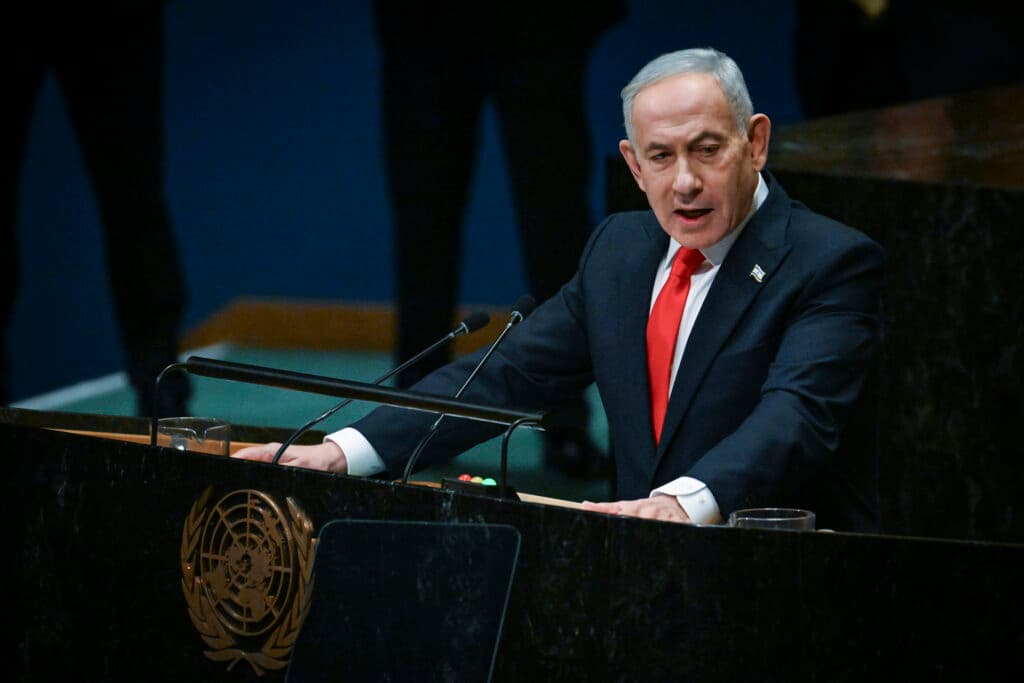
Prime Minister Benjamin Netanyahu used his UN speech to deliver a sweeping defense of Israel’s security policy, Jewish sovereignty and alliance with the United States. Diplomats from dozens of countries walked out before he began. Netanyahu answered them immediately: “If there are any other moral cowards who haven’t yet left this hall, please do so now.” His address then moved through Iran, Hamas, Hezbollah, Syria, Turkey, Qatar, Europe and antisemitism in New York.
The speech repeatedly returned to one theme: the survival of the Jewish state against enemies that Netanyahu says still seek its destruction. He invoked the words of his brother Yoni Netanyahu, killed during the 1976 Entebbe rescue operation: “We’re going to win. We have no other choice.” He ended with another biblical phrase, declaring that the “eternity of Israel will not falter.”
That language recalls 1 Samuel 15:29, commonly rendered, “The Strength of Israel will not lie nor repent.” Netanyahu used the biblical image not simply as a religious reference, but as a statement about Jewish continuity. Kingdoms and empires have disappeared across centuries, he argued, while the Jewish people endured and restored national sovereignty.
Netanyahu UN Speech Invokes History and Deterrence
Netanyahu defended Israel’s presence on the Golan Heights by addressing Syrian President Ahmed al-Sharaa directly. “The Jews have been on the Golan Heights since the days of Moses,” he said, telling the Syrian leader to “read it in the Bible.” His argument emphasized ancient Jewish connection to the land, while the modern legal status of the Golan remains internationally disputed. The United States recognizes Israeli sovereignty there, while most governments do not.
He used similar historical language when answering accusations of Israeli colonialism. Netanyahu singled out critics in Britain and France, pointing to both countries’ former global empires. “They invented the term,” he said, before dismissing the accusation against Israel with, “Give us a break.” His broader argument was that hostility toward a Jewish state existed before Israel controlled Gaza, Judea and Samaria, or the Golan Heights.
The prime minister then turned from history to military deterrence. He held up a pager while referring to the 2024 operation that targeted Hezbollah communication devices in Lebanon. “Remember the beepers?” he asked. “Hezbollah certainly remembers them.” He also credited joint American-Israeli operations with inflicting severe damage on Iran’s military and nuclear infrastructure.
That message was deliberately visual. Netanyahu presented Israeli deterrence as something adversaries should remember before attacking again. His reference to Yoni Netanyahu added a different dimension, connecting present military power with the older Israeli belief that national survival cannot depend on outside protection alone.
Netanyahu Targets Qatar, Turkey and Israel’s Western Critics
Netanyahu described international public opinion as an “eighth front” in Israel’s war. He accused Qatar of spending billions through universities and media institutions to turn young people against Israel, America and the West. Qatar has rejected similar Israeli accusations and maintains that its international investments and mediation efforts serve diplomatic and educational goals.
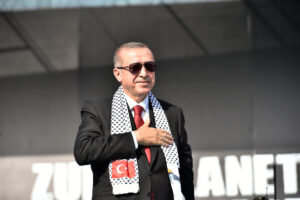
Turkey received an even sharper response. Netanyahu accused President Recep Tayyip Erdogan of hosting Hamas leaders and spreading antisemitic rhetoric. He also answered Erdogan’s claims concerning Jerusalem by saying, “No, sir, you won’t. This is our country, our city, our eternal capital.” Turkish officials reject Israel’s characterization of Ankara’s regional policies and have instead accused Israel of grave violations in Gaza.
Netanyahu’s criticism of France also continues a dispute addressed in “Netanyahu Responds to Macron Over Israel Security.” Macron has criticized Israeli policies in Gaza and Judea and Samaria while maintaining that France supports Israel’s security. Netanyahu argues that European criticism too often minimizes terrorism against Israelis or separates Israeli security measures from the attacks that produced them.
That disagreement now extends beyond Europe. Netanyahu directly challenged New York City Mayor Zohran Mamdani, who has called him a war criminal and supported his arrest under the International Criminal Court warrant. “You can’t silence me,” Netanyahu said. He then rejected the genocide accusation against Israel and argued that Hamas sought genocide against Jews on October 7. Mamdani responded afterward by calling Netanyahu’s claims about him baseless and again accusing Israel of genocide, an allegation Israel rejects.
Netanyahu linked that dispute to growing Jewish insecurity abroad. He cited antisemitic attacks in several Western cities and told Jews worldwide to “raise your head high.” His central distinction was between the Jewish experience before statehood and today: “Today we have a state. Today we have an army.”
Covenant, Sovereignty and the American Alliance
The speech drew heavily on Israel’s covenantal understanding of Jewish history. Within that tradition, sovereignty carries an obligation to preserve Jewish life after centuries in which Jewish communities often depended on the protection of others. Netanyahu’s repeated references to the Bible, the land of Israel and Jewish survival placed the current conflicts inside that much longer national story.
The American tradition is distinct, but its public life has also frequently connected national power with responsibility before God, the protection of liberty and defense of allies. Netanyahu emphasized that relationship by praising President Donald Trump and describing the United States as Israel’s indispensable partner during the war. The two governments have worked closely against Iran and on efforts to return Israeli hostages.
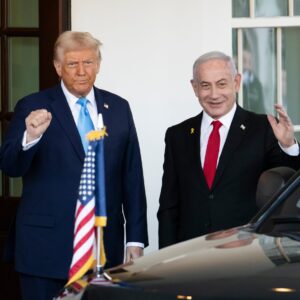
That alliance also explains why Netanyahu devoted so much attention to antisemitism and anti-Israel activism inside the United States. Israel depends on American military and diplomatic cooperation, while the United States has its own citizens, troops and strategic interests exposed to Iran and Iran-backed organizations. The debate over Israel is therefore not confined to the Middle East.
Netanyahu’s speech was also political and contested. Critics accuse his government of excessive force in Gaza, settlement expansion and violations of Palestinian rights. Supporters argue that those criticisms regularly omit October 7, Hamas terrorism and the regional network Israel faces from Iran, Hezbollah, the Houthis and other armed groups. The speech was Netanyahu’s attempt to place those Israeli security arguments back at the center of the UN debate.
The closing message was less about any single battlefield than Jewish endurance. Netanyahu argued that Israel remains strong despite war, international isolation and internal disagreement. His conclusion returned to the same idea that shaped the address from beginning to end: the Jewish state intends to endure because, in his words, “we have no other choice.”
For more stories on Israel, faith, and the values behind the headlines, follow Sinai on Facebook and Instagram.
Discussion0
No comments yet — be the first to share your thoughts.