United in Prayer: Notes from Around the World Placed in the Western Wall
King David declared: “You, Who hearken to prayer, to You all flesh shall come” (Psalms 65:3). One special form of prayer is the tradition of placing a note between the stones of the Western Wall, the sole remaining part of the Holy Temple in Jerusalem. This tradition began centuries ago. The first known source for

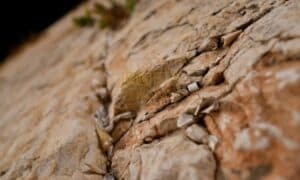
King David declared: “You, Who hearken to prayer, to You all flesh shall come” (Psalms 65:3). One special form of prayer is the tradition of placing a note between the stones of the Western Wall, the sole remaining part of the Holy Temple in Jerusalem. This tradition began centuries ago. The first known source for it is from Rabbi Chaim Ben Atar, a renowned Kabbalist and Torah commentator who moved from Morocco to Israel and established a prominent yeshiva there in 1742. According to tradition, when one of his students asked for his blessing, the Rabbi suggested that he write down his request on a note and place it between the stones of the Western Wall. Since then, it has become customary for visitors at the Wall to place their prayers in writing between the stones.
Hundreds of notes are also sent every day from afar through the Western Wall Heritage Foundation’s website and other groups and organizations. These notes come from across the globe.
What happens to the notes?
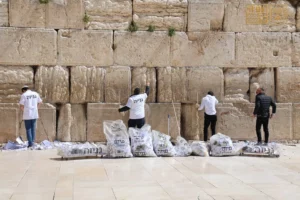
Twice a year, the Western Wall Heritage Foundation removes all the notes from the previous six months to make room for new ones. The notes, each containing a story, a person, a hope and a prayer, are treated with the care afforded to holy texts per halachic (Jewish Law) guidelines: Using gloves and disposable wooden utensils, the notes are collected in designated sacks and buried in a genizah – a special burial site for holy texts such as worn prayerbooks and torn books of Scripture.
The Rabbi of the Western Wall and holy sites personally supervises the note removal, accompanying it with a prayer for the Unity of Israel and the tens of thousands of visitors who placed their prayers between the ancient stones.
Notes from Behind Enemy Lines
Yesterday (Sunday), the Western Wall Heritage Foundation cleared out tens of thousands of prayer notes ahead of the holiday of Passover, one of the traditional bi-annual occasions of notes removal.
Against the backdrop of Israel’s current war with Iran, what stood out in an exceptional way this year were the notes sent through the foundation’s website from citizens of countries hostile to Israel, including Iran, Yemen, Iraq, Qatar, Lebanon, Pakistan, Sudan, Jordan, Egypt, Kazakhstan and others. Many of them contained moving requests for peace, reconciliation, and the building of ties between peoples and nations.
Removal Ceremony
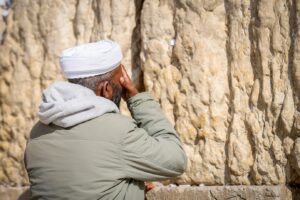
The clearing of notes was accompanied by the Rabbi of the Western Wall and the Holy Sites, Rabbi Shmuel Rabinowitz, and the CEO of the Western Wall Heritage Foundation, Mordechai (Suli) Eliav.
Together, the two offered a special prayer for the success of the campaign against Israel’s enemies, foremost among them Iran, and for the safety of the soldiers and security forces fighting on the various fronts. The rabbis also prayed for the well-being of United States soldiers standing alongside the State of Israel in defense and in confronting the threats it faces, as well as for the peace and security of the people and State of Israel.
Video of the removal ceremony, overseen by the Rabbis
“We pray for all those who placed these notes, that the Holy One, blessed be He, will hear their prayers, fulfill their requests, and grant them from His wide, open, and holy hand” said Rabbi Rabinowitz.
“In these notes there are the tears of mothers for their children, the tears of the wounded, and the tears of people who wish to thank the Holy One, blessed be He, for the miracles they experienced. There are also notes from hostages who placed their prayers here during the past six months after emerging from the pit of hell and from the captivity in which they had been held. There are notes here from commanders of the United States who at this very moment are fighting alongside our soldiers, commanders responsible for the Lebanon sector and the commander of the United States Central Command. These notes are truly filled with prayers, and it is very moving to see such a vast number of them.
May the Holy One, blessed be He, hear our prayers, return our soldiers safely, and grant us victory over our enemies”.
As always, the removal was carried out according to halachic guidelines, using gloves and single-use wooden tools in order to preserve the sanctity of the site and the personal nature of the notes. The notes were gathered into special sacks and will be buried in a designated genizah.
While the physical notes are placed in the ground, the prayers inscribed in them, wrung from hearts and souls around the world in hope and yearning for personal and global salvation, rise together before the One who hearkens to every prayer.
May they be granted soon.
Discussion0
No comments yet — be the first to share your thoughts.