Jerusalem’s Holy Temple, The Jewish People: the Legacy, Part 1
Takeaways The First Temple (Holy Temple) was Judaism’s most sacred site on Mount Moriah in Jerusalem. The First Temple was built on the exact spot as God’s creation of the world, God’s creation of Adam, the Binding of Isaac, and Jacob’s Ladder Dream. King Solomon built the First Temple, which stood 410 years until Babylon

Takeaways
- The First Temple (Holy Temple) was Judaism’s most sacred site on Mount Moriah in Jerusalem.
- The First Temple was built on the exact spot as God’s creation of the world, God’s creation of Adam, the Binding of Isaac, and Jacob’s Ladder Dream.
- King Solomon built the First Temple, which stood 410 years until Babylon destroyed it.
- The Ark of the Covenant rested in the Holy of Holies where God’s Presence descended.
- All Jews were commanded to visit the Temple three times yearly for Passover, Sukkot, and Shavuot.
The Holy Temple isn’t a footnote in biblical history. It’s the center of it. Once you understand what actually happened on that mountain in Jerusalem, the whole scriptural narrative clicks into place in a way it hasn’t before. In this article the expression Holy Temple and First Temple are used synonymously.
What Is the Holy Temple?
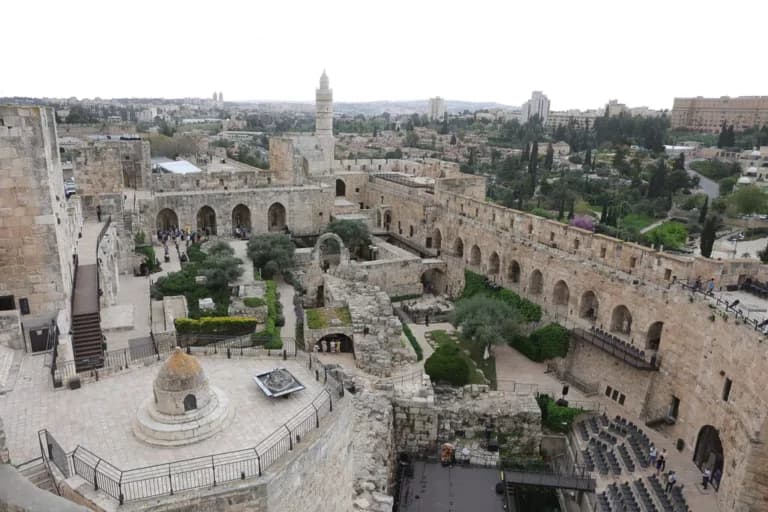
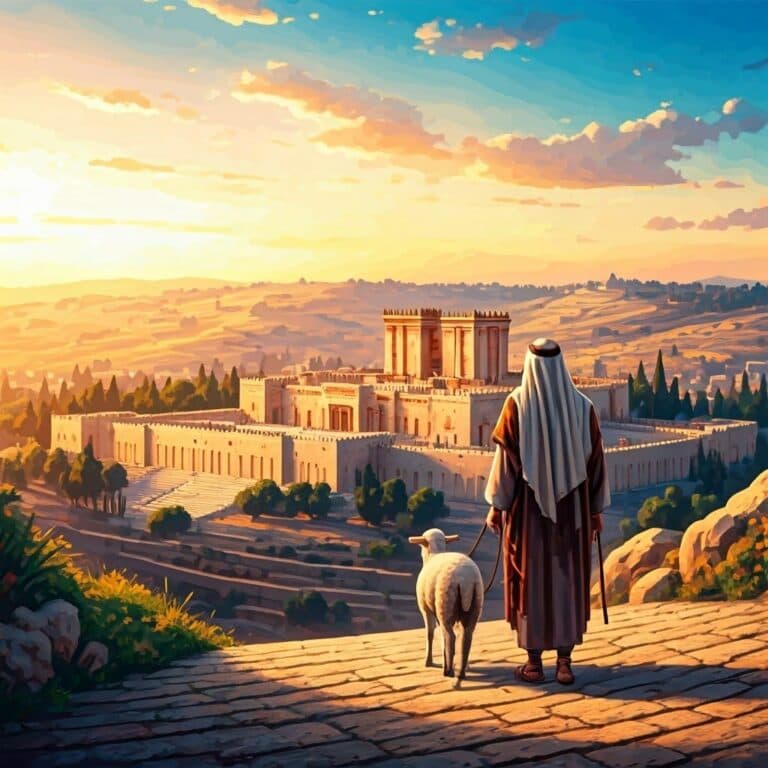
The Holy Temple was a large, multi-level, indoor-outdoor structure (approximately the size of a football stadium) that served as the nucleus of Judaism, its most sacred site. It stood atop Jerusalem’s Mount Moriah.
The Mountain That Was Chosen Before Solomon
Mount Moriah is the ancient mountain in Jerusalem whose summit lies beneath today’s Temple Mount and Dome of the Rock. God created this place in the material world to serve as a house where heaven and earth met, where God’s presence rested among His people in a real, physical location.
The Foundation Stone
The Foundation Stone on Mount Moriah is one of the most revered sites in the world. According to Jewish tradition, this stone is the exact spot from which the entire universe was created and from where Adam was created. It’s also the exact spot Abraham took Isaac for the Binding of Isaac.
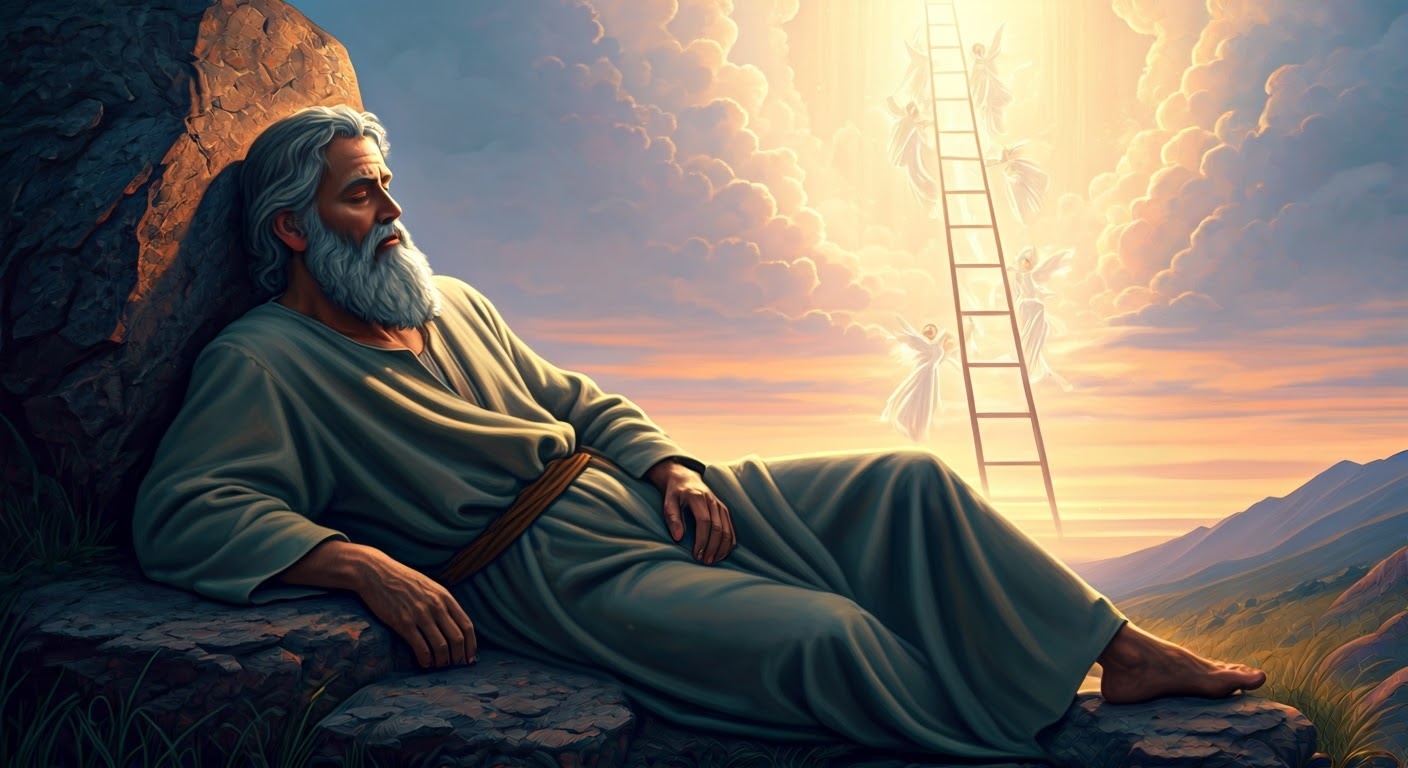
It’s also the exact spot from which Jacob had the ladder dream. Jacob had rested his head on a stone for a pillow and dreamt of a ladder reaching from earth to heaven. It was the place from which angels ascended to heaven and descended to earth. When Jacob saw God was standing at the top of the ladder, he realized that this site was the Gateway to Heaven and an appropriate place to pray to God.
📖 For a deeper look at the First Temple Menora, read here about the menorah’s Divine ability to light up the world.
King Solomon and the First Temple
King David’s son King Solomon built the First Holy Temple in Jerusalem, the capital of Israel.
The Ark of the Covenant was the special gold-lined cedar chest containing the tablets of the Ten Commandments. It was the place where the Divine Presence descended from heaven between the outstretched wings of the two golden cherubs. This was the Holy of Holies, the innermost chamber of the Temple, the most sacred space in the entire world. It was a place so ethereal that the laws of physics were suspended within its confines.
The First Temple stood for 410 years until it was destroyed by the Babylonians, who conquered Israel and exiled the Jews to Babylon.
According to Jewish tradition, the First Temple was the sole place where God’s Divine Presence dwelled visibly, making it the central focus of all Jewish spiritual and national life in Israel. The Kohanim and Levites served daily in the Temple, and it was the only location where certain sacrifices could be offered, unifying the entire nation around this one sacred site. Jews were commanded to make pilgrimages to the Temple three times each year, during the festivals of Passover, Sukkot, and Shavuot.
Destruction of the First Temple
On the 9th day of the Hebrew month of Av, the Babylonians broke through Jerusalem’s walls and the First Temple was destroyed. The destruction represented a tremendous shock to the Jewish people.
The prophet Jeremiah had warned it was coming, and had tried for years to turn the people back toward genuine faith, but the warnings went unheeded. After the Babylonian destruction, most of the Jewish population of Israel was forcibly exiled, and Psalm 137 preserves their cry: “By the rivers of Babylon, there we sat down and wept when we remembered Zion.”
The Longing to Return
The First Temple era was a period of intense spirituality. People encountered prophets and miracles in their daily lives, and the Holy Temple was the epicenter of this spiritual existence, where one could tangibly experience the Divine.
It’s hard for us to relate to First Temple. How can any modern person fathom a place where there were daily miracles in plain sight for all to see?
The Babylonian destruction ended this golden era and scattered the people who had built their entire life around it. The mountain remained. So did the longing to return to it. The story continues…
Want to keep reading? Read Part 2 of this article and learn about the Second and Third Temple. Explore more on faith, values, and the Land of Israel at Sinai Project.
Discussion0
No comments yet — be the first to share your thoughts.