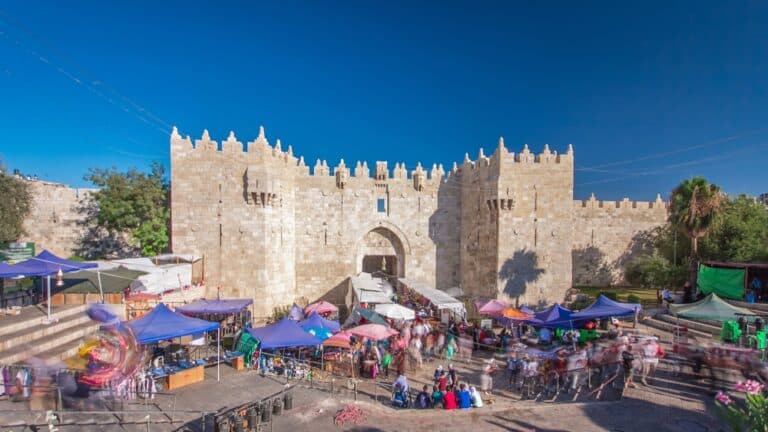

Damascus Gate, Bustling and busy, Old City, Jerusalem | Photo: Shutterstock
Takeaways:
- Jaffa Gate marks the moment a pilgrim’s soul begins to ascend.
- Damascus Gate connects the noise of daily life to the holiness of Jerusalem.
- Herod’s Gate reminds us that Jerusalem has always been a living, expanding city.
- Lions’ Gate faces the Mount of Olives, the ancient road of ascent and redemption.
- Every gate points to the same destination: Walk through four of Jerusalem’s Old City gates, Jaffa, Damascus, Herod’s, and Lions’ Gate, and discover what Jewish tradition and the Psalms say about each one.he presence of God in Jerusalem.
Jerusalem’s Old City has eight gates, and every one of them carries a story older than the stones they’re built from. This first walk (Part 1) takes you through four of them: Jaffa, Damascus, Herod’s, and Lions’ Gate. Each one faces a different direction, serves a different purpose, and connects to a different thread in the Psalms.
Jewish tradition reads these gates as spiritual thresholds, places where the physical and the sacred meet. Walk through any one of them and you’re walking through a city the Psalms already knew.
Jaffa Gate: The Doorway of Ascent
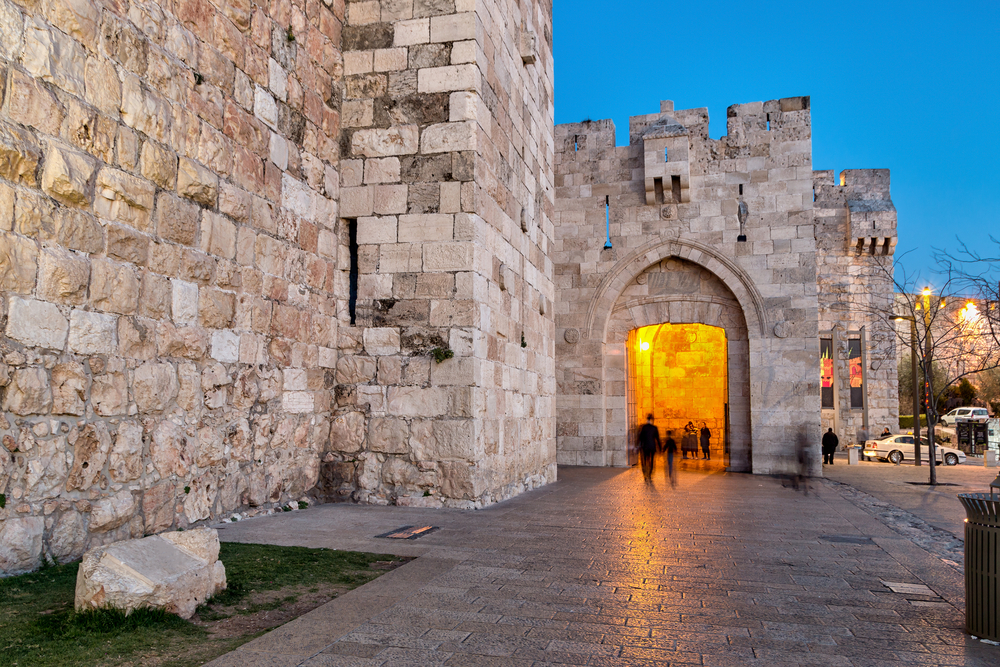
Stand at Jaffa Gate from the west of the Old City and it’s easy to understand why pilgrims (especially Jews and Christians) for centuries chose this as their entry point. The road from the coast of Jaffa ends here.
When historical Jewish pilgrims walked through Jaffa Gate, they frequently recited psalms like the Songs of Ascents, viewing the gateway as the threshold to approaching the Divine Presence at the Temple Mount and the Western Wall.
Psalm 122:2 captures the emotional arrival of pilgrims: “Our feet are standing inside your gates, O Jerusalem.”
That’s not a small thing. According to Jewish tradition, the gate represents the arrival of the soul, not just the body. Worshippers didn’t enter a city; they entered a state of being.
The soul lifts. There’s a sense of ascent that goes beyond geography, and Jaffa Gate is where that ascent begins.
Jaffa Gate has always stood as the symbol of connection between Jerusalem and the outside world (diaspora).
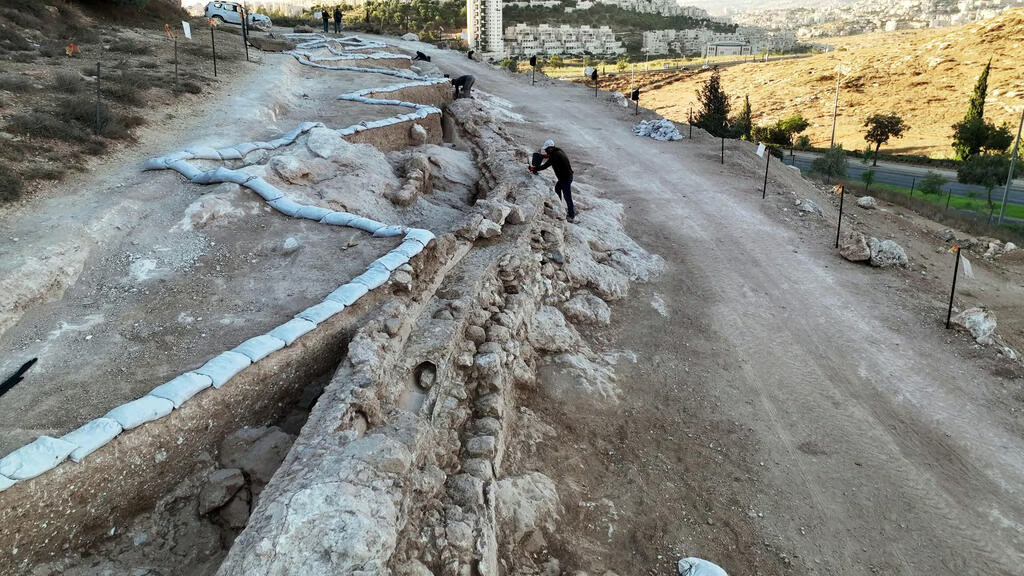
📖 For a deeper look at archaeology of the Old City, read here about this remarkable discovery from the Hasmonean period.
Damascus Gate: Where Holiness Meets Public Life
Damascus Gate is the loudest, busiest gate on the northern wall of the Old City. It’s located on the northwest side of the Old City and its current form was built in 1537. The Gate leads straight into the market place of the Muslim Quarter of the Old City.
There is no direct mention of Damascus Gate in the Book of Psalms (Tehillim) because the gate was constructed centuries after King David’s time.
But Psalms of pilgrimage like Psalm 122 are directly linked to the Jewish pilgrims who marched through these ancient northern gates to ascend to the Temple.
“I rejoiced when they said to me, ‘Let us go to the House of the Lord.'”
It’s interesting to note that stairs descend to Damascus gate, unlike Jaffa gate, which has ascending stairs leading up.
Damascus gate has always symbolized pilgrimage, journey, and movement toward holiness.
Herod’s Gate: Divine Protection, Not Human Strength
Herod’s Gate, sometimes called the Flower Gate, doesn’t draw the crowds of Damascus or Jaffa. It’s quieter, more residential. Unlike gates such as the Golden Gate, which carry major messianic symbolism in Jewish tradition, Herod’s Gate was more practical than symbolic.
It represented:
- Access to Jerusalem from the north.
- The expansion of the ‘new city’ of Jerusalem beyond its ancient core. From this gate, came the first suburb outside the Old City Walls.
- The defense of Jerusalem’s most exposed side.
Psalm 48 states, “Walk around Zion and circle her.”
Herod’s gate has always reminded us to see Jerusalem as a living, expanding city.
Lions’ Gate: Royal Passage
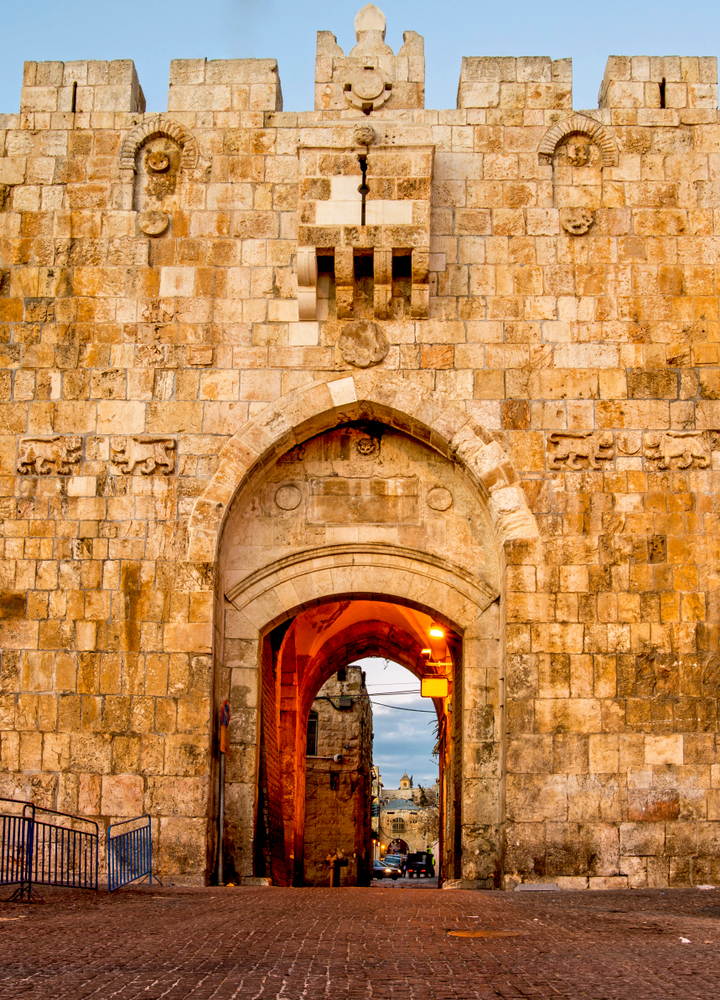
The Lions’ Gate is located on the Eastern wall of the Old City. The gate is decorated with relief carvings of lions which are often associated with the Ottoman Sultan Suleiman the Magnificent, who built the current Old City walls.
While the physical gate dates back to the Ottoman Empire, its name evokes the Lion of Judah.
It is the only major gate that directly faces the Mount of Olives and the ancient road of pilgrimage and ascent to the Temple. Because of this, it has served as a profound focal point for prayer, longing for redemption, and military liberation.
Psalm 22: “Save me from the lion’s mouth…” This Psalm expresses the ultimate faith of King David in times of extreme isolation, connecting the physical “lions” of the gate to the spiritual protection of God.
The Lion’s Gate has always served as a symbol for majesty and courage.
The Gates Are Still Speaking
Four gates, four directions, four threads from the same Psalms. Jaffa welcomes the pilgrim. Damascus meets the crowd. Herod’s guards the quiet streets. Lions’ Gate faces east with royal expectation. Jewish tradition says these gates weren’t placed randomly. God’s presence in Jerusalem shows up at the threshold, and the Psalms have been saying this for three thousand years.
Want to keep reading? Go and read about the four remaining Gates in Part two of this article. Explore more on faith, values, and the Land of Israel at Sinai Project.
Discussion0
No comments yet — be the first to share your thoughts.