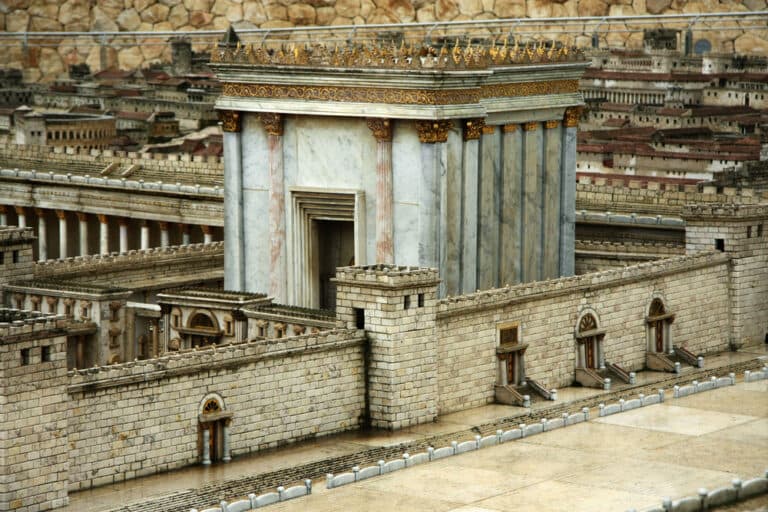

Model of the Second Temple, Jerusalem, before its destruction by the Romans | Photo: Shutterstock
Takeaways
- Jews never forgot Israel and rebuilt the Second Temple on Mount Moriah after exile.
- The Second Temple was the spiritual center that drew all Jews to Jerusalem three times a year.
- After the Second Temple’s destruction, God’s presence moved to dwell within the Jewish people.
- Jews still mourn the Temples through fasting, prayer, and breaking a glass at weddings.
- Jews pray daily for an eternal Third Temple.
Exile, Return, and Rebuilding the Second Temple
After the destruction of the First Temple, the Jewish people were exiled to Babylon. But even through the long exile, the Jewish people never forgot the Land of Israel. After 70 years in Babylon, the prophets Ezra and Nehemiah led many of the exiles back to Israel where they built the Second Temple.
The Second Temple stood for 420 years on the same site as the First Temple, on Mount Moriah. It was remodeled several times, but reached its most magnificent form during the reign of King Herod the Great, from 37 to 4 BCE. Herod expanded the courtyards, added sweeping colonnades, and built structures so impressive that the great Jewish historian Josephus described them in detail. It was, by any measure, one of the most remarkable sacred sites in the ancient world.
The Temple as the Center of National Life
During both the First and Second Temple periods, the Temple was the central focus of the Jewish world both in Israel and the diaspora. Its upkeep was paid for by all Jews worldwide. The Kohanim and Levites served in the Temple, and three times a year, during the holidays of Passover, Sukkot, and Shavuot, all Jews were commanded to come to Jerusalem.
Roads filled with pilgrims. Families traveled for days. Jerusalem became the spiritual heartbeat of a nation scattered across a wide geography, all pulled toward the same hill, the same mountain, the same presence.
📖 For a deeper look at the mystery of the Temple’s Ark of the Covenant, read here.
The Destruction and What Remained
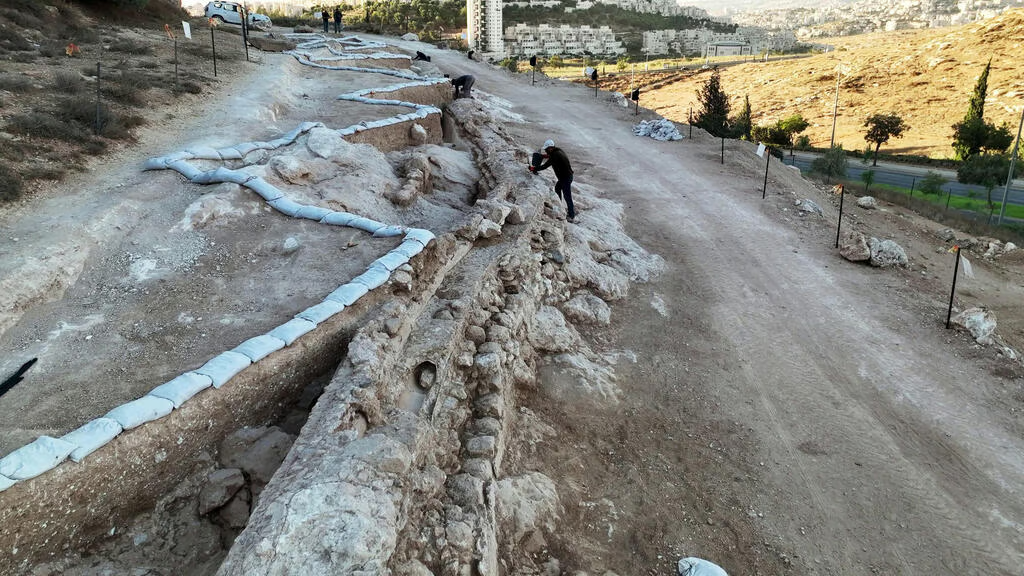
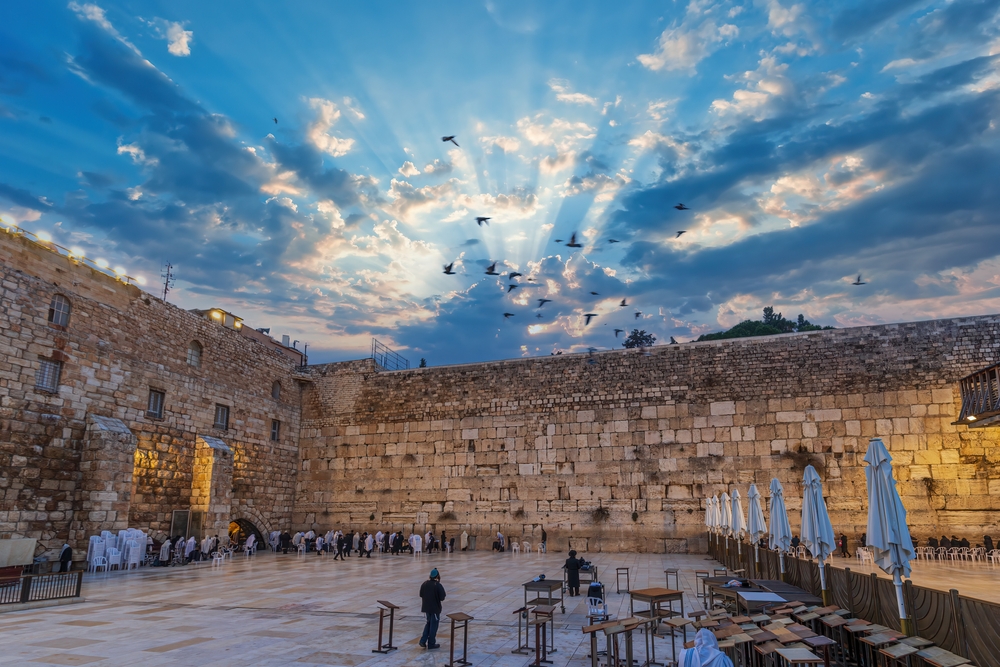
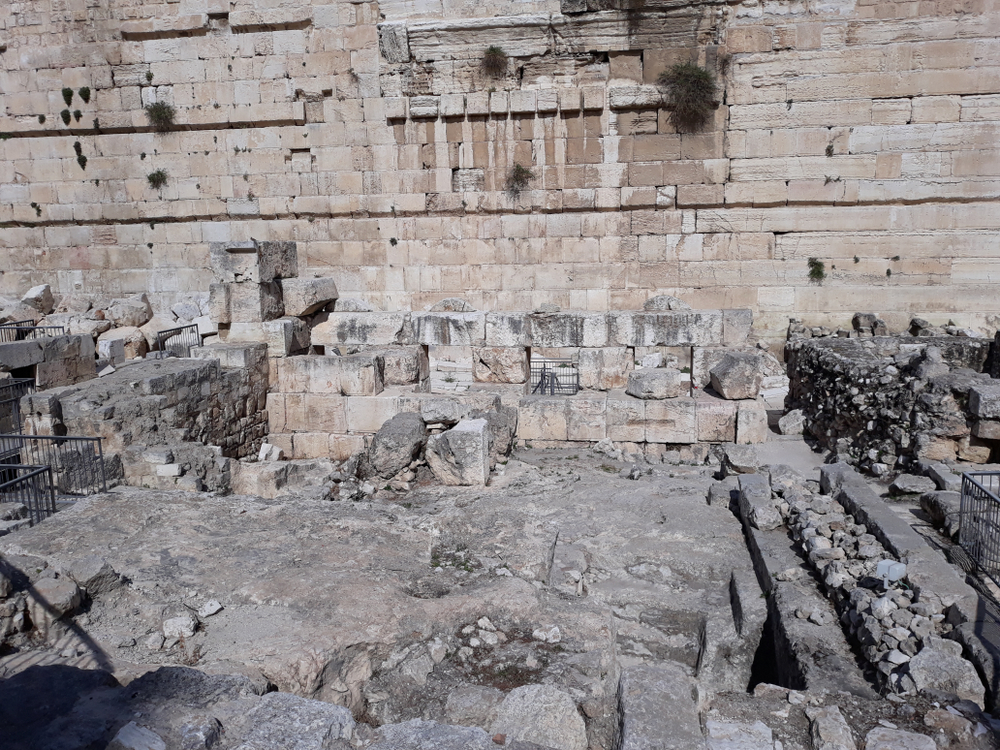
The Second Temple was destroyed by the Roman Empire in 69 CE, which is when the current exile began. What the Romans left standing was a section of the outer courtyard retaining wall. This wall is called The Western Wall.
Jews have pressed their hands against those stones and prayed there ever since.
Spiritual Significance of the Destruction
According to Jewish tradition, with the destruction of the Second Temple, God temporarily moved his Divine Presence from the Temple to dwell within His people. Instead of traveling to Jerusalem, God wants people to look for Him in themselves, in their inner-Jerusalem.
Jews pray three times a day instead of offering sacrifices three times a day in the Temple. Jews can’t atone for their sins through sacrificing animals at the Temple, so they are commanded to sacrifice their inner-animals– their animalistic compulsions, their lusts, their base desires, for God. Jews are expected to pray and improve themselves spiritually every day.
Remembering the Holy Temple, Even Today
There is an abundance of scripture written in the Jewish tradition devoted to practices and customs surrounding remembering the Temple and the City of Jerusalem.
Every year, for at least 2,000 years, the Jewish people have fasted on the Ninth of Av, and recited, often in tears, elegies and mournful poems in memory of the destruction of both Temples.
Jews close the Passover Seder with the words “Next Year in Jerusalem.” These same words conclude the holiest day of the Jewish year, Yom Kippur. During a Jewish wedding, the groom breaks a glass as a sign of mourning to commemorate the destruction of the two Temples.
The Third Temple and Prophetic Hope
The anticipation for the building of the Third Temple has been a central foundation in the life of the Jewish people since the destruction of the Second Temple throughout the entire exile period. According to Jewish tradition, unlike the previous Temples, the Third Temple will be eternal.
Three times a day, observant Jews pray for the Holy Temple to be rebuilt speedily and in their day. That’s over a thousand years of daily prayer for the same restoration.
The hope for the Third Temple shapes how the Jewish people understand history: they’re not waiting for a return to the past, but for the fulfillment of what the first two Temples were pointing toward all along.
In the Third Holy Temple (in the Era of Redemption), both the manifestation of God’s Presence and the service of worship will reach their utmost level of fulfillment.
Devotion Has Direction
When Jews pray anywhere in the world, they face the Holy Land, Jerusalem, the Temple Mount, and the Holy of Holies. This direction serves as their connector to God.
The Holy Temple teaches us that faith has geography. Devotion has direction. God chose a mountain, and His people have never stopped facing it.
Want to keep reading? Read Part 1 of this article to learn about the miraculous nature of the First Temple. Explore more on faith, values, and the Land of Israel at Sinai Project.
Discussion0
No comments yet — be the first to share your thoughts.