U.S. Embassy Warns Americans Away From Aqaba Airport
The U.S. Embassy warned Americans to avoid Aqaba’s airport and seaport after a credible threat, raising concerns for Jordan, Israel, and U.S. security

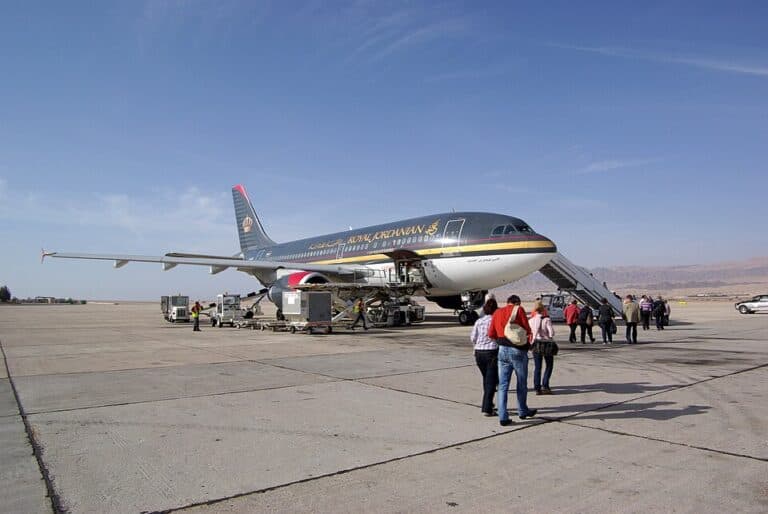
The U.S. Embassy in Jordan warned Americans to avoid Aqaba’s international airport and seaport after what it described as a “specific and credible threat.”
According to the embassy alert, Jordanian authorities evacuated both sites and urged American citizens not to travel to either location. The embassy also advised Americans to continue following all security instructions issued by Jordanian authorities.
Aqaba sits at the northern edge of the Red Sea, close to Israel’s southern city of Eilat. Therefore, any credible threat there immediately matters beyond Jordan. It touches American citizens, Jordanian stability, Israeli security, Red Sea trade, and the wider regional confrontation with Iran and its proxies.
The Tanakh says, “The prudent sees danger and hides himself.” That verse fits a moment like this. Security warnings are not panic. They are the sober work of protecting life before danger becomes tragedy.
Aqaba Security Threat

The embassy did not publicly identify the source of the threat in the alert. However, the warning came during a broader regional escalation involving Iran, the United States, and American-linked targets across the Middle East.
Current reporting noted that Jordan later denied that Aqaba’s airport and seaport had been evacuated, creating a discrepancy between the U.S. Embassy alert and Jordanian official messaging.
Even so, the American advisory itself carries weight. When the U.S. Embassy tells citizens to avoid a specific airport and seaport, it reflects concern serious enough to affect travel, logistics, and security planning.
For the United States, the issue is citizen protection and regional deterrence. American embassies must warn travelers quickly when credible threats emerge, especially around transportation hubs.
For Israel, the concern is geographic and strategic. Aqaba is only a short distance from Eilat. A threat to Aqaba’s airport or port can disrupt the same Red Sea corridor that matters to Israel’s southern security and trade access.
Why Israel Is Watching Jordan
The alert also connects directly to “Missile Interceptions Over Jordan.” Video showed attempted interceptions of missiles launched toward Jordan, as seen from the Israeli city of Eilat.
That connection matters because Jordan is not a distant arena for Israel.
When missiles, drones, or credible security threats move through Jordanian skies or toward Jordanian infrastructure, Israel’s southern front feels the pressure quickly. Eilat, Aqaba, and the Red Sea sit in the same narrow strategic space.
Jordan also plays a central role in regional stability. It borders Israel, Iraq, Syria, Saudi Arabia, and the Palestinian territories. Therefore, any threat that pressures Jordan can also affect American operations, Israeli security calculations, and broader regional coordination.
If hostile actors can threaten airports, ports, or military infrastructure in Jordan, they can create uncertainty across the entire southern and eastern approaches to Israel.
Covenant Of Watchfulness And Protection
The United States and Israel share a covenantal understanding before God that gives protection a moral purpose.
Both nations believe that life must be guarded. Both understand that freedom depends on vigilance. Both also know that enemies often test airports, ports, borders, and trade routes before testing cities.
In this story, that shared covenant appears through watchfulness.
America warns its citizens, protects its people abroad, and works with regional partners to reduce risk. Israel watches the same arena because threats near Aqaba can quickly become threats near Eilat.
The shared responsibility is concrete: protect civilians, defend allies, keep trade routes open, and refuse to let terror or Iranian-backed pressure turn the Red Sea into a zone of fear.
Ultimately, the embassy alert shows how tightly connected the region has become. A warning in Aqaba is not only a Jordanian issue. It is part of the same security map that links Washington, Jerusalem, Amman, Eilat, and the Red Sea.
For more stories on Israel, faith, and the values behind the headlines, follow Sinai on Facebook and Instagram.
Discussion0
No comments yet — be the first to share your thoughts.