Trump UN Iran Speech: Deal or Escalation
Trump used his UN address to defend pressure on Iran, revisit October 7 and Hormuz, and present a renewed nuclear agreement as an alternative to escalation

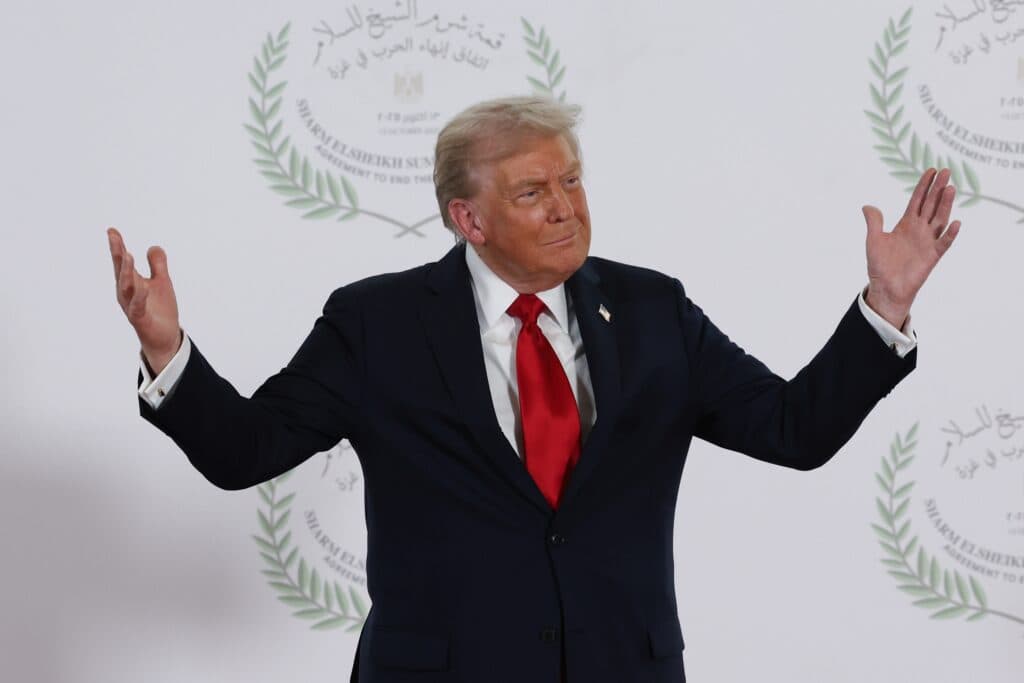
President Donald Trump used his United Nations address Tuesday to put Iran at the center of his foreign-policy message. The Trump UN Iran speech defended U.S. military action while also leaving open the possibility of a new agreement with Tehran. Trump portrayed the choice ahead as increasingly narrow: a negotiated settlement or further military escalation. AP and Reuters both reported that Iran dominated the address as the conflict entered another critical diplomatic phase.
Trump said his administration had offered Iran broad economic cooperation after he returned to office. In exchange, he said Tehran would have needed to halt its nuclear program and support for terrorism. He argued that Iran rejected that opportunity and instead continued developing ballistic missiles and nuclear capabilities.
Ecclesiastes 3:8 speaks of “a time of war, and a time of peace.” That tension ran through Trump’s address. Even while defending the use of American force, he repeatedly returned to the possibility of an agreement that could end the confrontation.
Trump UN Iran Speech Centers on Nuclear Threat
Trump argued that Iran sought to develop a nuclear weapon behind the protection of an expanding ballistic missile force. He also warned European governments about Iranian missiles capable of reaching Europe. Iran has long developed medium-range ballistic missiles, although Trump’s broader claim about using that arsenal as cover for completing a bomb represents his administration’s assessment rather than an independently established fact.
The president also returned to October 7, noting that its third anniversary is approaching. He recalled the roughly 1,200 people killed in the Hamas-led attack and emphasized the Americans among the victims. Trump tied the massacre to Tehran’s longstanding support for Hamas and other armed groups opposed to Israel.
Iranian Supreme Leader Ali Khamenei has openly praised the October 7 attack. In 2024, he called it “logical and legal.” During the same period, he also said strikes against Israel represented a “service” to the region and humanity. Those statements help explain why Washington and Jerusalem view Tehran’s support for armed groups as part of a wider strategic threat rather than a separate Palestinian issue.
Trump also claimed that Iran’s government had killed more than 72,000 of its own citizens this year. That figure was presented by the president in his speech, but major reporting reviewed Tuesday did not independently verify the total.
Hormuz Becomes Part of the Pressure Campaign
Trump devoted another part of the address to the Strait of Hormuz. He said the U.S. Navy had escorted more than one billion barrels of oil through the waterway. He also described growing daily convoys of commercial vessels under American protection.

The White House said in late August that nearly 1,500 commercial vessels had already crossed under U.S. protection. Those ships carried about 750 million barrels of crude, according to the administration. Independent shipping data still showed traffic far below prewar norms over the past weekend, although Gulf oil movements have begun recovering.
That maritime confrontation also connects to the escalation described in “IRGC Retaliation Warning: 20 Targets for Every 2 or 3.” The IRGC has threatened disproportionate retaliation if Iranian targets come under renewed attack. Such warnings show why even limited strikes can quickly expand across shipping lanes, military bases and regional infrastructure.
At the same time, diplomacy has not disappeared. Reuters reported Tuesday that Iranian officials arrived at the UN with authority to explore negotiations. Tehran has also offered to reopen Hormuz if Washington reduces military pressure and lifts its blockade of Iranian ports.
Israel and America Face the Same Strategic Question
Israel hears Trump’s message through the experience of October 7 and years of direct confrontation with Iran-backed forces. A nuclear-capable Iran would alter Israel’s security environment, while Tehran’s missile program already places Israeli cities within range. The United States approaches the same problem through its own troops, allies, energy interests and commitment to preventing nuclear proliferation.
The two countries therefore share a central interest in preventing Iran from using nuclear capability, missile power or proxy organizations to threaten regional security. They may still debate which combination of diplomacy, sanctions and force can accomplish that goal. Trump’s speech made clear that his administration continues to treat all three as available tools.
The United States and Israel also draw on covenantal traditions that connect national power with responsibility before God. Israel’s biblical inheritance emphasizes the protection and continuity of the Jewish people. American political tradition has often joined liberty and national defense with the idea of moral accountability under God. In both traditions, strength carries an obligation to protect life rather than simply demonstrate power.
Trump ended the Iran portion of his argument with the possibility of another deal. His language was threatening, but he said he believed an agreement could still follow the U.S. elections. The Trump UN Iran speech therefore presented deterrence and negotiation not as separate policies, but as competing paths toward the same unresolved question: whether the war ends through an agreement or another round of force.
For more stories on Israel, faith, and the values behind the headlines, follow Sinai on Facebook and Instagram.
Discussion0
No comments yet — be the first to share your thoughts.