Trump on Iran: Their ‘Failed Nation’ Is ‘Dead’
Trump called Iran a “failed nation” and pointed to its military and economic collapse, although several dramatic figures in his statement remain unverified

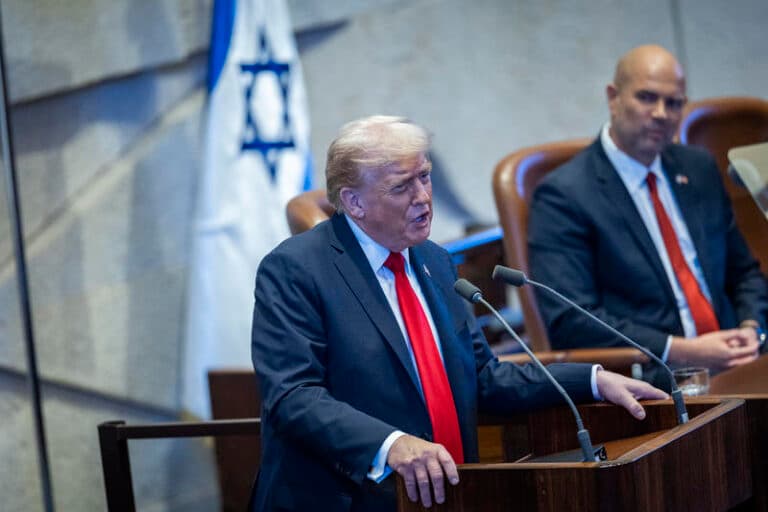
President Donald Trump on Iran delivered another blistering assessment Monday, declaring the Islamic Republic a “failed nation” and saying, “IT IS DEAD!” He pointed to Iran’s battered military, collapsing economy, unpaid security personnel, and violent repression of its own population. However, several figures in Trump’s post appear to be rhetorical or remain unverified, even as independent reporting confirms that Iran is under severe military and economic pressure.
“They have no Navy, they have no Air Force, they have no currency,” Trump wrote on Truth Social. He also claimed inflation had reached 300% and said more than 100,000 protesters had been killed. Trump called for Iran’s leaders to be tried for “war crimes against humanity.” His post came one day after renewed fighting between American and Iranian forces around the Strait of Hormuz.
The moment calls to mind Isaiah 5:20, which warns against those who “call evil good and good evil.” Iran’s rulers continue presenting military setbacks as victories while threatening Israel and suppressing dissent at home. The task for free nations is not merely to answer propaganda with propaganda, but to distinguish documented reality from boastful claims on either side.
Trump on Iran Highlights a Deepening Collapse
There is substantial evidence behind Trump’s broader argument that Iran has been badly weakened. U.S. Central Command told Congress in May that American forces had destroyed 161 Iranian naval vessels. It also said 82% of Iran’s air-defense systems had been disabled. Iran’s air force, which once flew up to 100 sorties daily, was no longer conducting missions.
Still, saying Iran has “no Navy” or “no Air Force” should not be read literally. Iran’s Revolutionary Guards Navy remains active and continues threatening shipping through the Strait of Hormuz. The IRGC Navy claimed last week that it still exercised “full control” over the strategic waterway. Iran also retains missiles and drones capable of striking American forces and regional allies.
Trump’s economic assessment also reflects a genuine crisis, although the 300% inflation figure does not match Iran’s latest official annual inflation data. Reuters reported annual inflation at roughly 66%, with food inflation reaching 128% in July. Foreign trade has fallen sharply under war conditions, sanctions, and the U.S. blockade.
The president’s claim that more than 100,000 protesters have been killed is also unverified. Trump did not provide a source for the number, and independent organizations have reported much lower documented totals. That does not diminish the brutality of Tehran’s crackdown. It does mean the scale of the killing should be presented as Trump’s claim unless independent evidence confirms it.
Tehran’s Victory Claims Meet Battlefield Reality
Trump’s post came shortly after senior IRGC official Mohammad Reza Naqdi offered an almost opposite description of Iran’s condition. In “Mohammad Reza Naqdi: 90% of Iran’s Missiles Intact,” Naqdi claimed Tehran still possessed more than 90% of its missile stockpile and was producing missiles faster than it could expend them.
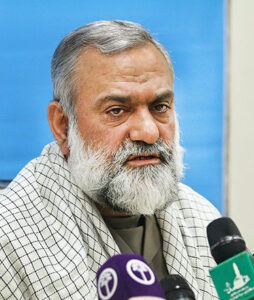
Naqdi also described Iran’s wartime performance as an unexpectedly easy victory and threatened Israelis to leave their country. Yet independent assessments paint a more complicated picture. Reuters reported that U.S. and Israeli attacks have substantially degraded Iran’s naval forces, air defenses, missile infrastructure, and conventional ability to project power. Iran remains dangerous, but it has unquestionably absorbed major losses.
The latest fighting provides another example. American forces struck two Iranian launchers on Larak Island after U.S. officials said IRGC personnel were preparing to deploy sea mines. Iran then retaliated against American positions. The exchange demonstrated both sides of the current reality: Tehran retains enough military power to threaten the region, yet U.S. forces continue penetrating and striking its military infrastructure.
Strength Requires Truth
America and Israel share a covenantal tradition that connects national strength with truth, responsibility, and the defense of human life before God. Neither nation benefits from understating the danger posed by Iran. Neither benefits from exaggeration when the documented facts already make a powerful case.
Israel has spent decades warning that Tehran’s military ambitions, nuclear program, proxy forces, and destructionist ideology cannot be treated as ordinary regional politics. America is now confronting many of those same dangers directly. The current war has shown how closely American and Israeli security interests converge when Iran threatens shipping lanes, military bases, civilians, and the wider regional order.
The strongest argument against the Islamic Republic does not require declaring every part of the Iranian state nonexistent. Its military has suffered severe damage. Its economy is under enormous strain. Its government continues repressing its own population while maintaining the ability to threaten its neighbors.
Trump is right to focus attention on that contradiction. Tehran’s leaders portray themselves as victorious while their country absorbs devastating costs. The challenge now is ensuring that pressure produces a lasting strategic result rather than giving the regime time to rebuild what American and Israeli forces have already destroyed.
For more stories on Israel, faith, and the values behind the headlines, follow Sinai on Facebook and Instagram.
Discussion0
No comments yet — be the first to share your thoughts.