Azmi Bishara Election Call Draws Scrutiny Ahead of Vote
Sinai Desk
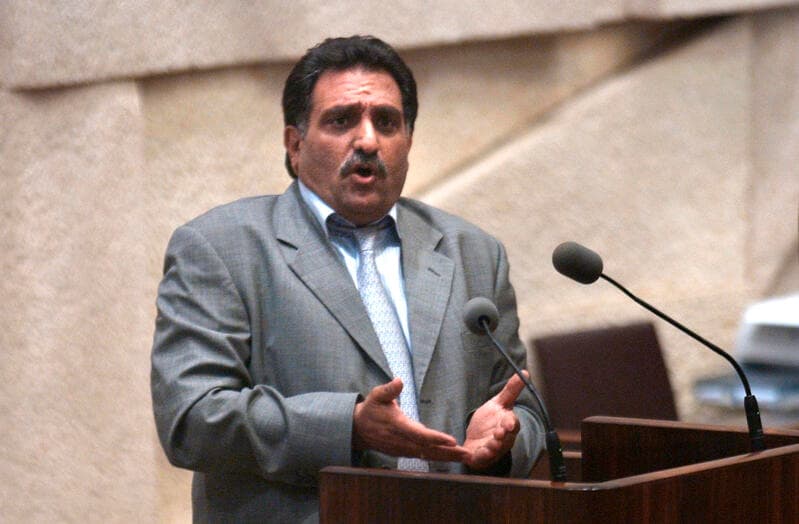
The Azmi Bishara election call is drawing renewed attention days before Israelis vote on October 27. Speaking to Al-Araby TV, the former Balad chairman urged Arab citizens of Israel to turn out in large numbers, arguing that the election offers an opportunity to challenge the current government and what he described as attempts to delegitimize Arab political participation. He also said increased Arab turnout could help prevent another Netanyahu-led coalition.
Bishara’s intervention carries unusual baggage. He left Israel in 2007 while authorities were investigating allegations that he provided information to Hezbollah during the Second Lebanon War and received money in return. Bishara has consistently denied the espionage allegations and was never tried because he did not return to Israel. He later acknowledged meeting Hezbollah leader Hassan Nasrallah several times after leaving, while insisting their conversations were political rather than security-related.
Deuteronomy 16:20 commands, “Justice, justice shalt thou pursue.” That principle applies not only to governments, but to public accusations and political participation itself. Israeli democracy gives Arab citizens the same ballot as Jewish citizens, while the Bishara case raises a separate question about the credibility of a former legislator who left the country amid allegations involving an enemy organization.
Azmi Bishara Election Call Comes From Abroad
Bishara told Al-Araby TV that Arab participation could be decisive because neither major political bloc appears guaranteed a majority. That assessment is consistent with broader polling. Arab citizens make up roughly 21% of Israel’s population, and Reuters reported that Arab turnout could materially affect coalition arithmetic in a close election. Pollsters recently projected turnout around 63%, compared with 56% in 2022.
There is nothing illegitimate about Arab citizens voting, organizing or seeking influence in Israel’s democratic system. The sharper criticism concerns Bishara himself. He once served inside the very parliament he now seeks to influence from abroad, yet left Israel rather than remain to face the criminal investigation against him. Israeli critics therefore see a striking contradiction between his warnings about political “delegitimization” and his own unresolved history with the state whose election he is attempting to shape.
His political record also matters. Bishara led Balad, a party built around transforming Israel from a specifically Jewish state into what it describes as a “state of all its citizens.” That vision has long stood in direct ideological conflict with Zionism and Israel’s definition as the nation-state of the Jewish people.
Elections Take Place Under Heightened Security
The timing is especially sensitive. Israel is holding its first national election since the October 7 massacre while the country remains under threat across several fronts. The IDF has placed forces on its highest level of readiness for the voting period, imposed a leave freeze and reinforced Central Command to help ensure the election takes place safely.
That security backdrop was detailed in “IDF Election Readiness Raised Ahead of Vote,” which reported the additional forces, command presence and operational preparations ordered ahead of October 27. The contrast is significant: while Israel mobilizes soldiers to protect a democratic election, Bishara is participating in the political debate from Qatar after leaving Israel during an investigation involving Hezbollah.
Bishara’s call should also be distinguished from the broader question of Arab political participation. Mansour Abbas and other Arab Israeli politicians are campaigning openly inside Israel, appealing directly to Israeli citizens and operating within the country’s electoral and legal institutions. Bishara’s circumstances are fundamentally different, which is why his intervention attracts scrutiny beyond the substance of his political views.
Sovereignty Requires Both Ballots and Accountability
Israel’s covenantal mission before God includes preserving Jewish sovereignty while administering a state in which citizens participate through law rather than force. That means defending the Jewish character of Israel does not require denying Arab citizens political rights. It does require drawing a clear distinction between democratic disagreement and cooperation with organizations committed to Israel’s destruction.
America’s covenantal tradition developed around constitutional self-government and peaceful transfers of political power. The United States and Israel therefore share an interest in protecting elections while resisting foreign-backed violence, terrorism and efforts to undermine sovereign institutions from outside them.
Bishara is free abroad to express his political views, and Arab Israelis are free to decide for themselves whether and how to vote. His history, however, is inseparable from the credibility of his intervention. A former Israeli lawmaker who left while facing an espionage investigation tied to Hezbollah now wants to influence who governs the Jewish state.
Israeli voters, Jewish and Arab alike, will determine that question at the ballot box on October 27.
For more stories on Israel, faith, and the values behind the headlines, follow Sinai on Facebook and Instagram.
Discussion0
No comments yet — be the first to share your thoughts.