Qatar Funds Islamic Centers In Europe While Restricting Churches
Qatar is facing criticism for funding Islamic centers in Europe while restricting Christian worship, symbols, and missionary activity on its own soil

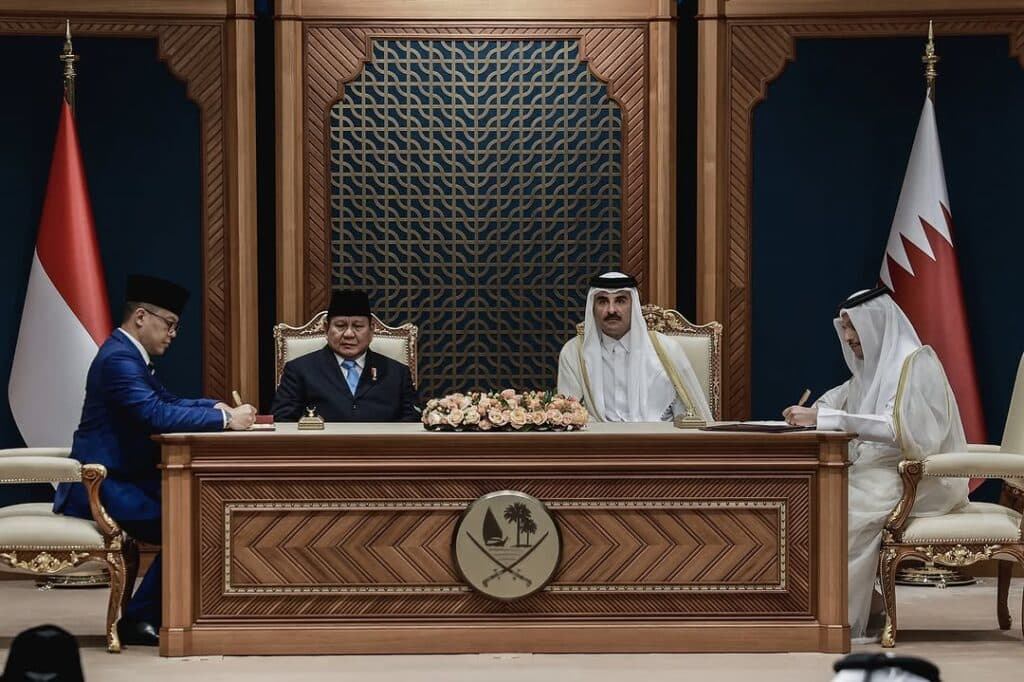
Qatar Islamic centers in Europe are drawing new scrutiny after an investigation by Visegrád 24 claimed Doha is funding large Islamic complexes across the continent while sharply restricting Christian worship on Qatari soil.
According to the investigation, Qatar has poured millions of euros into Islamic infrastructure in Western countries. At the same time, Christians in Qatar, most of them foreign workers, can pray only within a designated and monitored compound outside Doha known as the “church complex.”
U.S. State Department reporting has also described Qatar’s Mesaymeer Religious Complex, known as “Church City,” as the main worship space for registered Christian denominations. The State Department reported that Christian symbols such as crosses, steeples, and statues were not permitted on the exterior of church buildings, and that proselytizing on behalf of any religion other than Islam is criminalized.
The Tanakh says, “One law and one ordinance shall be for you and for the stranger who sojourns with you.” That principle gives this story its moral weight. A country that seeks broad religious influence abroad should face serious questions when it limits religious freedom at home.
Qatar Islamic Centers In Europe
According to Visegrád 24, Qatar built a massive Islamic center in Croatia at a cost of 10 million euros. The investigation also said Qatar Charity funded at least six Islamic projects in Poland at a total cost of 2 million euros.
The report said these complexes are not used only for prayer. They include halls, classrooms, libraries, kindergartens, restaurants, and guest apartments. Critics argue that this structure can create closed communities and weaken integration into wider European society.
That concern is not only European. The United States and Israel both have an interest in understanding how foreign money shapes religious, cultural, and political influence inside Western societies. When governments that restrict pluralism at home finance expansive institutions abroad, religious freedom becomes tied to national security, social cohesion, and ideological transparency.
Freedom House has reported that non-Muslims in Qatar are not allowed to proselytize or worship in public, even though the constitution provides for freedom of worship. That contrast helps explain why European critics view Qatar’s activity as a matter of reciprocity, not merely construction funding.
Qatar’s Double Standard

The debate comes as Qatar continues to position itself as a regional actor with influence across diplomacy, media, finance, and security. That broader role also surfaced in “Iran Warns Trilateral Defense Alliance As Qatar Holds Back.” Iran warned it would respond to any attack by members of the Saudi-Turkish-Pakistani alliance, while Qatar signaled caution about joining.
Qatar’s hesitation in regional defense frameworks and its activity inside Europe point to a larger pattern: Doha prefers flexible influence over fixed commitments. It moves through money, mediation, religious infrastructure, and strategic ambiguity. That gives Qatar room to present itself as a partner while avoiding the standards it expects others to accept.
For Israel, the issue matters because Western societies often underestimate ideological infrastructure until it becomes politically powerful. For America, the question is just as direct. Free societies cannot treat religious liberty as a one-way privilege, where foreign governments fund institutions abroad while denying similar freedoms under their own laws.
Covenant Of Worship And Reciprocity
The United States and Israel carry separate covenantal responsibilities before God in how they defend liberty and truth. America’s covenantal tradition speaks through religious freedom, equal protection, and the right of conscience. Israel’s covenant is ancient and unique, rooted in the God of Israel, Torah, Jewish peoplehood, sovereignty, and the return to the land.
Qatar’s conduct tests those values through a basic question: should a state that restricts churches at home enjoy unlimited moral authority while funding religious complexes abroad? The answer should matter to every Western government that still claims to protect freedom of worship.
Israel understands the danger of double standards more than most nations. The Jewish state faces constant demands from foreign governments, courts, activists, and institutions that rarely apply the same standards to hostile or authoritarian regimes. Qatar’s religious-freedom imbalance belongs inside that wider discussion.
Europe may be waking up late, but the question now is unavoidable. Religious freedom cannot mean permission for one side to expand everywhere while others must hide their symbols, silence their mission, and worship under supervision.
For more stories on Israel, faith, and the values behind the headlines, follow Sinai on Facebook and Instagram.
Discussion0
No comments yet — be the first to share your thoughts.