Polish Airspace Violation: Russian Mi-8 Crosses Border
A Russian Mi-8 briefly entered Polish airspace from Kaliningrad, prompting fighter activity and raising wider questions about NATO deterrence and air defense

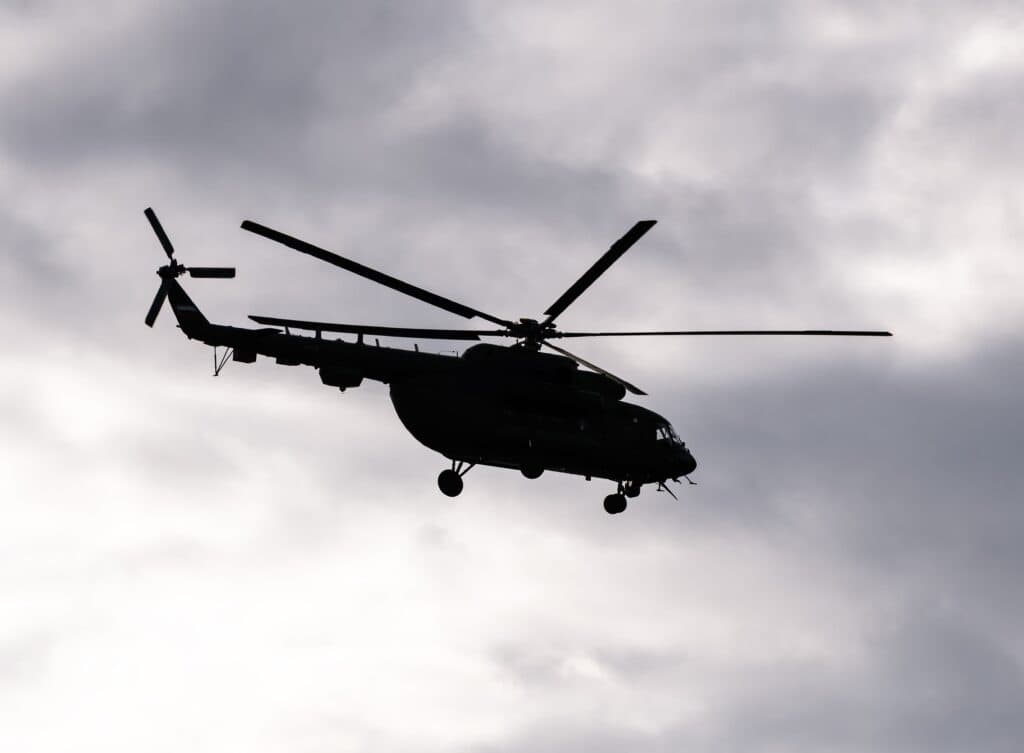
A Polish airspace violation by a Russian military helicopter triggered an immediate response from Poland on Wednesday. The Mi-8 entered from Russia’s Kaliningrad region at 11:08 a.m., according to the Polish Armed Forces. It crossed roughly 300 meters into Polish territory and remained there for 42 seconds before leaving. Polish radar systems tracked the aircraft while fighter jets scrambled and ground forces remained ready.
Poland’s Operational Command went further than simply reporting the incursion. It said the nature of the incident suggested Russia was again testing the readiness of Polish air defenses. The violation occurred near Braniewo, only a short distance from the heavily militarized Russian exclave of Kaliningrad.
Nehemiah 4:9 describes a people facing danger who “set a watch against them day and night.” The principle is particularly relevant to modern air defense. Deterrence begins long before weapons are fired, with radar coverage, readiness and the ability to respond quickly when a border is tested.
Polish Airspace Violation Tests NATO Readiness
The incursion was brief and shallow, but that does not make it strategically meaningless. Poland’s own military interpreted it as a possible test of defensive readiness rather than an ordinary navigation error. Just one day earlier, Polish Defense Minister Władysław Kosiniak-Kamysz said Russia was moving further up the “escalation ladder” in its confrontation with NATO countries.
Still, a short airspace violation does not automatically trigger NATO’s Article 5 collective-defense clause. NATO says Article 5 applies to an “armed attack,” with each incident assessed according to its circumstances. Article 4 separately allows an ally to request consultations when its territorial integrity or security faces a threat.
That distinction matters because the greatest danger from repeated border incidents may be miscalculation. A helicopter crossing 300 meters is very different from an intentional strike. However, repeated incursions can force NATO aircraft to scramble, increase military activity near borders and narrow the time commanders have to distinguish a mistake from an attack.
Russia’s proximity gives Poland little room for complacency. Kaliningrad sits between Poland and Lithuania and provides Moscow with a military foothold deep inside NATO’s northeastern region. Any pattern of Russian aircraft testing neighboring airspace therefore carries consequences beyond the 42 seconds of Wednesday’s incident.
The United States Has a Direct Stake in Poland
The episode also lands at a sensitive moment for Washington. Poland already hosts American forces on a rotational basis, and President Donald Trump said last week that progress was being made toward establishing a permanent U.S. Army base there. Warsaw has pushed for a stronger American presence as part of reinforcing NATO’s eastern flank.
That means Russian pressure on Poland increasingly touches American military planning directly. The Pentagon is reviewing the broader U.S. force posture in Europe, while Poland has argued that American troops remain essential to credible deterrence. Poland’s defense minister said earlier this year that there is “no NATO without the United States.”
Washington therefore faces two related demands. European allies are being pressed to assume more responsibility for their own defense, but Russian activity continues to demonstrate why American capabilities remain central to NATO deterrence. A stronger European defense base can reduce the burden on the United States without making the transatlantic alliance less relevant.
The security challenge also intersects with energy. In “Russia Diesel Exports Halt as Saudi Pipeline Nears Return,” the disruption of Russian refining and exports showed how conflict in Europe can quickly affect fuel markets around the world. Global diesel prices have since reached record highs as Russian and Middle Eastern supply disruptions converge.
Why Israel Is Watching Europe’s Air Defense
Israel is not a NATO member, but the European response to Russia increasingly intersects with Israeli defense policy and industry. European governments have shown growing interest in Israeli air and missile defense systems as they prepare for missile, drone and aircraft threats. Germany has already purchased the Arrow system, while Finland selected David’s Sling.
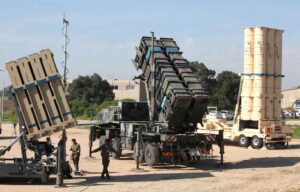
Those systems also illustrate the depth of U.S.-Israeli defense cooperation. Arrow was developed by Israel Aerospace Industries with the U.S. Missile Defense Agency. Israeli officials said this summer that European demand for such systems was rising partly because governments increasingly view Russia as a direct security threat.
The connection is more than commercial. Israel has spent years developing layered defenses against missiles, drones and hostile aircraft. Poland and other NATO countries now face a different geography and adversary, but the core problem is familiar: detect threats early, determine intent quickly and maintain enough defensive capacity to prevent a limited incident from becoming a larger conflict.
Europe accounted for 36% of Israel’s defense agreements in 2025, while missile and air-defense systems represented a major share of Israeli exports. The European security crisis therefore increasingly ties Israeli technology to the continent’s deterrence architecture.
Sovereignty Depends on Credible Deterrence
Israel and the United States approach national defense from distinct covenantal traditions, yet both place weight on sovereignty, responsibility and the protection of civilian life. Israel’s national story gives particular importance to maintaining the ability of the Jewish state to defend itself. The American tradition has long linked its own security with alliances designed to deter wider wars before they reach American shores.
Poland’s experience demonstrates why those principles depend on more than declarations. Borders require surveillance, military readiness and alliances that adversaries believe will function under pressure. Poland’s immediate tracking and fighter response showed that the incursion did not go unnoticed.
The Polish airspace violation lasted less than a minute, but its significance lies in what it tested. Russia crossed the border of a NATO member, Poland detected the movement and its military reacted. If Warsaw’s assessment is correct that Moscow was probing defensive readiness, the response was also a message: the airspace was being watched.
For the United States, that reinforces the importance of a credible eastern flank. For Israel, it reinforces the value of air-defense technology, rapid warning and strategic partnerships. Across both theaters, deterrence works best when a potential adversary understands that even a small test will be detected, assessed and answered.
For more stories on Israel, faith, and the values behind the headlines, follow Sinai on Facebook and Instagram.
Discussion0
No comments yet — be the first to share your thoughts.