Pezeshkian: Iran Will Never Give Up Uranium Enrichment
Iranian President Masoud Pezeshkian said Tehran will never give up uranium enrichment and claimed the missile “rules” have changed

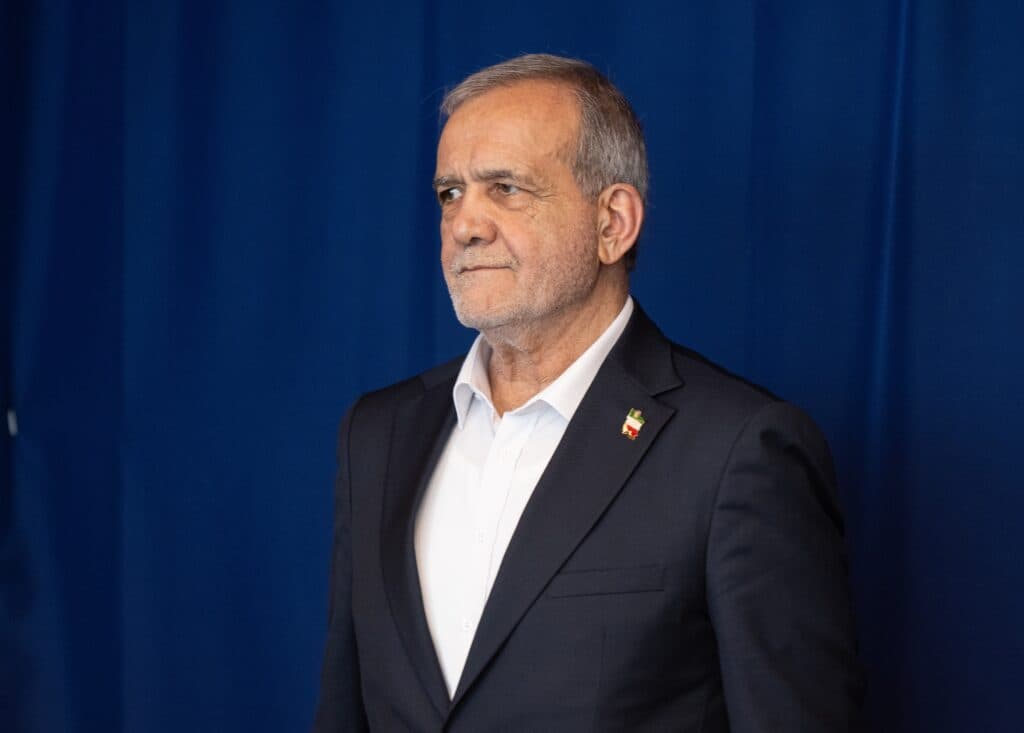
Pezeshkian uranium enrichment remarks sharpened Iran’s confrontation with Washington after the Iranian president declared that Tehran will never give up its nuclear rights.
“What is certain is that we will never give up our right to enrich uranium,” Iranian President Masoud Pezeshkian said. He added that “the other side will have no choice but to accept this.”
Pezeshkian also claimed that the missile issue has shifted in Iran’s favor. He said that in the past, Iran’s ballistic missiles were part of negotiation demands. Now, he claimed, the other side says Iran should have the right to possess ballistic missiles, just as other countries do. “The rules of the game have changed,” he said.
The Tanakh says, “Woe unto them that call evil good, and good evil.” That warning fits the moment because Iran is trying to present enrichment and ballistic missiles as ordinary rights. For Israel, those programs are not abstract. They sit inside a regime strategy built on threats, proxies, and repeated calls against the Jewish state.
Pezeshkian Uranium Enrichment Claim
Iran has long insisted that uranium enrichment is a national right. Pezeshkian’s latest statement goes further by framing Western acceptance as inevitable. The message is not compromise. It is pressure.
That matters because enrichment remains the core issue in any nuclear track with Tehran. Iran says its nuclear program is peaceful. Israel and many of its allies see the program through a different lens: concealment, IAEA disputes, high-level enrichment, missile development, and years of regional aggression.
The ballistic missile comments add another layer. Iran’s missiles threaten Israel directly and strengthen Tehran’s wider deterrence network. When Iranian leaders speak about missiles and enrichment together, Israel hears the architecture of a future nuclear threat.
Trump’s Pressure Test

Pezeshkian’s remarks follow “Trump Warns Iran: U.S. May Take Control Of Hormuz.” That article reported that President Donald Trump warned the United States may take control of the Strait of Hormuz if forced to do so, as pressure on Iran rises.
The timing matters. Washington is increasing economic and maritime pressure, while Tehran claims the rules have changed. Both sides are signaling that the 60-day window did not create trust. It created a test of resolve.
For Trump, the question is whether Iran’s defiance will meet stronger consequences. For Netanyahu and Israel’s security establishment, the issue is more immediate. A regime that insists on enrichment and ballistic missiles cannot be treated as a normal negotiating partner while it arms Hezbollah, Hamas, the Houthis, and other forces around Israel.
Covenant Of Clarity Against Threats
The United States and Israel share a covenantal worldview that freedom requires courage, truth, and the defense of life before God. Both nations, at their best, understand that peace cannot rest on illusions about hostile regimes.
That shared American-Israeli instinct matters with Iran. America must defend global order against nuclear blackmail, missile threats, and attacks on free navigation. Israel must protect the Jewish people from a regime that has turned anti-Israel ideology into state policy.
Pezeshkian says the rules of the game have changed. The real question is whether Washington will accept Iran’s version of those rules, or enforce rules that protect Israel, America, and the region from Tehran’s ambitions.
Iran wants enrichment treated as inevitable and missiles treated as normal. The free world cannot afford to confuse persistence with legitimacy.
For more stories on Israel, faith, and the values behind the headlines, follow Sinai on Facebook and Instagram.
Discussion0
No comments yet — be the first to share your thoughts.