Palestine Action Sanctions Mark U.S. Terror Designation
The U.S. designated Palestine Action as a global terrorist entity after Britain proscribed the group over attacks targeting Israel-linked defense companies

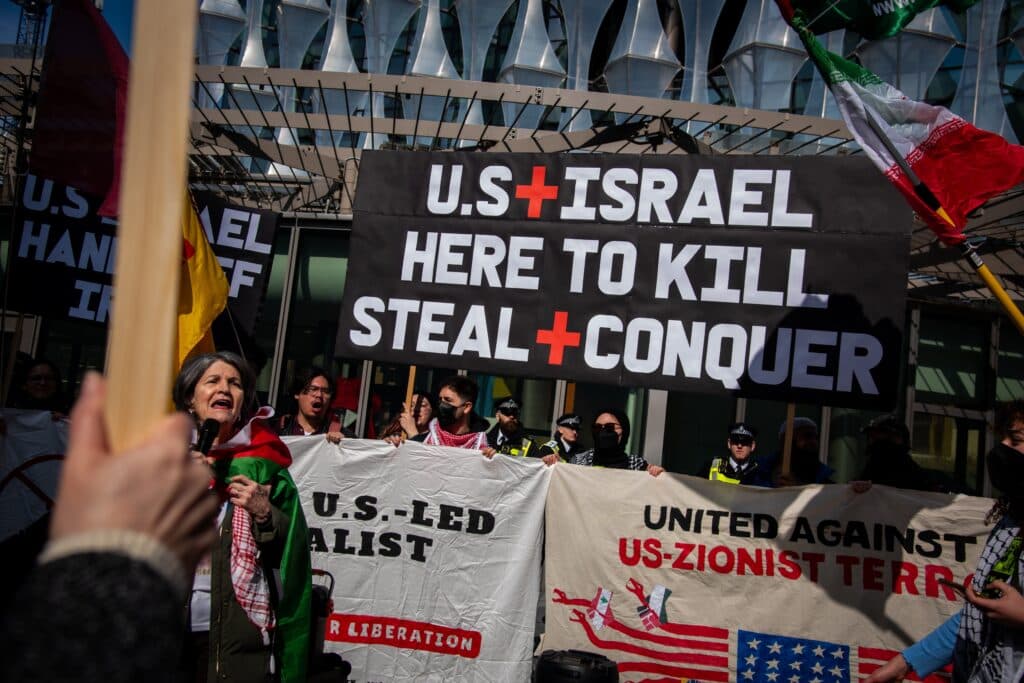
Palestine Action sanctions announced by the United States mark a major escalation in Washington’s response to radical anti-Israel activism in the West. The U.S. sanctioned Palestine Action on Wednesday and designated the group as a Specially Designated Global Terrorist, according to a notice published by the Treasury Department. The move follows Britain’s earlier decision to proscribe Palestine Action as a terrorist organization.
Palestine Action was founded in Britain in 2020 as a direct-action network focused on companies linked to Israel’s defense sector. Its main target has been Elbit Systems and related companies in the United Kingdom. The group has built its profile through break-ins, blockades, paint attacks, and property damage aimed at disrupting firms it accuses of supporting Israel.
Ecclesiastes says, “Wisdom is better than weapons of war, but one sinner destroyeth much good.” That verse fits the moral line at the center of this story. A free society can tolerate protest, argument, and fierce criticism. It cannot treat sabotage, intimidation, and attacks on lawful businesses as normal political speech.
Palestine Action Sanctions
The U.S. designation places Palestine Action inside a far more serious legal category. A Specially Designated Global Terrorist listing freezes property and interests under U.S. jurisdiction and restricts dealings with the group. It also sends a broader message to activists, donors, online enablers, and affiliated networks: Washington no longer views the group as merely a protest movement.
The UK had already moved first. British authorities proscribed Palestine Action in July 2025 after a long campaign of direct action, including attacks that officials said caused serious property damage and targeted defense-linked sites. One of the most serious incidents involved RAF Brize Norton, where activists were accused of entering the base and damaging military aircraft.
The legal fight is not over. The UK Supreme Court has agreed to hear an appeal challenging the British proscription decision, after a lower court ruling upheld the ban. That appeal will test how far governments can go in using counterterrorism law against groups that present themselves as political activists while carrying out serious property damage and intimidation campaigns.
From Boycott Pressure To Terror Designation
The U.S. move comes as Britain is already debating a harder line against Israel-linked trade. That wider climate was visible in “Burnham Settlement Trade Ban Raises Israel Boycott Fears.” That article reported that UK Prime Minister Andy Burnham is considering a complete ban on imports from Jewish settlements in Judea and Samaria, raising concerns that Britain may drift from criticism of E1 construction into a broader economic campaign against Jewish communities.
The Palestine Action case shows the other side of that Western debate. On one track, governments and activists pressure Israel through boycotts, sanctions, and trade restrictions. On another, radical groups use direct action against companies tied to Israel, especially defense firms that help the Jewish state protect itself from missiles, drones, and terror networks.
That distinction matters. Peaceful protest is protected in democratic societies. However, political violence and sabotage cannot become an accepted substitute for debate. When activists target defense companies because they work with Israel, the practical effect is to weaken a democratic ally facing Hamas, Hezbollah, Iran, and other hostile forces.
Law, Order And Covenant Responsibility
The United States and Israel carry separate covenantal missions before God, and this case touches both through the defense of lawful order. America’s mission requires protecting civil liberties while refusing to let ideological groups normalize coercion, sabotage, and attacks on lawful enterprise. Israel’s mission requires defending Jewish life against enemies who try to isolate it militarily, economically, and morally.
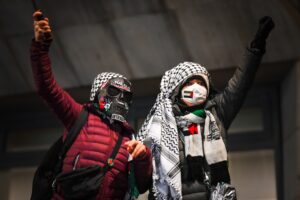
That is why the designation matters beyond one British activist group. It signals that Washington sees anti-Israel extremism as part of a broader security problem when it crosses into intimidation and organized destruction. The same Western societies that defend the right to criticize Israel must also defend Jews, Israelis, and Israel-linked businesses from targeted campaigns meant to punish them into silence.
The U.S. action will draw criticism from those who argue that terrorism laws are being stretched too far. That concern deserves legal scrutiny, especially in free societies. Yet the core principle remains clear: activism does not grant immunity for sabotage. A political cause does not become moral simply because it is aimed at Israel.
For Israel, the sanctions are a welcome sign that Washington understands the battlefield is not only in Gaza, Lebanon, Yemen, or Iran. It also exists in Western institutions, streets, courts, campuses, and supply chains. When anti-Israel extremism targets the companies that help Israel defend itself, it becomes part of the pressure campaign against Jewish sovereignty.
For more stories on Israel, faith, and the values behind the headlines, follow Sinai on Facebook and Instagram.
Discussion0
No comments yet — be the first to share your thoughts.