Pakistan Houthi Strikes Considered Under Saudi Defense Pact
Pakistan is reportedly considering airstrikes on Houthi positions in Yemen after Saudi Arabia requested support under their new collective defense pact

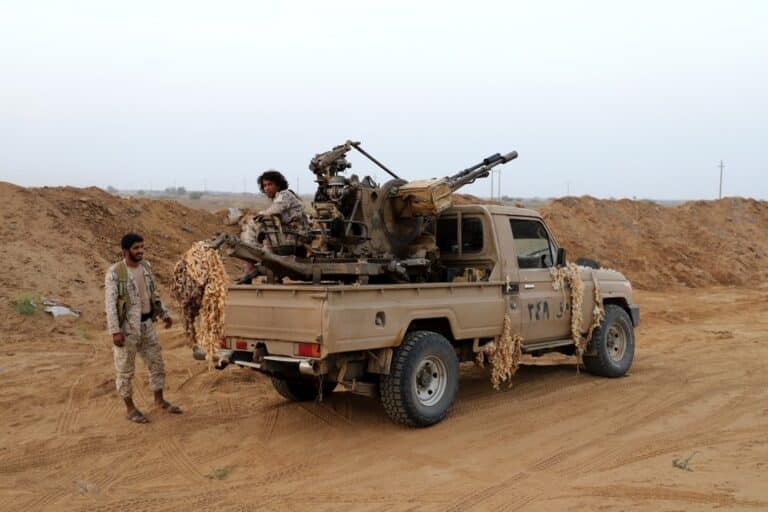
Pakistan Houthi strikes in Yemen are under consideration following a request from Saudi Arabia, according to a report published Wednesday by Türkiye Today. The Turkish outlet cited Pakistani sources who said Islamabad could target Houthi positions in the coming days. However, the report stressed that Pakistan has not made a final decision. No official Pakistani announcement had confirmed plans for strikes at the time of publication.
One Pakistani source identified Saada province, the Houthis’ northern stronghold, as a possible priority. Other Houthi-controlled areas could also be targeted if Islamabad approves military action. Türkiye Today reported that any operation could be disclosed publicly soon after it begins. Because the claim rests on unnamed Pakistani sources, the prospective strikes should still be treated as a reported option rather than established policy.
The report comes after Pakistan delivered a warning to Iran over the Houthis’ renewed attacks on Saudi Arabia. Reuters reported that Islamabad urged Tehran to restrain the Iran-aligned movement after strikes wounded 73 people and targeted Saudi infrastructure. Pakistan has emphasized diplomacy, but its new defense commitments to Riyadh give the crisis a broader military dimension.
Second Samuel 10:11 records a battlefield arrangement between allies: “If Aram is too strong for me, then you shall help me.” The setting is ancient, but the principle is recognizable. Alliances become meaningful when countries are willing to carry responsibility for one another’s security rather than limiting cooperation to declarations.
Pakistan Houthi Strikes Would Test the Mecca Pact
Pakistan, Saudi Arabia, and Turkey signed the Mecca Joint Defense Agreement on August 7. The agreement states that an armed attack against one member will be regarded as an attack against all three. The pact was designed to strengthen collective deterrence and formalize already extensive defense relationships among the three countries.
The alliance has since begun developing permanent institutions. Its first Strategic Political and Defense Committee meeting produced agreements on the organization’s name and structure. The three governments have called the grouping the Mecca Defense Alliance and placed its secretariat in Saudi Arabia.
Pakistani Defense Minister Khawaja Asif said Wednesday that attacks on Saudi Arabia could activate the pact. Türkiye Today cited him as saying aggression against one member would be treated as aggression against all. That statement gives the Houthi attacks particular significance because Riyadh has now suffered direct missile and drone strikes.
Still, collective defense does not automatically require Pakistani airstrikes inside Yemen. Islamabad could provide intelligence, air defense, logistical support, or forces stationed inside Saudi Arabia instead. Reuters reported that military assistance remains an option, while Pakistan continues to favor efforts aimed at containing the conflict diplomatically.
Saudi-Houthi Fighting Raises the Stakes
The debate follows one of the largest recent Houthi attacks against Saudi Arabia. Houthi missiles and drones targeted southern cities, oil infrastructure, and military facilities on September 8. Saudi authorities said 73 people were wounded, including women and children. Energy facilities also suffered fires and temporary operational disruptions.
Saudi forces responded with dozens of airstrikes in Yemen as fighting intensified across several provinces. The renewed war has already spread through Al-Jawf, Taiz, Al-Bayda, and the western coast. The escalation threatens to undo the relative calm that followed the 2022 truce.
Saada would be a particularly significant target for any Pakistani operation. The northern province has long served as the heartland of the Houthi movement. Striking there would mean entering one of the most politically and militarily sensitive parts of Yemen’s conflict.
Pakistan would also risk becoming a direct combatant against an organization closely aligned with Iran. Tehran denies controlling the Houthis, but Iran has supplied political and military support to the movement. Islamabad therefore has strong incentives to calculate carefully before moving from collective defense commitments to offensive operations inside Yemen.
Turkey has already publicly condemned the latest Houthi attacks. Ankara’s Foreign Ministry said the strikes endangered civilians and threatened efforts toward a political settlement in Yemen. It also reaffirmed support for Saudi sovereignty and territorial integrity.
The alliance dimension also adds context to “Greece-Turkey Tensions: Gerapetritis Says Athens Is Ready.” In that dispute, Greece emphasized how stronger partnerships with Israel and the United States increase deterrence. Turkey is simultaneously building its own security architecture with Pakistan and Saudi Arabia, showing how alliance networks are reshaping the wider region.
Red Sea Security Connects Washington and Jerusalem
A Pakistani intervention would matter directly to Israel because the Houthis have repeatedly targeted Israeli territory and Red Sea shipping. The group’s position in Yemen gives it access to the approaches to Bab al-Mandab. That passage connects the Gulf of Aden to the Red Sea and Israel’s maritime route toward Eilat.

Saudi Arabia also increasingly depends on western export routes while instability affects the Strait of Hormuz. Renewed Houthi pressure on the Red Sea therefore threatens Saudi energy security and international commerce at the same time. Recent attacks have already helped push oil prices sharply higher.
Washington has the same strategic interest in preventing an Iran-backed armed movement from controlling regional shipping through missiles and drones. The United States has defended vessels in the Red Sea and continues extensive defense cooperation with Saudi Arabia. Just days ago, Washington approved a potential $5 billion sale of extended-range precision munitions to Riyadh.
For Israel, weakening the Houthis would reduce pressure from one part of Iran’s regional network. Yet a wider war involving Pakistan, Saudi Arabia, Turkey, and Iran-linked forces could also create new instability. The strategic benefit therefore depends on whether military action restores deterrence or simply adds another state to an expanding conflict.
Alliances Carry Responsibilities
Israel and the United States have distinct covenantal identities before God, but both understand that alliances must involve responsibility. Israel’s covenantal mission requires the defense of Jewish sovereignty and protection of Jewish life. America’s national tradition joins freedom with the defense of allies, navigation, and a stable international order.
The Mecca pact reflects the same basic reality in a different political framework. Saudi Arabia sought partners that could strengthen deterrence against attacks threatening its territory and economy. Pakistan and Turkey accepted obligations that may now be tested much sooner than expected.
That does not mean every attack must produce another war. A credible alliance should deter aggression precisely because adversaries understand that one country will not stand alone. The challenge comes when deterrence fails and governments must decide how far their commitments actually extend.
For now, Pakistan has not publicly announced an attack on Yemen. Türkiye Today’s report says military action remains under consideration and that no final decision has been made. That distinction is essential as the regional situation changes quickly.
If Pakistan does enter the Yemen conflict, the decision would mark a major expansion of the war. It would also provide the clearest test yet of the new Mecca Defense Alliance and its promise of collective defense. Saudi Arabia’s confrontation with the Houthis would no longer be only a Yemeni or Gulf dispute, but a conflict drawing in one of the Islamic world’s largest militaries.
For more stories on Israel, faith, and the values behind the headlines, follow Sinai on Facebook and Instagram.
Discussion0
No comments yet — be the first to share your thoughts.