Iraqi F-16 Strikes Destroy ISIS Hideouts in Saladin
Iraqi F-16s carried out four precision strikes that destroyed ISIS hideouts in Wadi al-Shay after intelligence tracked militants in the Saladin sector

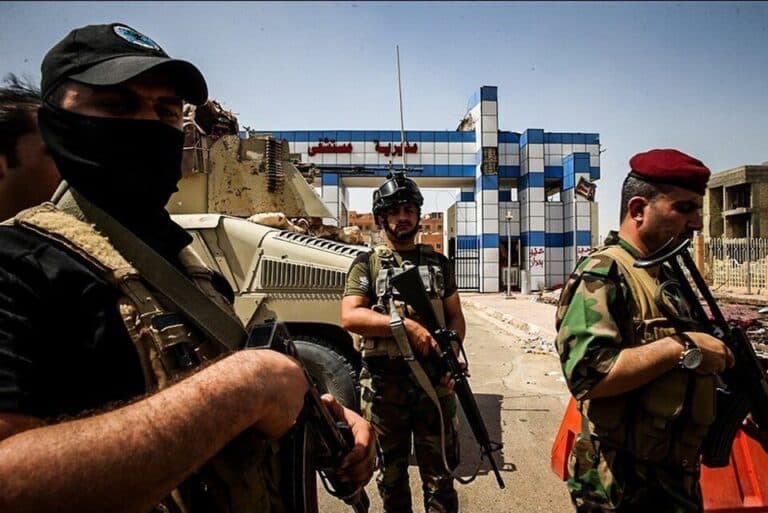
Iraqi F-16 strikes destroyed ISIS hideouts in Wadi al-Shay on Wednesday as Baghdad continued pressure on the terrorist organization’s remaining cells. Iraq’s military said four precision airstrikes hit designated positions within the Saladin Operations Command sector. Officials said all of the identified targets were completely destroyed. No militant casualty figure was immediately announced.
The operation followed intelligence collection and surveillance by Iraq’s Counter-Terrorism Service. The service coordinated with the targeting cell attached to the Office of the Commander-in-Chief of the Armed Forces. Iraqi officials said the strikes came after security forces tracked the movements of ISIS operatives in the area. Additional operational details were expected later.
Second Samuel 22:35 says, “He trains my hands for battle; my arms can bend a bow of bronze.” The verse places strength alongside training and preparation rather than uncontrolled force. Iraq’s latest operation followed that pattern, using intelligence, surveillance, air power, and coordination to strike terrorist positions without reopening a broad conventional battlefield.
Iraqi F-16 Strikes ISIS in Wadi al-Shay
Wadi al-Shay has repeatedly served as a hideout and movement corridor for ISIS cells. The rugged area connects terrain across Kirkuk, Saladin, and Diyala, making it useful for militants seeking to avoid security forces. Iraqi aircraft have struck ISIS elements there before, including an operation in May that killed four militants.
ISIS lost its territorial control in Iraq in 2017, but the organization was not eliminated. Smaller cells continue operating in remote and rural areas, relying on concealment rather than control of major cities. Iraqi forces have therefore shifted toward intelligence-driven raids and precision strikes designed to prevent those networks from rebuilding.
The Iraqi military described Wednesday’s strikes as part of a continuing policy of direct pressure against the remnants of terrorism. Its statement said security forces would remain a “watchful eye” and a “striking hand” against threats to national stability. Officials also vowed that terrorists would find no safe haven on Iraqi soil.
That language reflects a larger challenge facing Baghdad. Defeating ISIS territorially was only one stage of the fight. Preventing a resurgence requires persistent intelligence work, capable security institutions, and enough military reach to strike cells before they can rebuild larger networks.
American-Built Aircraft in Iraq’s Counterterror Fight
The F-16s used Wednesday also reflect years of U.S.-Iraqi security cooperation. Iraq purchased 36 F-16 aircraft from the United States, along with weapons, maintenance assistance, training, and technical support. The Pentagon praised Iraq’s first counter-ISIS operations with the aircraft in 2015 and described them as part of the strategic security partnership between the two countries.

Washington has also invested heavily in Iraqi counterterrorism capabilities beyond the aircraft themselves. The United States provided billions of dollars to Iraqi forces through counter-ISIS training and equipment programs. The Pentagon’s fiscal year 2026 plan continues support for the Iraqi Defense Ministry, Kurdish forces, and the Counter-Terrorism Service.
That support carries new significance as the American military presence changes. Washington and Baghdad have been transitioning from the coalition’s combat mission toward a longer-term bilateral security relationship. The Pentagon has emphasized that the purpose is not to abandon the counter-ISIS campaign, but to enable Iraqi forces to take greater responsibility for preventing the organization’s return.
The transition is occurring amid a separate confrontation over Iran-backed militias inside Iraq. “Akram al-Kaabi Threatens U.S. Troops In Iraq” highlighted threats against American personnel if forces remain beyond the September 30 deadline. Reuters reported Wednesday that Baghdad is also under pressure to disarm powerful Iran-aligned militias as the remaining U.S.-led coalition presence approaches its planned transition point.
The two issues are distinct, but they expose the same fundamental question about Iraqi sovereignty. A functioning state must be able to direct its armed forces against terrorist organizations while controlling weapons and military decisions inside its own borders. Baghdad’s ability to do both will shape whether the country becomes more stable after the coalition transition.
State Power Against Terror Networks
Israel was not involved in Wednesday’s Iraqi operation, but the outcome still matters to Israeli regional security. An ISIS resurgence in Iraq or Syria could create new territory for jihadist recruitment, weapons movement, and attacks across an already unstable region. Preventing that resurgence reduces another potential threat while Israel confronts Iran and its allied armed organizations on other fronts.
The American interest is even more immediate. The Defense Department has explicitly described an ISIS resurgence as a threat to U.S. national interests and to regional stability. American policy has therefore focused on ensuring that Iraqi partner forces can continue counterterrorism operations even as the structure of the U.S. military presence changes.
The United States and Israel have separate covenantal missions before God, yet both understand that sovereignty requires more than borders and flags. America’s tradition of ordered liberty depends on lawful institutions capable of defending citizens from terrorist violence. Israel’s covenantal responsibility includes protecting Jewish sovereignty and ensuring that enemies cannot build secure bases from which to threaten Jewish life.
Iraq’s situation is its own, but the principle is relevant across the region. Terror organizations thrive where states lose control, armed factions operate independently, and remote territory becomes a sanctuary. Strong national institutions make that environment harder to create.
Wednesday’s operation therefore represents more than four airstrikes. Iraqi intelligence identified the targets, Iraqi command structures coordinated the mission, and Iraqi aircraft carried it out. That is the model Baghdad needs if it wants to keep ISIS suppressed while reducing reliance on foreign forces.
The larger test will be whether that capability remains consistent. ISIS no longer holds Iraqi cities, but its surviving cells continue searching for gaps in state control. Iraq’s message from Wadi al-Shay was that those gaps will be met with surveillance, pursuit, and precision air power.
For more stories on Israel, faith, and the values behind the headlines, follow Sinai on Facebook and Instagram.
Discussion0
No comments yet — be the first to share your thoughts.