Greece-Turkey Tensions: Gerapetritis Says Athens Is Ready
Giorgos Gerapetritis says Greece is ready for any scenario with Turkey while pointing to expanding defense ties with Israel and strong U.S. cooperation


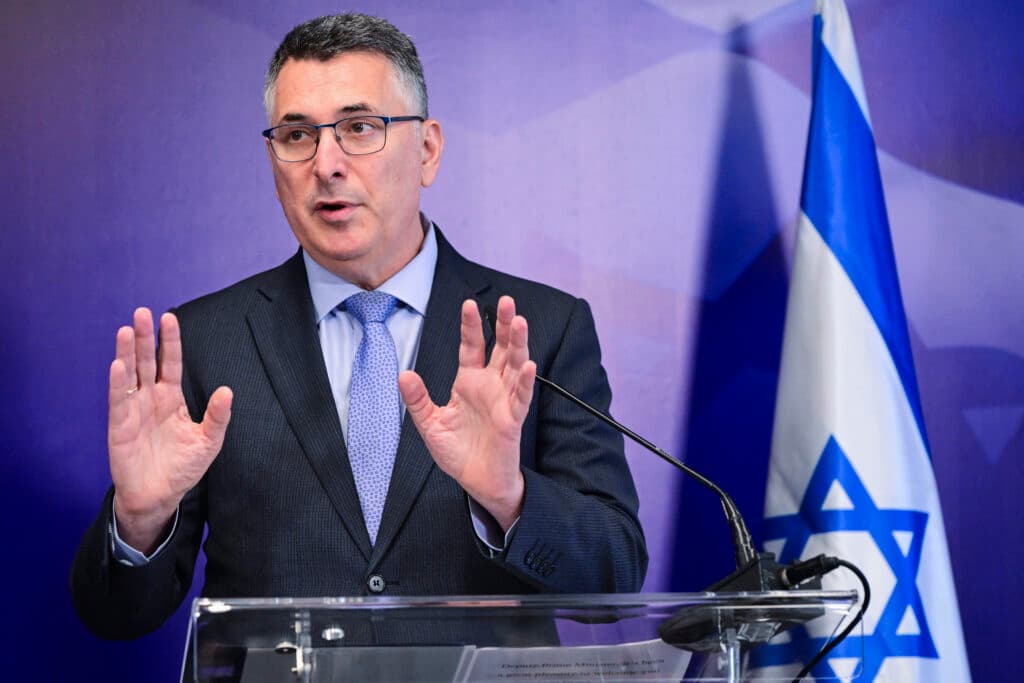
Greece-Turkey tensions sharpened Wednesday as Foreign Minister Giorgos Gerapetritis declared that Athens has the strength to respond to any scenario. At the same time, he said Greece does not expect or seek a military confrontation with neighboring Turkey. Gerapetritis linked Greece’s stronger position to its defense capabilities, economy, and expanding network of international alliances.
“Whoever shouts is not always the strongest,” Gerapetritis said in an interview with SKAI. “In fact, quite often it is the weak who shout.” He argued that heightened rhetoric from some quarters in Turkey partly reflects Greece’s growing diplomatic and military weight. Greece, he said, now has a voice “heard more than ever.”
The Greek foreign minister nevertheless stressed that diplomatic channels with Ankara remain open. “I am not afraid of a military incident,” he said, pointing to the structured dialogue between Greece and Turkey. “We are ready for every eventuality,” he added. “At this moment, we have the strength to respond to anything.”
Proverbs 24:5 says, “A wise man is strong, and a man of knowledge increases strength.” Gerapetritis presented Greek power in similar terms, not as military hardware alone. His argument was that lasting deterrence rests on preparation, diplomacy, economic strength, and alliances that make a country harder to isolate or intimidate.
Greece-Turkey Tensions Meet a Stronger Athens
Relations between Greece and Turkey remain shaped by longstanding disagreements in the Aegean and Eastern Mediterranean. The two NATO members have disputed maritime boundaries, airspace, territorial waters, and other sovereignty questions for decades. Athens and Ankara have also spent the past three years maintaining a structured dialogue designed to prevent disagreements from becoming crises.
Gerapetritis said that dialogue remains valuable precisely because Greece is not approaching Turkey from weakness. He argued that communication can reduce the danger of uncontrolled escalation while Athens continues defending what it considers its sovereign rights. Greek officials have repeatedly said that maintaining talks does not mean conceding on those claims.
His remarks also directly answer the recent warning from Turkish President Recep Tayyip Erdogan. In “Erdogan Warns Against ‘Encircling’ Turkey as Israel Tensions Rise,” Erdogan said Ankara would not remain on the sidelines while hostile regional moves sought to surround Turkey. Greece’s growing partnerships with Israel and Cyprus have become part of that wider strategic argument.
Gerapetritis rejected the idea that another country should determine Greece’s alliances. “We will not define our international alliances based on the wishes of other countries,” he said Wednesday. That message was particularly clear when the conversation turned to Israel.
Israel Alliance Expands Greece’s Strategic Reach
“We have security cooperation with Israel, which, as you know, has expanded significantly,” Gerapetritis said. He confirmed that Greece intends to deepen that relationship. In his words, cooperation with Israel has produced significant added value, particularly in defense and technology.

That cooperation recently reached a new level with the approximately €3 billion Achilles Shield agreement. Israel will build Greece a multi-layered air defense network using David’s Sling, SPYDER, BARAK MX, radar systems, and integrated command capabilities. Israel’s Defense Ministry called it the largest defense export agreement in the history of Israeli-Greek relations.
The partnership does not stand alone. Greece plans to acquire U.S.-made F-35 fighter jets and has invested heavily in French and other Western defense systems. Gerapetritis has described this diversification as one source of Greek strength rather than dependence on a single partner.
That makes the United States central to the same strategic architecture. Greece maintains a strong security relationship with Washington and hosts important American military facilities. Both Greece and Turkey remain NATO allies, giving Washington a clear interest in preventing bilateral tensions from producing a military clash.
For Israel, Greece offers something equally important: a stable democratic security partner in the Eastern Mediterranean. Joint military exercises, air-defense cooperation, energy interests, and technology ties have steadily deepened the relationship. The partnership also gives Israel another strong regional connection at a time when Turkey’s relationship with Jerusalem has become increasingly confrontational.
Gerapetritis emphasized that Greece does not view stronger ties with Israel as requiring weaker ties elsewhere. He pointed to Athens’ strategic relations with Arab countries, the United States, and other partners. Greece’s goal, he argued, is a broad diplomatic network that increases national room for maneuver.
Strength Built Through Alliances
“Strength is produced by strong alliances,” Gerapetritis said. He also named a strong economy and capable national defense as essential parts of the same equation. His formulation captures the larger strategic significance of the Greek-Israeli relationship: cooperation is intended to increase deterrence before a confrontation begins, not merely provide assistance after one starts.
Israel and the United States have distinct histories and covenantal identities before God, yet both national traditions recognize the responsibility that comes with strength. Israel’s covenantal mission includes defending Jewish sovereignty and protecting the Jewish people in their ancestral homeland. America’s national tradition ties liberty to alliances, collective defense, and the preservation of a stable international order.
Greece is not part of either covenant, but its current security strategy intersects with principles important to both countries. Strong states build dependable partnerships, protect sovereign decision-making, and keep diplomatic channels open even when deterrence must remain credible. The Greece-Israel-U.S. relationship increasingly reflects that balance.
This also explains why the current dispute with Turkey matters beyond Athens and Ankara. A military incident between two NATO members could destabilize the Eastern Mediterranean and complicate American regional planning. It could also place Israel between two important regional relationships at a moment when Jerusalem already faces threats across several fronts.
Gerapetritis, however, said he does not expect that outcome. Greece wants continued dialogue and says it does not seek a military incident. His message to Ankara is that avoiding confrontation should not be confused with an inability to respond.
That distinction is the core of Athens’ current posture. Greece is signaling that diplomacy remains open, but its alliances with Israel, the United States, and other partners will continue to deepen regardless of Turkish objections. In Gerapetritis’ formulation, restraint and strength are not opposites. The stronger Greece becomes, the more confidently it believes it can pursue both.
For more stories on Israel, faith, and the values behind the headlines, follow Sinai on Facebook and Instagram.
Discussion0
No comments yet — be the first to share your thoughts.