Joseph Aoun: Saudi Security Is Inseparable From Lebanon’s
Joseph Aoun condemned the Houthi attacks on Saudi Arabia and declared that the kingdom’s security is inseparable from Lebanon’s and the wider Arab region’s

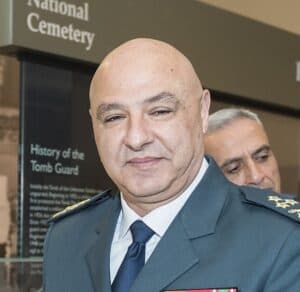
Lebanese President Joseph Aoun issued a forceful statement of solidarity with Saudi Arabia on Tuesday after Houthi missile and drone attacks struck several Saudi cities. Aoun condemned the attacks and said Saudi security is inseparable from Lebanon’s security and that of the wider Arab region. His comments place Beirut firmly alongside Riyadh as the Iran-backed Houthi movement again expands its attacks beyond Yemen.
“We in Lebanon are following with utmost concern this dangerous escalation that targets the security and stability of our sister Kingdom of Saudi Arabia,” Aoun said. He condemned what he called an aggressive act and a violation of Saudi sovereignty. Aoun then stressed that “the security of the Kingdom is an inseparable part of the security of Lebanon and the entire Arab region.”
Ecclesiastes 4:12 says, “Though one may be overpowered, two can defend themselves. A cord of three strands is not quickly broken.” The principle carries particular weight in a Middle East where armed movements can turn one country’s instability into a regional security crisis. Aoun’s message presents Saudi security not as a distant Gulf concern, but as part of a wider system in which Arab states depend on one another’s stability.
Joseph Aoun Backs Saudi Security After Houthi Attacks
The Houthi assault struck Abha, Khamis Mushait, Jazan, and Najran in southern Saudi Arabia. Saudi authorities said 73 people were wounded, including women and children. The attacks also caused fires and disruptions at energy facilities, including sites connected to Saudi Aramco.
The Houthis claimed responsibility for the operation and said it came in retaliation for Saudi military action in Yemen. Their missiles and drones struck civilian and economic infrastructure as well as military targets, according to Saudi officials. Riyadh described the attacks as a dangerous escalation and pledged to protect its territory and critical infrastructure.

The latest escalation follows the confrontation detailed in “Houthis Threaten Saudi Arabia After Alleged Prison Strike.” That dispute began with Houthi accusations surrounding a strike on a prison in Yemen and quickly expanded into direct threats against the kingdom. Tuesday’s attacks showed how rapidly those warnings could translate into missile and drone strikes against Saudi territory.
Aoun’s response was also part of a broader Arab reaction. Egypt, Qatar, Bahrain, Kuwait, and the Gulf Cooperation Council condemned the attacks and expressed solidarity with Saudi Arabia. The GCC called the targeting of civilian installations a terrorist act and said repeated Houthi attacks threatened regional and international security.
Lebanon Moves Toward a State Sovereignty Doctrine
Aoun’s statement is especially significant because of the political direction he has pursued inside Lebanon. He has repeatedly argued that decisions of war and peace must belong exclusively to the Lebanese state. Earlier this year, Lebanon’s government ordered Hezbollah to surrender its weapons and barred the organization from conducting military and security activity outside the authority of the state.
That policy is directly relevant to the regional model represented by the Houthis. The United States classifies Ansarallah, commonly known as the Houthis, as a Foreign Terrorist Organization. The group receives Iranian backing and has used missiles, drones, and maritime attacks to project military power far beyond Yemen.
Aoun did not compare Hezbollah with the Houthis in Tuesday’s statement. Still, his condemnation of attacks by an Iran-backed armed movement fits his broader insistence that sovereign states must control military force. Lebanon has suffered repeatedly when external conflicts and armed factions have pulled the country into wars that its state institutions did not choose.
Saudi Arabia has strongly supported that sovereignty agenda. Crown Prince Mohammed bin Salman has backed Aoun’s efforts to strengthen Lebanese independence, state institutions, and territorial sovereignty. Aoun also chose Saudi Arabia for his first foreign trip after becoming president, highlighting the importance Beirut places on restoring its relationship with Riyadh.
Only days before the latest Houthi attacks, Aoun praised Saudi efforts to reduce escalation and promote stability in Yemen. His new statement therefore reinforces an increasingly clear diplomatic alignment. Lebanon under Aoun is seeking closer relations with Arab states while emphasizing that security decisions should rest with governments rather than armed movements.
Security, Sovereignty, and Responsibility
That shift matters to both Israel and the United States. Israel has spent years confronting Iran-backed organizations that operate through missiles, drones, and independent military structures. The Houthis have targeted Israel and Red Sea shipping, while Hezbollah has built a powerful armed infrastructure directly across Israel’s northern border.
Washington faces the same strategic problem from a broader regional perspective. Houthi attacks threaten Saudi Arabia, international shipping, energy markets, and freedom of navigation. A Lebanese government that strengthens state institutions and resists independent armed decision-making would also support a longstanding American objective: a sovereign Lebanon capable of controlling its own territory and security policy.
Israel and America come from different historical traditions, yet both connect national freedom with responsibility before God, lawful defense, and the protection of civilian life. Sovereignty means more than possessing a flag or a seat at the United Nations. It requires governments to control weapons, defend their citizens, and prevent outside powers or armed factions from deciding when their people go to war.
Aoun’s declaration places Lebanon inside that regional debate. Saying Saudi security is also Lebanese security recognizes that attacks on neighboring states do not remain neatly contained behind borders. Missiles against Saudi energy infrastructure can affect oil markets, shipping, economic stability, and the military balance across the Middle East.
It also carries a message about Lebanon’s future. A country seeking to rebuild its economy and restore full sovereignty cannot prosper within a regional system where armed proxies repeatedly create new wars. Aoun’s support for Riyadh therefore speaks not only to Saudi Arabia’s immediate security, but to the kind of Middle East Lebanon itself needs in order to recover.
For more stories on Israel, faith, and the values behind the headlines, follow Sinai on Facebook and Instagram.
Discussion0
No comments yet — be the first to share your thoughts.