PA Elections in Doubt as Rajoub Questions November Vote
Jibril Rajoub says PA elections may not be possible in November despite Mahmoud Abbas’s decree and an official timetable for the legislative vote

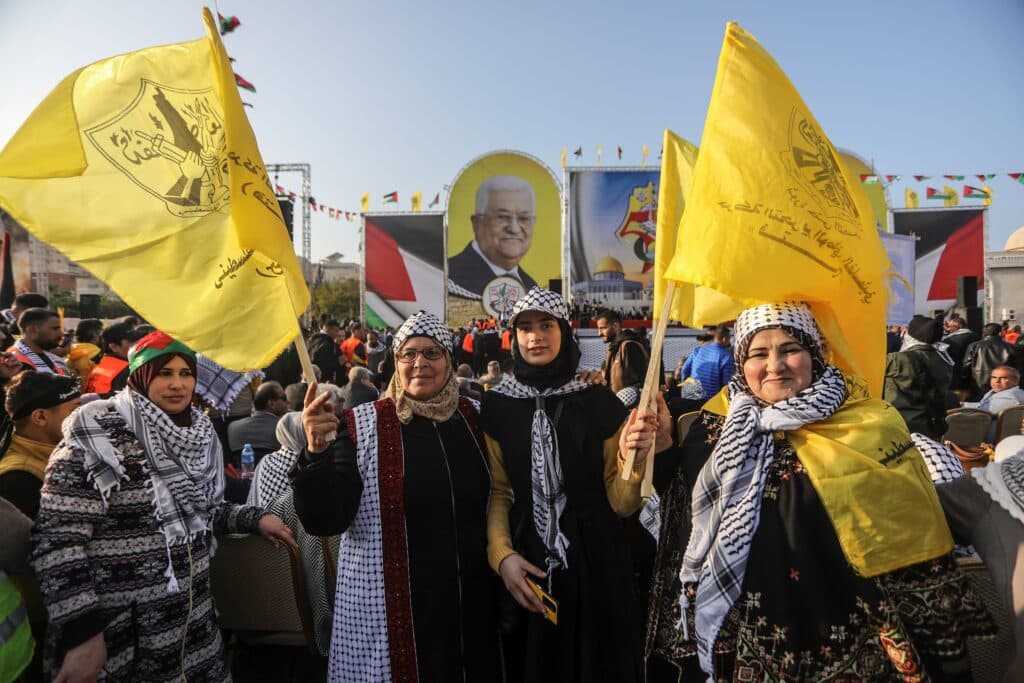
PA elections scheduled for November are facing new uncertainty after senior Fatah official Jibril Rajoub said he does not believe the vote can proceed as planned. Palestinian Authority President Mahmoud Abbas issued a decree in July setting legislative elections for November 28. The Palestinian Central Elections Commission has since published a formal timetable for registration, nominations, campaigning, and voting.
Rajoub, who was elected secretary of Fatah’s Central Committee this weekend, argued that several political steps should have come before Abbas issued the decree. “I do not believe it is possible to hold the elections this coming November,” he said. Rajoub added that a comprehensive national dialogue should have preceded the decision to schedule the vote. Fatah’s Central Committee had publicly discussed election preparations only a day earlier and stressed the importance of remaining ready for the ballot.
Deuteronomy 1:13 tells Israel, “Choose wise, understanding, and knowledgeable men from your tribes, and I will appoint them as your heads.” The verse comes from a very different political system, but its principle remains relevant. Leadership requires legitimacy, preparation, and institutions capable of carrying responsibility rather than merely claiming authority.
PA Elections Face a Test of Credibility
Abbas has publicly insisted that the legislative elections will take place on November 28. In August, he met Central Elections Commission Chairman Rami Hamdallah and reaffirmed that timetable. The commission said preparations were continuing, including voter registration, polling stations, nominations, campaigning, and early voting for security personnel.
The broader electoral calendar is even more ambitious. Abbas previously called Palestinian National Council elections for November 1, while presidential elections are planned for 2027. His government has also amended election law by expanding the Palestinian Legislative Council to 200 seats and lowering the electoral threshold to 1%.
Rajoub’s comments therefore challenge more than one date on a calendar. They raise questions about whether Fatah itself believes the political groundwork is ready. His call for a national dialogue suggests concern about political fragmentation before voters are asked to choose new representatives.
That concern is not abstract. Fatah has faced significant internal divisions, including tensions among senior figures and disputes over the movement’s future leadership. Rajoub’s own election as Central Committee secretary came after months of friction within the organization. Official Fatah statements now emphasize organizational unity and readiness ahead of the planned elections.
Twenty Years Without a Legislative Vote
The last Palestinian legislative elections took place on January 25, 2006. The Palestinian Central Elections Commission recorded turnout of nearly 78% across the electoral districts. No subsequent legislative election has been completed.
That two-decade gap matters because electoral legitimacy has become one of the Palestinian Authority’s deepest institutional weaknesses. Mahmoud Abbas himself won the Palestinian presidential election in 2005. Yet Palestinian voters have not participated in another completed presidential election since then.
The prolonged absence of elections has also complicated American and European efforts to promote Palestinian political reform. Washington has long supported institutions that can govern effectively, maintain security, and operate through accountable structures. A Palestinian leadership that repeatedly schedules elections but cannot complete them faces an obvious credibility problem with both its own population and international partners.
Israel has a different but equally direct interest. Jerusalem needs to know who actually controls Palestinian institutions, security forces, and armed power in areas adjacent to Israeli communities. Political paralysis inside the PA can create openings for Hamas and other terrorist organizations to exploit weak governance.
That security concern is especially relevant after “Israel Katz Warns Palestinian Authority of Full-Scale War.” Katz said Israel was preparing for a far more severe response if PA security bodies ever turned their weapons against Israelis or prepared an October 7-style attack. His warning concerned an extreme security scenario, while Rajoub is discussing elections. Yet both stories point toward the same underlying issue: the stability, authority, and direction of Palestinian institutions matter directly to Israeli security.
Legitimate Government Requires More Than a Decree
The United States and Israel have distinct covenantal histories before God, but both traditions place importance on accountable institutions and leadership bound by responsibility. America’s constitutional tradition rests on regular elections, lawful transfers of authority, and public consent. Israel’s national covenant is different, rooted in the Jewish people, the Land of Israel, and responsibility before God, yet modern Israeli sovereignty also depends on functioning democratic institutions.
That shared respect for accountable government helps explain why Palestinian elections matter beyond internal Fatah politics. A credible Palestinian political system cannot depend indefinitely on presidential decrees without renewed public legitimacy. Nor can elections succeed if factions cannot agree on basic political rules or if armed organizations retain the power to override civilian institutions.
This problem is particularly sharp because Hamas remains an armed movement with its own military infrastructure. Fatah and the Palestinian Authority present themselves as an alternative political system. If that alternative cannot hold regular elections, its claim to institutional legitimacy becomes harder to sustain.
Rajoub’s warning may prove temporary. The Central Elections Commission is still officially preparing for November 28, and Abbas has publicly insisted that the vote will proceed. Nothing in Rajoub’s statement by itself cancels the election.
But the significance of his position is difficult to dismiss. He is not an outside critic questioning the PA from a distance. He is now the secretary of Fatah’s Central Committee, speaking from inside the movement that dominates the Palestinian Authority.
Twenty years after the last legislative election, another postponement would deepen questions already surrounding Palestinian political legitimacy. If November is to mark genuine institutional renewal, Fatah will need more than a decree. It will need the political unity, security conditions, and public confidence required to turn an announced election into an actual one.
For more stories on Israel, faith, and the values behind the headlines, follow Sinai on Facebook and Instagram.
Discussion0
No comments yet — be the first to share your thoughts.