Otzma Yehudit Platform: Four Security Priorities
Otzma Yehudit outlines positions on Hamas, Hezbollah, Judea and Samaria, and Iran as security takes center stage in Israel’s 2026 election
Sinai Desk
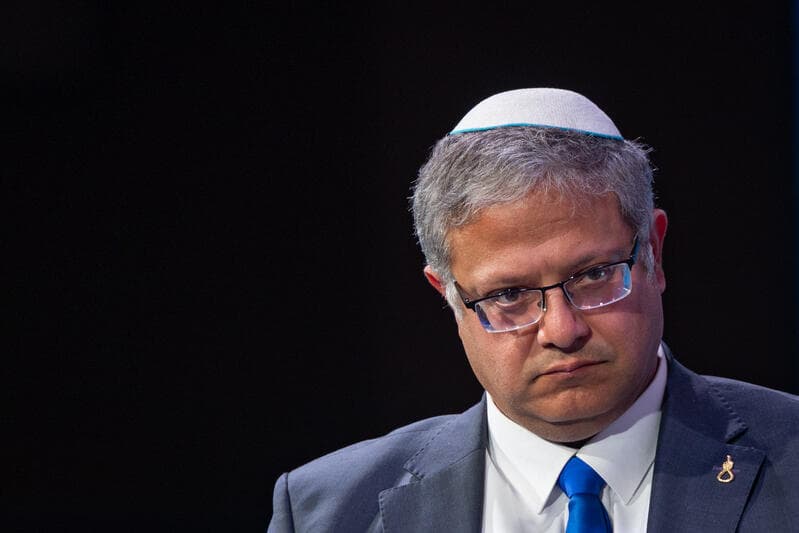
The Otzma Yehudit platform is placing four major security questions at the center of its message ahead of Israel’s October 27 election. The party has outlined positions on defeating Hamas, confronting Hezbollah, Judea and Samaria, and Iran’s nuclear program. The proposals offer voters a clearer picture of what Itamar Ben Gvir’s party would seek to advance in a future government.
Otzma Yehudit has already made security and sovereignty central to its campaign. Ben Gvir is seeking the Defense Ministry in the next government, while the party has called for tougher anti-terror policies and broader Israeli sovereignty. Current reporting also confirms its support for renewed Jewish settlement in Gaza and Israeli sovereignty in Judea and Samaria.
Ecclesiastes 3:8 speaks of “a time of war, and a time of peace.” Israel’s current election is taking place after three years in which questions once treated as theoretical became immediate matters of national defense. Otzma Yehudit is defining its program around what it believes Israel must do after October 7 to prevent another strategic surprise.
Otzma Yehudit Platform on Gaza and Hezbollah
On Gaza, the party’s position calls for defeating Hamas completely. Its program combines renewed Jewish settlement, Israeli control and the elimination of Hamas’s armed infrastructure with a policy encouraging Palestinians to leave Gaza voluntarily.
Ben Gvir recently unveiled a detailed plan called “Disengagement 710.” It seeks to facilitate the voluntary departure of roughly 1.86 million Gazans over seven years. The proposal includes agreements with receiving countries, legal status abroad and financial assistance. It also calls for a dedicated government ministry to oversee the program.
The party says participation would require consent and acceptance by a destination country. Critics argue that large-scale government-backed emigration during wartime could become coercive displacement. Otzma Yehudit rejects that characterization and explicitly describes its proposal as voluntary.
Its Lebanon position goes considerably further than Israel’s current stated security policy. The party summary calls for a large Israeli security zone extending to the Litani River, cleared of Lebanese residents. It also calls for destroying Hezbollah forces without accepting a ceasefire that leaves the organization capable of rebuilding.
Israel already maintains forces in a security zone in southern Lebanon and continues destroying Hezbollah infrastructure there. Prime Minister Benjamin Netanyahu and Defense Minister Israel Katz said in June that Israeli troops would remain in the zone to protect northern communities. However, the government statement did not call for annexing the territory up to the Litani.
The distinction is significant. A permanent annexation policy would represent a major change from the government’s publicly stated approach. It would also become a central diplomatic issue for Washington, which has remained deeply involved in efforts to shape security arrangements between Israel and Lebanon.
Judea and Samaria, the PA and Iran
In Judea and Samaria, Otzma Yehudit supports a substantial expansion of Jewish construction and full Israeli sovereignty. The party says this should extend across Areas A, B and C. It also seeks to dismantle the Palestinian Authority and encourage voluntary Palestinian emigration from the territory.
Those positions are consistent with the party’s recent public statements. Otzma Yehudit told Ynet that it supports establishing Jewish communities throughout Judea and Samaria. It also called for full sovereignty, dismantling the Palestinian Authority’s governing and security structures, and encouraging voluntary migration.
Ben Gvir has linked the issue directly to October 7. Earlier this month, he warned that Israel should not allow a similar attack to emerge from Palestinian Authority-controlled territory near central Israel. He called for dismantling the PA, confiscating its weapons and arresting personnel involved in terrorism.
Iran forms the fourth pillar of the security outline. The party position calls for completely destroying Iran’s nuclear program, even if doing so requires Israel to act independently. It favors cooperation with the United States but argues that American participation cannot become a condition for Israeli action.
That position places the U.S.-Israel alliance inside a familiar strategic debate. Jerusalem benefits enormously from American military cooperation, intelligence and diplomatic support. Yet Israeli governments have also maintained that the Jewish state must retain the ability to act alone against threats they consider existential.
The debate has become more immediate as tensions with Tehran rise again. Iran is reinforcing nuclear and strategic sites while the United States increases its regional military posture. Washington has also continued targeting Iranian financial networks and discussing possible further responses to Tehran’s actions.
Security Policy Meets the Election
The four-point program arrives during an election in which security remains inseparable from coalition arithmetic. “Israel Election Poll: Eisenkot Leads, Blocs Deadlocked” showed how neither major political camp currently has an easy path to the 61 Knesset seats required for a majority.
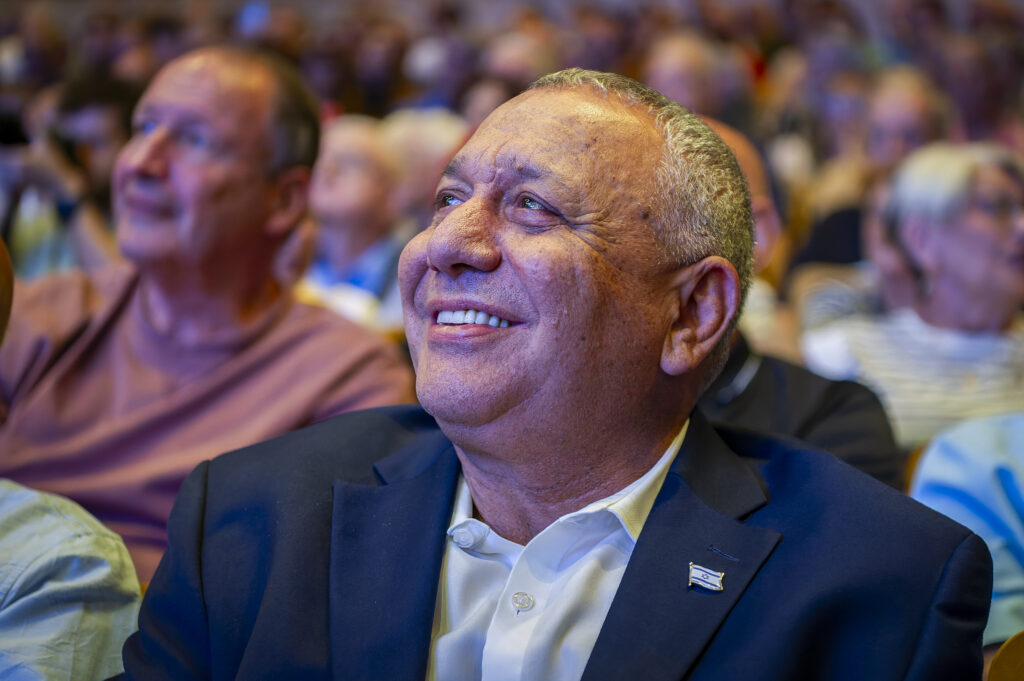
That makes smaller coalition parties especially important. Otzma Yehudit has made clear that participation in another Netanyahu-led government would come with substantive policy demands. Ben Gvir has already said he wants the Defense Ministry, giving these security proposals added significance beyond ordinary campaign rhetoric.
The party’s proposals also reveal where disagreements inside Israel’s right may emerge. Netanyahu and Ben Gvir broadly share opposition to Hamas and concern over Iran. However, renewed Gaza settlement, annexation in Lebanon and the future structure of the Palestinian territories could require decisions far beyond current government policy.
Those questions also affect Washington. Any Israeli government must weigh its freedom of military action against relations with its most important ally. Policies concerning Iran, Lebanon and the Palestinian territories can reshape American diplomacy across the entire Middle East.
Sovereignty, Covenant and Democratic Responsibility
Israel’s covenantal mission before God places a particular weight on sovereignty and the protection of Jewish life. After October 7, arguments over borders, deterrence and territorial control are tied directly to the question of how the Jewish state prevents another massacre. Yet covenantal responsibility also requires leaders to consider the human, diplomatic and strategic consequences of how national power is used.
America’s covenantal tradition follows a different path. It emphasizes liberty, constitutional government and the defense of a free society. The U.S.-Israel alliance brings these two national traditions together on security, but it does not require identical policies on every territorial or military question.
An election is where those distinctions should become concrete. Otzma Yehudit has now placed a clear set of security proposals before Israeli voters. Whether those policies become government policy will depend on the election result, coalition negotiations and the decisions of Israel’s next government.
For more stories on Israel, faith, and the values behind the headlines, follow Sinai on Facebook and Instagram.
Discussion0
No comments yet — be the first to share your thoughts.