El-Sisi on Israel: Arms, Peace and Palestinian State
El-Sisi said Egypt’s military strength should not threaten Israel, while revealing a long-running disagreement with Netanyahu over Palestinian statehood
Sinai Desk
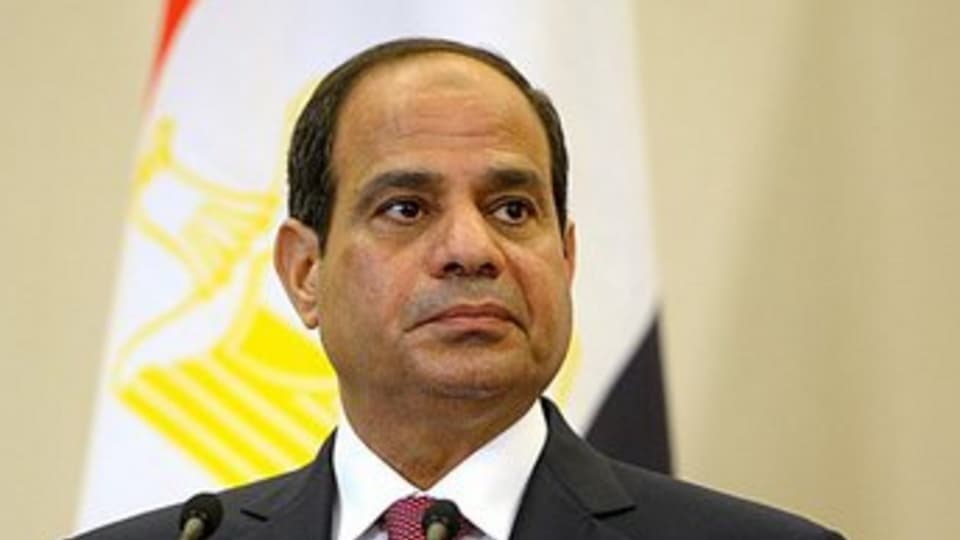
The El-Sisi Netanyahu talks over the years have included unusually direct conversations about Egypt’s military buildup, Israel’s strength and the future of the Palestinians. Egyptian President Abdel Fattah el-Sisi described those exchanges this week, saying Prime Minister Benjamin Netanyahu once asked him why Cairo continued acquiring weapons. El-Sisi answered that he had never regarded Israel’s military strength as a threat to Egypt and expected Israel to approach Egyptian power the same way.
“Netanyahu is responsible for his country, and he knows very well that Egypt will never pose a threat,” el-Sisi said. Recalling one conversation, he quoted Netanyahu asking: “Why are you arming yourself? Why are you acquiring weapons?” El-Sisi said he replied that both countries should understand that military strength does not automatically make one a threat to the other.
Psalm 29:11 declares, “The Lord will give strength unto his people; the Lord will bless his people with peace.” Strength and peace are not presented there as opposites. That principle gives weight to the most constructive part of el-Sisi’s message: Egypt and Israel can remain militarily capable while preserving a peace that has survived decades of regional upheaval.
Sisi Netanyahu Talks Link Strength With Peace
El-Sisi argued that Egypt lives in a turbulent neighborhood and therefore must remain strong. He said that strength helps preserve peace not only with Israel, but across the region. Egypt’s presidency made a similar point this week, reaffirming that Cairo has no territorial ambitions toward Israel and regards the peace treaty as the governing framework between the two countries.
That message matters in Israel. Egypt possesses one of the Arab world’s largest militaries, controls the Suez Canal and shares borders with both Israel and Gaza. The two countries fought multiple wars before the U.S.-brokered peace treaty transformed their relationship. A strong Egypt that remains committed to the treaty can contribute to regional stability rather than undermine it.
The same logic now extends south toward the Red Sea. In “Saudi-Egypt Security Talks as Houthi Threat Grows,” Cairo and Riyadh treated Gulf and Red Sea security as interconnected. El-Sisi has since reiterated that Gulf security forms part of Egypt’s national security and said Cairo stands ready to help preserve maritime navigation.
That is particularly relevant as Iran-backed Houthi attacks place Saudi infrastructure and Red Sea commerce under growing pressure. Egypt depends heavily on secure navigation through the Suez Canal, while Israel and the United States also depend on open maritime routes. The overlap creates real space for strategic coordination, even where Cairo and Jerusalem remain divided politically.
Palestinian State Claim Faces an Israeli Security Objection
El-Sisi’s comments became more contentious when he turned to Palestinian statehood. He said he had repeatedly told Netanyahu that establishing a Palestinian state would bring “true stability” and allow Israel to integrate fully into the region. He concluded simply: “He was not convinced. He was not convinced.”
Egypt has maintained that position consistently. Its presidency said this month that an independent Palestinian state represents the only viable route to lasting regional peace. Cairo has traditionally envisioned such a state along the 1967 lines, with East Jerusalem as its capital.
Yet the claim that Palestinian statehood would itself produce stability faces a fundamental Israeli security objection after October 7. Netanyahu has explicitly rejected the creation of a Palestinian state west of the Jordan River. In a September 2025 statement, he argued that recognizing Palestinian statehood after the Hamas massacre would amount to rewarding terrorism rather than creating peace.
The central question is therefore not merely whether Palestinians receive internationally recognized sovereignty. Israel must also consider who controls that state, who possesses its weapons and whether its territory could become a platform for another large-scale attack.
October 7 transformed that debate. Hamas governed Gaza after Israel withdrew its permanent military presence and dismantled its settlements there in 2005. Hamas later seized full control of the territory in 2007. The October 7 attack then demonstrated how an armed organization positioned beside Israeli population centers could inflict catastrophic damage.
That does not by itself settle every argument over Palestinian statehood. Supporters of a two-state solution, including Egypt, argue that a sovereign Palestinian political framework would reduce conflict and allow wider normalization. Israel’s objection is that sovereignty without enforceable demilitarization and reliable governance could create new strategic vulnerabilities rather than eliminate old ones.
The dispute therefore exposes a real divide between el-Sisi and Netanyahu. They appear closer on deterrence between established states than on what political structure can safely emerge beside Israel.
Peace Must Rest on More Than Promises
The United States has a major stake in both sides of that discussion. American diplomacy helped produce the Egypt-Israel peace treaty, one of the most durable achievements in modern Middle Eastern diplomacy. Egypt also reaffirmed this week its support for President Donald Trump’s broader Gaza peace framework and continued U.S.-led regional diplomacy.
Washington benefits when Egypt and Israel view one another’s military strength through deterrence rather than suspicion. The same relationship supports American interests in the Suez Canal, Red Sea commerce, counterterrorism and containment of Iranian regional power.
Israel’s covenantal mission before God places the preservation of Jewish life and sovereignty at the center of national responsibility. Peace is valuable precisely because it protects life, but Jewish sovereignty also demands vigilance about agreements that could expose the country to another existential threat.
America’s covenantal tradition carries a separate responsibility centered on liberty, security and the defense of a stable international order. Its role in the Egypt-Israel peace shows what sustained diplomacy can accomplish when agreements rest on enforceable commitments and mutual deterrence.
El-Sisi’s remarks therefore contain both an encouraging lesson and a serious disagreement. His insistence that Egyptian and Israeli strength can coexist with peace reflects nearly half a century of evidence. His confidence that Palestinian statehood would automatically produce the same result remains far more disputed.
A durable peace requires more than a map or diplomatic recognition. It requires institutions, security guarantees and leaders capable of ensuring that territory intended for peace cannot become another launching ground for war.
For more stories on Israel, faith, and the values behind the headlines, follow Sinai on Facebook and Instagram.
Discussion0
No comments yet — be the first to share your thoughts.