Nadim Gemayel: Lebanon Needs Ties With Israel
Nadim Gemayel says Lebanon should strengthen international ties with all countries, including Israel, as Beirut debates sovereignty and Hezbollah’s future


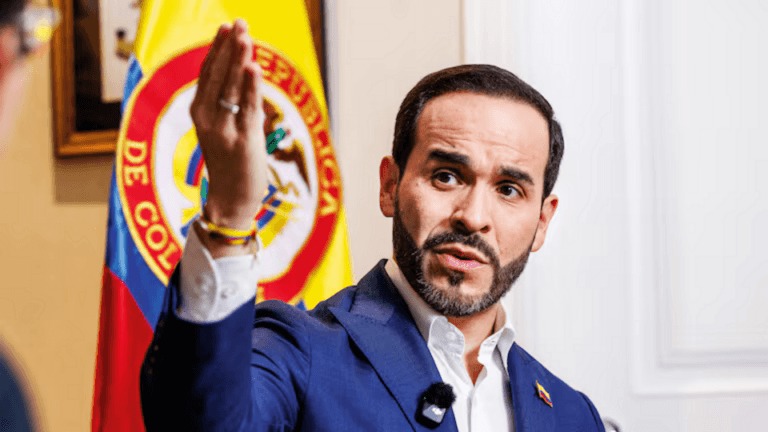
Nadim Gemayel said Lebanon can only protect itself by strengthening its international relationships with other countries, explicitly including Israel. The Christian Kataeb Party lawmaker’s remarks add to a growing Lebanese debate over sovereignty, Hezbollah’s weapons, and Beirut’s future relationship with the Jewish state.
“Lebanon can only be protected by strengthening international ties with everyone, including Israel,” Gemayel said.
The idea of former regional adversaries building relationships has a striking biblical parallel. Isaiah 19:23 envisions a highway linking Egypt and Assyria, with peoples once divided by conflict moving between them. The passage presents a Middle East where connection can replace permanent hostility. Gemayel’s argument applies that principle to Lebanon’s modern security dilemma: isolation and endless confrontation have not produced sovereignty or stability.
Nadim Gemayel Challenges Lebanon’s Old Israel Policy
Gemayel’s statement comes as Lebanon and Israel are already engaged in U.S.-mediated talks aimed at ending decades of conflict. A framework reached earlier this summer includes mutual recognition of sovereignty, Israeli withdrawal arrangements, and the gradual disarmament of Hezbollah. The Lebanese Armed Forces would expand state control as the process advances.
His position therefore goes beyond a symbolic willingness to speak with Israelis. Gemayel is arguing that Lebanon’s security depends on broader international engagement rather than continued alignment with Tehran’s regional strategy.
That view follows directly from his earlier sovereignty arguments. In “Lebanese Politician: Iran Has No Right To Speak For Lebanon,” Gemayel rejected Tehran’s attempts to negotiate over Lebanon’s future. He argued that only the Lebanese state can represent the country in talks involving its borders and security.
Gemayel has repeatedly made the same point in other contexts. He has warned that Lebanon must not become an Iranian bargaining chip and has insisted that negotiations remain under state authority. He has also called for the Lebanese army and security forces to replace armed groups operating outside state control.
From Hezbollah’s Front Line to Regional Diplomacy
The significance for Israel is substantial. For decades, Hezbollah has justified its independent arsenal through confrontation with Israel. Iran has supplied and supported the organization while treating Lebanon as part of its wider regional strategy.

A sovereign Lebanon with functioning ties to Israel would challenge that model. Diplomacy would move questions of borders and security from militias to governments. It could also give Lebanese leaders alternatives to the cycle of escalation that repeatedly brings destruction to both sides of the border.
The United States has a direct interest in that transition. Washington has mediated the current Israel-Lebanon framework and continues to support strengthening the Lebanese state. President Donald Trump discussed Hezbollah’s disarmament and Lebanon’s sovereignty with President Joseph Aoun at the White House in July. The administration has also backed stronger Lebanese state institutions as an alternative to Hezbollah’s military power.
Gemayel’s statement therefore fits a much larger strategic question. Lebanon must decide whether its security will come through sovereign diplomacy and international partnerships or through an armed organization tied to Tehran.
A Covenant of Peace Through Strength
America and Israel share a covenantal tradition that treats national freedom as both a gift and a responsibility before God. Both understand that sovereignty must be defended, but neither national ideal requires permanent hostility with neighboring peoples. Strength has its highest purpose when it protects life and creates the conditions for genuine peace.
That principle has shaped the American belief that free nations can build alliances instead of living under coercion. Israel’s covenantal story carries a parallel responsibility: preserve Jewish sovereignty, defend the people of Israel, and seek a future in which security allows the nation to live rather than remain trapped in endless war.
Those traditions meet naturally in Lebanon’s current choice. Washington and Jerusalem both benefit from a Lebanon strong enough to make its own decisions, control its territory, and pursue relationships without Iranian veto power. Peace between sovereign nations would not erase their differences. It would place those differences in the hands of governments and diplomacy rather than missiles and militias.
Gemayel’s willingness to include Israel among Lebanon’s international relationships therefore represents more than a change in rhetoric. It challenges the assumption that hostility must define the countries forever and offers a different vision of how Lebanon might protect its sovereignty.
For more stories on Israel, faith, and the values behind the headlines, follow Sinai on Facebook and Instagram.
Discussion0
No comments yet — be the first to share your thoughts.