Boy George Israel Concert Follows Pro-Israel Stand
Boy George will perform in Tel Aviv after facing professional backlash for his October 7 tribute and outspoken support for Israel and Jewish friends

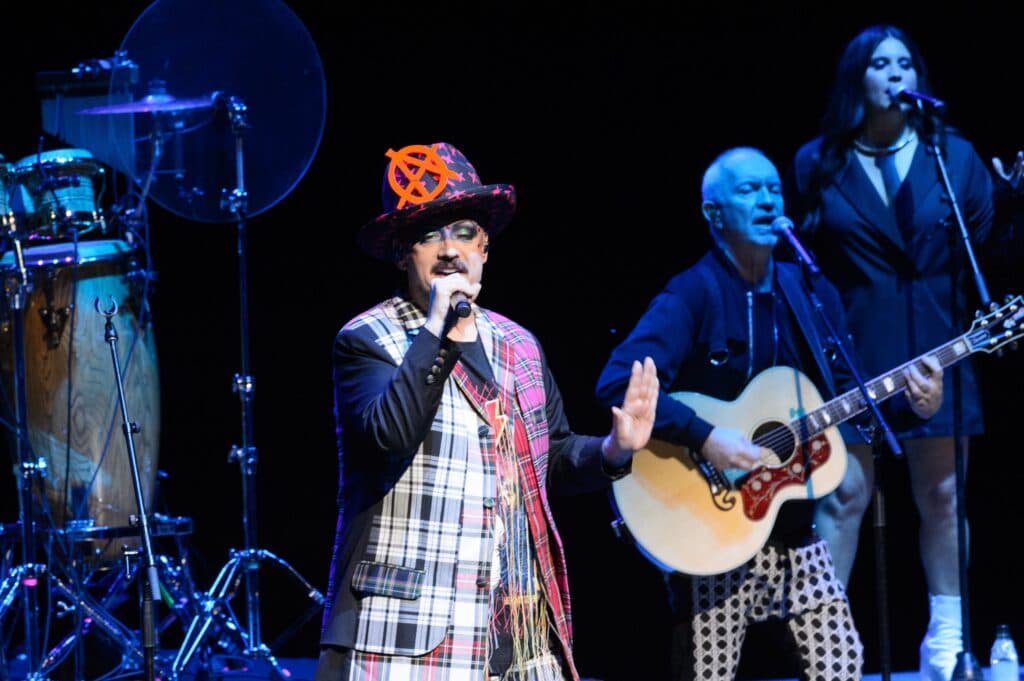
A Boy George Israel concert is set for November 4 in Tel Aviv, months after the British pop icon faced professional fallout for publicly standing with Israel and the Jewish community. George will perform at Menora Mivtachim Arena in a 360-degree show. He described the invitation as an honor and promised an evening centered on positivity and love.
The appearance carries meaning beyond another stop on an international tour. In July, George released “We Will Dance Again,” a song inspired by the Hamas-led October 7 massacre and the Nova music festival. The song remembered those murdered while dancing and rejected accusations that Israel’s war against Hamas amounts to genocide. It also criticized artists who condemn Israel while, in George’s view, overlooking October 7.
Proverbs 31:8 says, “Open thy mouth for the dumb in the cause of all such as are appointed to destruction.” George has never presented himself as a spokesman for Israel. Yet his willingness to speak when many artists chose silence gave his words unusual weight among Israelis and Jews who felt abandoned after October 7.
Boy George Israel Concert Comes After Backlash
George’s position carried real professional consequences. He said he parted ways with Tony Pontius, who had managed his BGP record label, after Pontius refused to release “We Will Dance Again.” George said the dispute stemmed directly from his decision to stand by his Jewish friends.
He also withdrew from a London production of Jesus Christ Superstar shortly after the controversy erupted. His management did not publicly attribute that decision to the Israel dispute. However, it came amid intense criticism of the song and calls targeting his participation in the production.
George also resisted pressure surrounding Eurovision earlier this year. While appearing with San Marino’s delegation, he rejected calls to boycott the competition because Israel was participating. He said he would not turn his back on his Jewish friends.
That history makes the November performance significant. He is returning not after avoiding the controversy, but after choosing to maintain his relationship with Israel despite it.
From American Pop Culture to Jewish Solidarity
Boy George’s career also has a deep American connection. Culture Club became one of the defining international acts of the 1980s and won the 1984 Grammy for Best New Artist. His distinctive appearance and refusal to conform made him an unusually visible figure in American popular culture at the time.

That background makes his current stance particularly interesting. George built much of his public identity around individual expression and refusing to let others determine who he should be. His decision to stand with Jewish friends despite pressure follows that same principle of personal conscience, even in a completely different context.
His religious background is also more complicated than simply calling him Christian. George was raised Catholic and later said he never renounced that heritage. He has also described himself as a practicing Buddhist, famously summarizing his outlook as Catholic in his “complications” and Buddhist in his “aspirations.”
The significance therefore lies less in assigning him a religious label than in the moral language he has used. George has framed his support as a human response to murdered civilians, Jewish friends and people whose suffering he believes others have ignored.
The cultural debate runs in both directions. In “Adèle Haenel Replay Removed After Gaza Remarks,” France Télévisions removed a program replay after Haenel accused Israel of genocide and demanded sanctions, citing the absence of opposing viewpoints. George’s experience shows another side of the same increasingly bitter cultural environment: artists who defend Israel can also encounter institutional and professional pressure.
Memory, Freedom and the Courage to Speak
Israel and the United States share traditions that give unusual importance to memory, freedom of conscience and the defense of people targeted for who they are. Israel’s covenantal story demands remembrance of Jewish suffering while insisting that Jewish life continue. American civic tradition has likewise elevated the freedom to speak unpopular convictions without surrendering to social conformity.
Those ideas meet naturally in George’s story. An artist celebrated in America for challenging conventions later used his platform to stand beside Jews when doing so had become professionally costly. His message did not require audiences to agree with every Israeli policy. It insisted that October 7 itself should not disappear from the moral conversation.
That is also why “We Will Dance Again” resonated with many Israelis. The phrase grew from the Nova massacre into a declaration that Jewish and Israeli life would not remain frozen at the moment of attack. Music, dancing and ordinary life would return.
The Boy George Israel concert will now bring that message to Tel Aviv in person. For an Israeli audience that has watched international artists cancel appearances, join boycott campaigns or distance themselves from the country, his arrival represents something more than celebrity entertainment. It is the continuation of a relationship he chose to preserve when preserving it came with a cost.
For more stories on Israel, faith, and the values behind the headlines, follow Sinai on Facebook and Instagram.
Discussion0
No comments yet — be the first to share your thoughts.