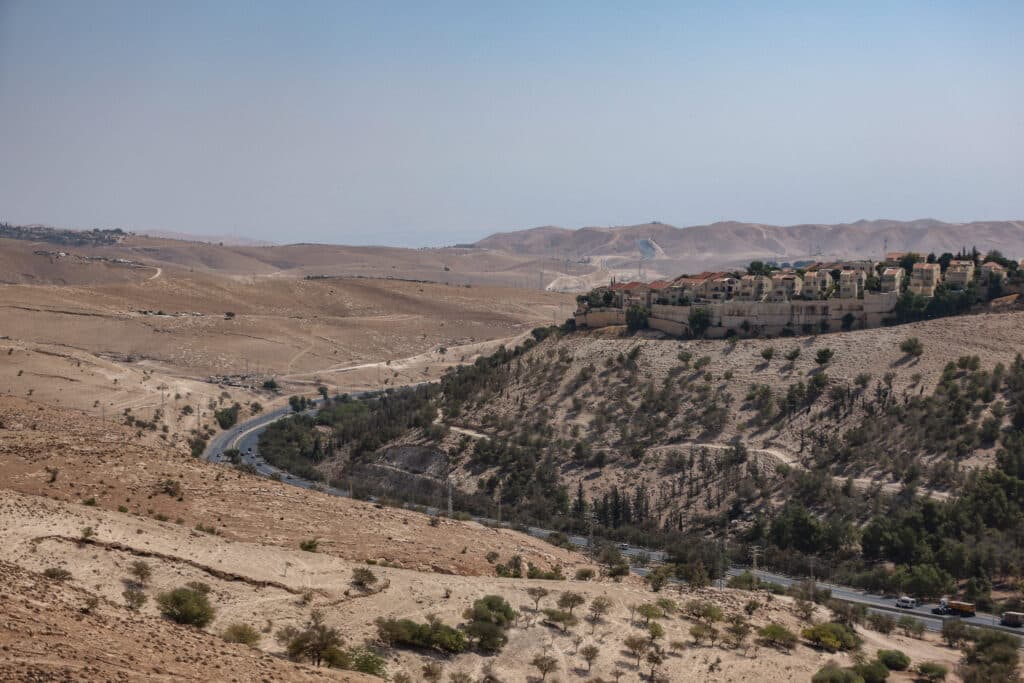
From King Solomon’s Wisdom to Mia Schem’s Liberation: Prayers for Hostages’ Safe Return
Today, as almost 100 hostages being brutally held in Gaza cry out for deliverance, we are reminded of King Solomon’s timeless words, urging God’s people to pray fervently, seek His face, and trust in His justice. In a world often marked by conflict and uncertainty, the holy city of Jerusalem stands as a beacon of

Today, as almost 100 hostages being brutally held in Gaza cry out for deliverance, we are reminded of King Solomon’s timeless words, urging God’s people to pray fervently, seek His face, and trust in His justice.
In a world often marked by conflict and uncertainty, the holy city of Jerusalem stands as a beacon of hope and faith for millions. For many of us, its significance is deeply intertwined with our heritage and our faith in God’s eternal promises.
As we navigate this time of war and turmoil since October 7th, King Solomon’s prayer for Jerusalem offers both a guide and a challenge. What does it mean to pray with purpose for the hostages and for God’s intervention in the Land of Israel? Let us journey back to the sources, to rediscover King Solomon’s words, and to answer this call with faith and action.
King Solomon’s Prayer: A Model for Us Today
Nearly 3,000 years ago, King Solomon (Shlomo HaMelech) dedicated the First Temple (Beit HaMikdash) in Jerusalem with a prayer so powerful that it echoes through the generations:
King Solomon asks God that if there is a situation of hostages of the People of Israel, who were taken, “captive to a land far or near” God should hear them from “His dwelling place . . . hear their prayer and their pleas, and uphold their cause” (2 Chronicles 6:36–39).
This moment was not merely a ceremony — it was a declaration of Jerusalem’s role as a holy anchor for the people of God. Solomon’s prayer emphasized repentance, reconciliation, and reliance on God’s mercy, also in times of great distress. His words were inclusive, acknowledging not only the Israelites but also “the foreigner who does not belong to Your people Israel but has come from a distant land because of Your great name” (2 Chronicles 6:32–33).
In this profound prayer, Solomon prays on behalf of those who might be taken captive, asking God to hear their prayers from distant lands and bring deliverance. Today, as we witness the plight of hostages held in unimaginable circumstances, Solomon’s prayer rings with renewed urgency. Just as he pleaded for God to hear prayers directed toward Jerusalem, we too are called to lift our voices in prayer for the innocent and afflicted.
“I sat and said the prayer ‘Shema Yisrael.’ If I didn’t die on the 7th of October, I’m not dying now. I trusted the IDF.”
Liberated hostage Mia Schem, a 21-year-old French-Israeli woman, was abducted by Hamas militants during the attack on the Nova music festival on October 7, 2023. She endured 54 days of captivity in Gaza under harrowing conditions before her release on November 30, 2023. During her captivity, Mia’s faith played a crucial role in sustaining her as she wrote about on her Instagram account.
In an interview conducted after her release, Mia said, “I sat and said the prayer ‘Shema Yisrael.’ If I didn’t die on the 7th of October, I’m not dying now. I trusted the IDF.” She explains that she wasn’t allowed to speak in case an Israeli drone would pick up her voice. She would say to herself quietly a prayer in Hebrew, so maybe the drone would hear her, “God, please help me. It’s Mia Schem here.” Mia Schem’s faith is still strong. In November, 2024 she said: “With God’s help, thanks to our prayers, everyone will be able to return home”
Watch the full interview with Mia Schem following her release from captivity:
The Call to Pray for Hostages
The issue of hostages is not merely a geopolitical matter—it is a deeply human one. Behind every headline are fathers, mothers, sons, and daughters, all bearing the image of God and deserving of dignity and freedom. When we pray for hostages, we are joining in the great biblical tradition of praying for someone else. We echo the cries of the psalmist: “Arise, O Lord! Deliver me, my God! Strike all my enemies on the jaw; break the teeth of the wicked” (Psalm 3:7).
And we draw inspiration from Solomon’s plea that God would hear the prayers of captives and restore them. Our prayers are not passive gestures. They are acts of faith that move the heart of God and invite His power into impossible situations. Just as God delivered His people from Egypt, parting the Red Sea in response to their cries, we can trust that He sees and hears the prayers of those held captive today.
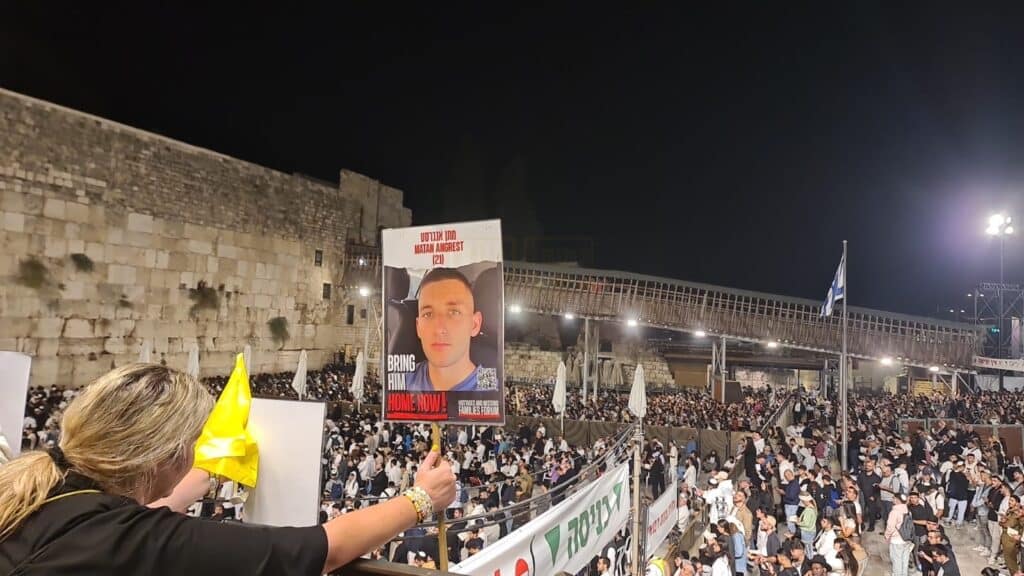
Traditional Jewish Prayer for Release of Hostages at the Western Wall Plaza, January, 2024. Credit: The Western Wall Heritage Foundation
Jerusalem: A Holy City of Peace and Promise
Jerusalem is not just a city — it is a holy promise. It is the place where God has chosen to establish His name as the Bible says: “I have chosen Jerusalem for My name to be there, and I have chosen David to rule My people Israel” (2 Chronicles 6:6). By praying for hostages in Jerusalem, we are aligning our hearts with God’s eternal purposes for the city and its people. Our prayers are not just for physical freedom but also for spiritual renewal, for reconciliation, and for the fulfillment of God’s plans in this holy place.
A Challenge for Today
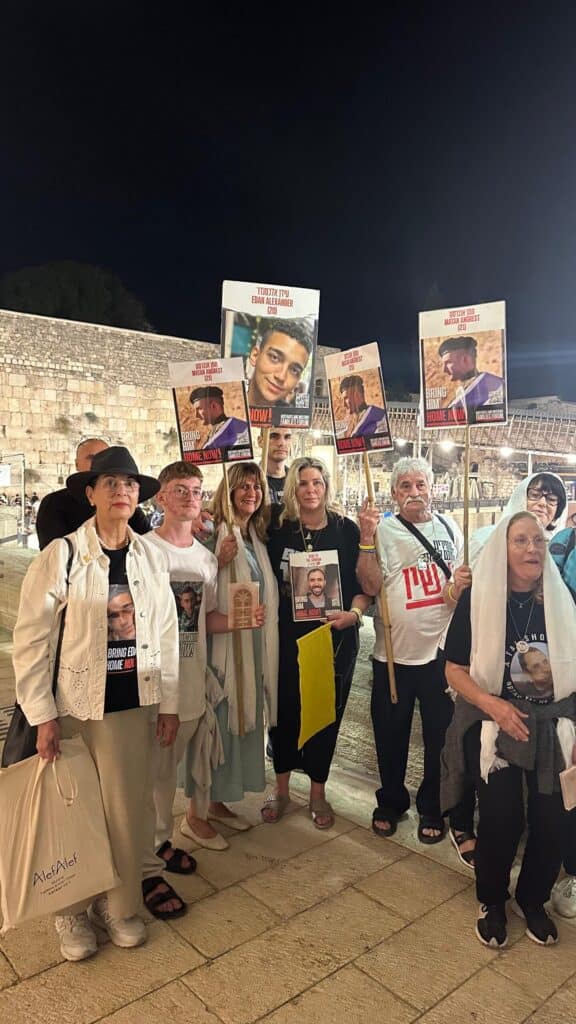
King Solomon’s words challenge us to pray with urgency and expectation. Let us lift up the hostages by name when possible and ask God to move the hearts of leaders and negotiators. Let us pray for Jerusalem and for all who live within its borders, trusting in God’s promise to hear and deliver.
As Solomon prayed, so must we: “May Your eyes be open toward this temple night and day, toward the place of which You said You would put Your name there; may You hear the prayer Your servant prays toward this place” (2 Chronicles 6:20). May our prayers rise like incense, and may God bring deliverance to the hostages, peace to Jerusalem, and glory to His name.
Discussion0
No comments yet — be the first to share your thoughts.