Joint List Deal Reunites Arab Parties, Ra’am Urged To Join
Hadash, Ta’al, and Balad agreed to revive a joint Arab slate, while Balad chairman Sami Abu Shehadeh urged Ra’am to join the alliance


The Joint List deal has returned Arab party unity to Israel’s election debate after Hadash, Ta’al, and Balad agreed to run together.
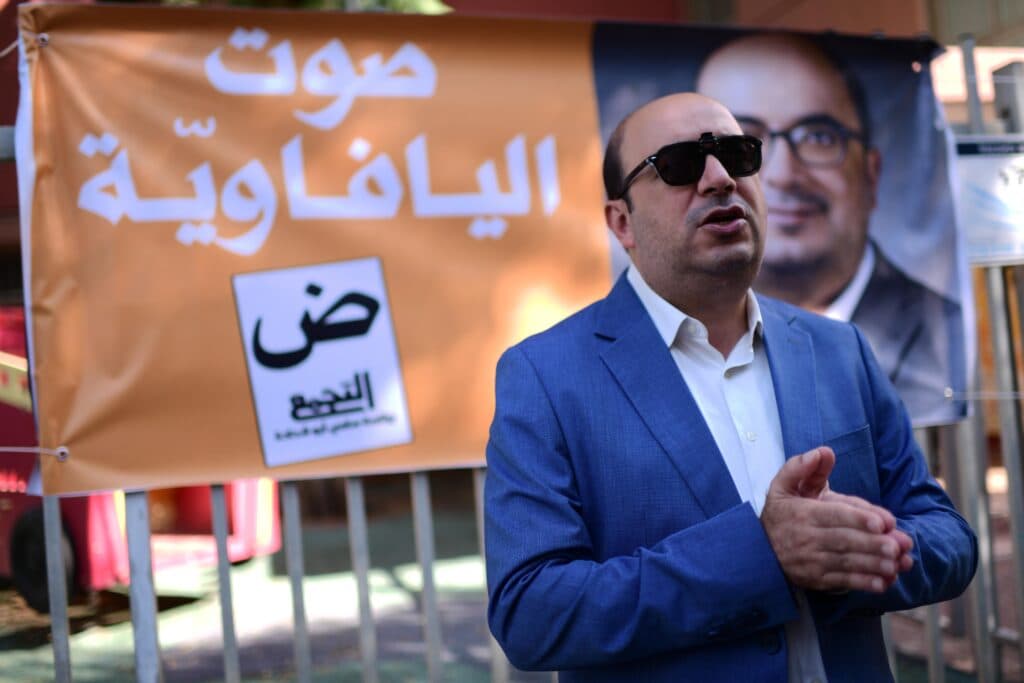
After the agreement, Balad chairman Sami Abu Shehadeh called on Ra’am to join the alliance as well.
“We call on our brothers in Ra’am to return to the embrace of their people, not to stray from the line,” Abu Shehadeh said. “We want a joint list of the four parties.”
For American readers, the story requires a basic explanation of Israel’s political system. Israel does not elect lawmakers by district. Instead, voters choose national party lists, and parties win Knesset seats based on their share of the national vote.
Proverbs says, “Where there is no counsel, the people fall, but in the multitude of counselors there is safety.” In Israeli politics, that principle often becomes a question of representation: which communities unite, which parties split, and how voters choose who speaks for them.
Joint List Deal
The Joint List is an electoral alliance of Arab-majority parties in Israel. It first formed before the 2015 election, after Israel raised the electoral threshold. The higher threshold made it harder for smaller parties to enter the Knesset alone.
The point of the Joint List was practical as well as political. By running together, several Arab parties could avoid losing votes below the threshold and increase Arab representation in the Knesset.
The current agreement includes Hadash, Ta’al, and Balad. Ra’am, led by Mansour Abbas, remains outside the alliance for now.
That matters because Ra’am once ran with the other parties, but later chose a different political path. In 2021, Ra’am became the first Arab party to join an Israeli governing coalition, entering the Bennett-Lapid government.
Who The Parties Are
Hadash is a Jewish-Arab left-wing list with communist roots. Its full name means the Democratic Front for Peace and Equality. It emphasizes Arab-Jewish cooperation, social equality, and opposition to Israel’s right-wing governments.
Ta’al, the Arab Movement for Renewal, is associated with Ahmad Tibi. It focuses heavily on Arab civil rights, equality, and Palestinian issues, and has often run with other Arab parties rather than alone.
Balad, officially the National Democratic Assembly, is a Palestinian nationalist and Arab nationalist party. It stresses the national identity of Arab citizens of Israel and often takes a harder ideological line than the other Arab parties.
Ra’am, also called the United Arab List, has roots in the southern branch of the Islamic Movement. Under Mansour Abbas, it has taken a more pragmatic approach, focusing on budgets, crime, housing, and services for Arab communities.
In simple American terms, the Joint List is not one party with one ideology. It is more like a temporary election bloc. The parties share an Arab voter base, but they differ sharply on religion, nationalism, socialism, pragmatism, and cooperation with Israeli governments.
Israel’s Domestic Fault Lines
The new Arab party talks come as Israel’s election season highlights several deep internal debates. That domestic pressure also appeared in “Haredi Draft Debate: Bennett Vows ‘No Exceptions.’” That article focused on Naftali Bennett’s pledge to draft eligible ultra-Orthodox men and the wider argument over Torah study, military service, and shared responsibility.

The Joint List story shows another side of Israel’s civic structure. Israel’s democracy includes Jewish, Arab, secular, religious, nationalist, left-wing, right-wing, Islamist, and ultra-Orthodox political forces. They do not agree on the state’s identity, security policy, or public priorities, but they compete inside the same parliamentary system.
For Israel, Arab party unity can affect coalition math. A stronger joint slate could increase Arab representation and influence after the election. A split between Ra’am and the other parties could divide Arab voters and shape the final balance between blocs.
For Americans, the key point is that Arab citizens of Israel vote, run parties, sit in parliament, and debate strategy inside the state’s political system. Their parties often oppose Zionist parties on major issues, but they still play a real role in Israel’s elections.
Covenant Of Representation And Responsibility
The United States and Israel carry separate covenantal missions before God, but both understand that national life depends on representation, civic responsibility, and contested debate. America’s covenantal tradition built a system where different communities argue over power through ballots rather than force. Israel’s covenantal story is older, rooted in Torah, peoplehood, sovereignty, and the return of Jewish self-government to the land.
That does not make Israeli politics simple. It makes it consequential.
The Joint List deal is not only an Arab party story. It is part of Israel’s larger election map, where identity, security, religion, citizenship, and representation all meet. Abu Shehadeh wants four Arab parties united. Ra’am must decide whether unity serves its voters better than independence.
The answer could shape Arab turnout, Knesset seats, coalition possibilities, and the next government’s room to govern.
For more stories on Israel, faith, and the values behind the headlines, follow Sinai on Facebook and Instagram.
Discussion0
No comments yet — be the first to share your thoughts.