Italy School Burqa Ban Sets 30% Student Cap
Italy approved a school ban on burqas and niqabs alongside a 30% cap for certain foreign students, reopening debate over integration and religious freedom

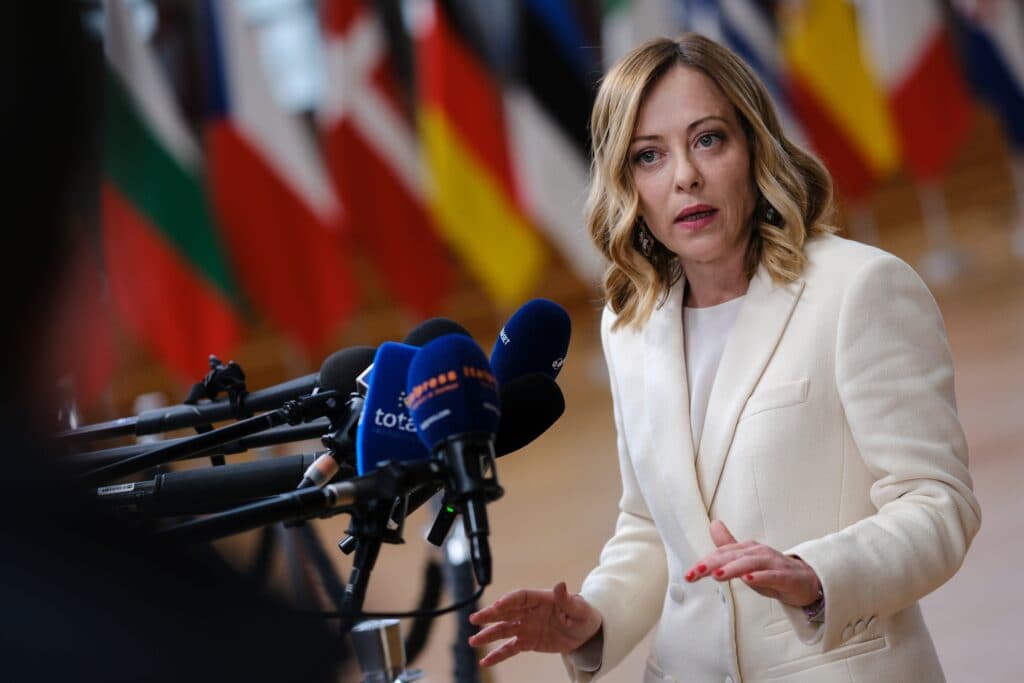
Italy has approved an Italy school burqa ban alongside new rules intended to increase language integration among foreign students. Prime Minister Giorgia Meloni’s government approved the school decree Thursday. It prohibits face coverings that prevent identification, including burqas and niqabs, during school activities. The measure also introduces a 30% limit for certain foreign students in incoming classes beginning with the 2027-28 school year.
The rule does not prohibit the ordinary hijab, which leaves the face visible. Violations of the face-covering provision can bring administrative fines ranging from €200 to €1,000. If the student is a minor, the penalty applies to the parent. Contrary to some initial descriptions, the fine is aimed at the person violating the rule or the responsible parent, not generally at the school itself.
Meloni described the package as an integration measure rather than an attempt to exclude immigrant children. She said the government wants to prevent what she called “ghetto classrooms” and give students a common linguistic foundation. Critics, including education unions and Amnesty International Italy, argue that parts of the policy could instead discriminate against immigrant and Muslim students.
Jeremiah 29:7 tells the exiled Jewish community to “seek the peace of the city” where they live. The verse speaks to a difficult balance that reaches beyond modern immigration politics: maintaining distinct identity while participating fully in the society around you. Italy’s new rules place that question directly inside the classroom.
Italy School Burqa Ban Focuses on Face Visibility
The decree is broader than a ban on particular Islamic garments. Its text prohibits participation in curricular, extracurricular and school-family activities when a person’s face is concealed so that identification becomes impossible. Officials have cited burqas and niqabs as principal examples, but the rule can also apply to other forms of face concealment without a legitimate health or security reason.
Meloni had previewed the policy days earlier, saying students should attend school with their faces visible. She argued that no tradition should compel a young woman to hide herself. Supporters frame the restriction as a question of identification, communication and integration, while opponents argue that it could burden religious freedom and discourage affected girls from attending school.
The government’s 30% rule is also more specific than a simple cap on all foreign students. In primary school, it covers pupils who are not Italian citizens and either were not born in Italy or did not attend at least two years of Italian preschool. In lower and upper secondary schools, the limit applies to non-Italian students who have not successfully completed at least three years in Italy’s education system. The rules apply to first-year classes from 2027-28.
Education Minister Giuseppe Valditara said about 34,000 Italian classes currently have foreign-student populations above 30%. He argued that stronger Italian-language skills are essential for academic integration. The government has paired the limits with additional language support and free Italian courses for some parents whose language barriers interfere with their children’s schooling.
Integration Versus Religious Freedom
The dispute reflects a broader European argument about how democracies should balance immigration, religious expression and a common civic culture. Meloni says integration requires immigrants to learn Italian and participate in national institutions rather than forming parallel communities. Critics counter that integration can fail when government policies make minorities feel targeted because of religion or national origin.
The United States approaches these questions through a substantially different legal framework. The First Amendment protects the free exercise of religion, while federal civil-rights rules require public schools to address language barriers so English learners can participate meaningfully in education. U.S. schools therefore also pursue language integration, but broad restrictions on religious expression face strong constitutional constraints.
Israel presents another model. Its Declaration of Independence defines the state through Jewish national restoration while promising equality and freedom of religion, conscience, language, education and culture. That combination creates its own continuing debate over how a country can preserve a strong national identity while protecting minority communities and religious practice.
Those questions also intersect with themes raised in “Netanyahu UN Speech: Israel Will Prevail.” Netanyahu’s address emphasized Jewish continuity, national sovereignty and the pressures Israel faces from terrorism and international hostility. Italy’s school decree concerns a very different policy arena, but both debates involve the relationship between national identity, security, minority rights and the obligations of democratic states.
Identity, Freedom and Civic Responsibility
Jewish covenantal tradition does not erase the distinction between a people’s identity and its obligations toward those living among them. Israel’s modern national framework reflects both elements: the state exists as the national home of the Jewish people while its founding declaration commits it to freedom of religion and equal civil rights.
America’s national tradition developed separately. Its constitutional structure begins from strong limits on government interference with religious practice, while its education laws also require schools to help students overcome language barriers. The American model therefore places religious liberty and integration beside one another rather than treating either as sufficient on its own.
Italy is now attempting to define that balance for its own schools. Meloni’s government argues that visible faces, Italian-language proficiency and mixed classrooms can strengthen integration. Opponents contend that numerical limits and restrictions associated closely with Muslim dress risk producing the exclusion the government says it wants to prevent.
The Italy school burqa ban will therefore be judged on more than whether students remove face coverings. Its larger test will be whether the new framework improves language learning and classroom cohesion while preserving equal access to education. The decree must also pass through Italy’s parliamentary process, giving lawmakers another opportunity to debate where integration ends and unnecessary restriction begins.
For more stories on Israel, faith, and the values behind the headlines, follow Sinai on Facebook and Instagram.
Discussion0
No comments yet — be the first to share your thoughts.