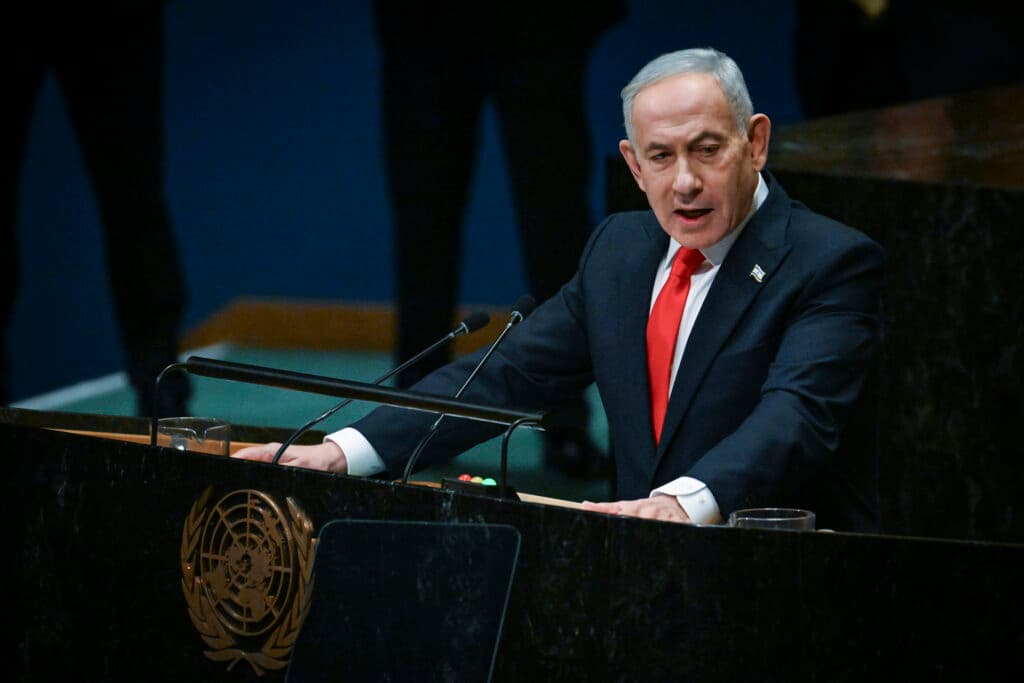
Ben-Gvir: Recognize Falkland Islands as Argentine Territory
Ben-Gvir called on Netanyahu to recognize Argentina’s Falkland Islands claim and sanction Britain as tensions rise over UK measures targeting Judea and Samaria


The Ben-Gvir Falkland Islands proposal has opened another front in Israel’s growing diplomatic confrontation with Britain. National Security Minister Itamar Ben-Gvir called on Prime Minister Benjamin Netanyahu to recognize Argentine sovereignty over the islands, known in Argentina as the Islas Malvinas. He described the British presence there as an occupation and demanded Israeli sanctions against the United Kingdom while it continues. His statement came as London prepared new economic measures targeting Israeli communities in Judea and Samaria.
“The time has come for the State of Israel to publicly recognize the Falkland Islands as occupied Argentine territory,” Ben-Gvir wrote in Spanish. He accused Britain of taking the territory by force and criticized British-backed oil drilling around the islands. Ben-Gvir then urged Netanyahu to recognize Argentina’s sovereignty and impose sanctions on Britain “for as long as the occupation continues.” Argentine President Javier Milei later shared Ben-Gvir’s post on social media.
Zechariah 8:16 instructs, “Speak the truth to one another; render in your gates judgments that are true and make for peace.” Territorial disputes test that principle because history, sovereignty, law, and national identity often collide. Israel has strong reason to challenge countries that apply standards to Jewish sovereignty that Israelis believe those governments would reject for themselves. At the same time, such arguments are strongest when the competing historical and legal claims are stated clearly.
Ben-Gvir Falkland Islands Call Follows UK Pressure
Ben-Gvir’s intervention came directly after reports that Britain planned restrictions on trade with Israeli communities in Judea and Samaria. Finance Minister Bezalel Smotrich responded by demanding the immediate expulsion of the British ambassador. The confrontation was detailed in “UK Settlement Trade Ban: Smotrich Calls to Expel Ambassador,” which examined London’s planned economic measures and Israel’s increasingly forceful response.

The Falkland Islands dispute gives Ben-Gvir a deliberately pointed way to answer British criticism. Argentina maintains that the Malvinas, South Georgia, South Sandwich Islands, and surrounding maritime areas form part of Argentine territory. Buenos Aires describes the sovereignty claim as permanent and constitutionally mandated. Britain rejects that position and says it has no doubt about its sovereignty over the islands.
The United Kingdom also emphasizes the wishes of the islanders themselves. In a 2013 referendum, 99.8% of participating voters supported remaining a British Overseas Territory. London regards that result as an exercise of self-determination and says sovereignty should not change against the islanders’ wishes. Argentina disputes the British interpretation of the issue and continues to press for bilateral sovereignty negotiations.
That distinction matters when reporting Ben-Gvir’s statement. Calling the islands “occupied Argentine territory” reflects his position and Argentina’s claim, not an uncontested international fact. The islands remain under British administration, while both governments continue to assert competing sovereignty positions.
Milei and Trump Add a Wider Political Dimension
Ben-Gvir’s statement also intersects with Israel’s unusually warm relationship with Argentine President Javier Milei. Milei has emerged as one of Israel’s strongest international supporters, repeatedly identifying himself with the Jewish state and strengthening ties with Jerusalem. His decision to share Ben-Gvir’s statement gives the Israeli minister’s intervention greater political significance inside Argentina.
The dispute has gained additional attention because Argentina recently intensified pressure over offshore oil development near the islands. Milei announced tougher sanctions against companies involved in the project and renewed Argentina’s sovereignty campaign. The development is especially sensitive for Israel because Israeli-linked interests are involved in the Sea Lion oil project.
Washington is also relevant. President Donald Trump recently indicated that the United States was reconsidering its traditional position on the sovereignty dispute, according to Reuters. That has encouraged Milei, a close Trump ally, to press Argentina’s case more aggressively. The result is an unusual diplomatic triangle involving three strongly pro-American and pro-Israel political governments while Britain takes an increasingly confrontational approach toward Israeli policy.
The disagreement therefore extends well beyond a remote group of South Atlantic islands. Britain’s actions against Israeli communities in Judea and Samaria have prompted Israeli ministers to challenge London on its own unresolved territorial dispute. Argentina, meanwhile, sees an opportunity to gain support from governments with which Milei has built close ideological and strategic ties.
Sovereignty and Friendship Require Consistency
Israel and the United States have different histories, yet both were built around the conviction that nations have the right to govern themselves and defend their political independence. Those traditions also carry responsibilities before God: strength should serve justice, alliances should have meaning, and sovereign power should not be used selectively against friends. That shared principle makes consistency especially important when democratic allies disagree over territory and national rights.
Israel’s connection to Judea and Samaria is rooted in thousands of years of Jewish history, scripture, archaeology, and national memory. British policy treats those areas through the framework of occupation and a future Palestinian state. Many Israelis reject that framing as incomplete because it separates modern diplomacy from the Jewish people’s historical connection to Judea, Samaria, Jerusalem, and the biblical heartland.
Ben-Gvir’s Falklands proposal turns that disagreement back toward London. His argument is that Britain should not demand territorial concessions from Israel while dismissing Argentina’s challenge to British sovereignty thousands of miles from the United Kingdom. Britain would answer that the Falkland Islanders have explicitly chosen British status and that their right to self-determination is decisive.
Those competing arguments will not be resolved by a single Israeli ministerial statement. However, Ben-Gvir has transformed the Falklands dispute into part of the worsening Israel-UK relationship. What began as a British move against Israeli commerce in Judea and Samaria is now touching diplomatic relations with Argentina, Britain, and potentially the United States.
Netanyahu has not announced Israeli recognition of Argentina’s claim. Ben-Gvir’s proposal therefore remains a call for a change in Israeli policy, not the position of the State of Israel. Its significance lies in the message behind it: Israeli ministers are increasingly prepared to answer British pressure with diplomatic pressure of their own.
For more stories on Israel, faith, and the values behind the headlines, follow Sinai on Facebook and Instagram.
Discussion0
No comments yet — be the first to share your thoughts.