Iranian Official: Hormuz Will Stay Closed Until U.S. Accepts Terms
Mohsen Rezaee said Iran will not reopen the Strait of Hormuz unless the United States accepts Tehran’s conditions, including frozen funds and regional de-escalation

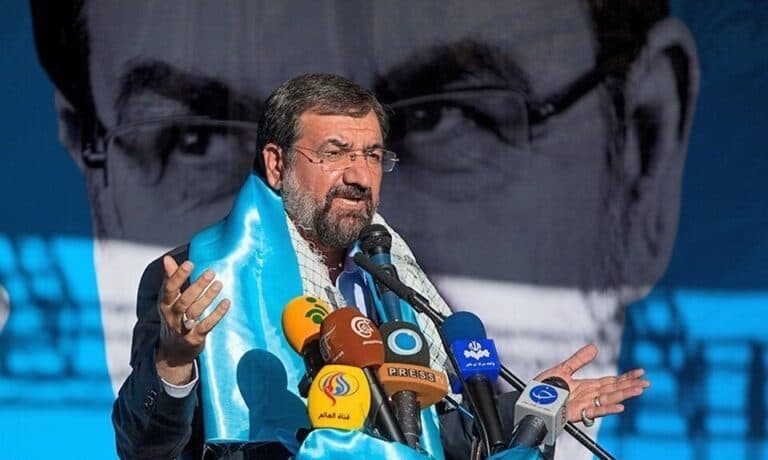
Iran Hormuz conditions are now being stated openly by Mohsen Rezaee, the new chairman of Iran’s Supreme National Security Council and one of the most powerful figures in the Islamic Republic.
Rezaee declared that the United States must change its conduct and accept Iran’s demands before the Strait of Hormuz can reopen. “As long as the United States does not change its conduct and does not accept Iran’s conditions, the Strait of Hormuz will not be opened,” he said.
He added that Washington must end the war, transfer frozen funds to Iran, and bring about an end to fighting across the region, including in Lebanon and Gaza. Rezaee also said the United States must fulfill additional conditions that Iran has conveyed through mediators.
The Tanakh says, “The wicked flee when no one pursues, but the righteous are as confident as a lion.” That verse fits the standoff because Iran is presenting its blockade as strength. Yet its demands also reveal pressure, fear, and the desire to turn regional chaos into bargaining power.
Iran Hormuz Conditions
Rezaee’s statement makes the Strait of Hormuz central to Iran’s pressure campaign. Tehran is not only tying the waterway to its direct confrontation with Washington. It is also linking Hormuz to Lebanon, Gaza, frozen funds, and wider regional arrangements.
That linkage matters. Iran is trying to treat every front as part of one negotiation: maritime passage, financial pressure, proxy warfare, and the future of the war. Instead of separating the Hormuz crisis from Hezbollah, Hamas, and other arenas, Rezaee placed them inside the same demand package.
For Washington, the message creates a direct test of deterrence. If the United States accepts Iran’s terms simply to reopen Hormuz, Tehran may read that as proof that maritime coercion works. If America refuses, pressure on the global economy may grow as oil tanker movement remains restricted.
The dilemma is real, but so is the strategic danger. A regime that can close a major shipping route and demand money, policy changes, and regional concessions will not stop using that model.
Tehran’s Waiting Strategy

Rezaee’s remarks fit the wider Iranian line described in “Iranian Adviser Says Tehran Is Waiting Out Trump.” Majid Shakeri said Iran believes no agreement with Trump is possible and is trying to endure pressure until his term ends.
Taken together, the statements suggest a two-track approach. Iran wants to wait out Trump politically while using Hormuz as leverage economically. Tehran may hope that sustained pressure on energy markets will force Washington to soften before Iran’s own system cracks under sanctions and blockade pressure.
Israel will read the statement through a sharper lens. Lebanon and Gaza are not side issues for Jerusalem. They are fronts where Iran’s influence has translated into rockets, terror tunnels, armed militias, massacres, kidnappings, and years of direct threat to Israeli civilians.
That is why Rezaee’s demand to end the war “throughout the region” matters. Iran is not asking only for de-escalation. It is seeking a regional outcome that protects its assets and limits the freedom of Israel and the United States to dismantle Iranian-backed threats.
Covenant Of Open Seas And Unbent Resolve
The United States and Israel carry separate covenantal responsibilities before God in this confrontation. America’s covenantal tradition speaks through liberty, ordered strength, free passage, and the refusal to let hostile regimes dictate global commerce. Israel’s covenant is ancient and unique, rooted in the God of Israel, Torah, Jewish peoplehood, sovereignty, and the return to the land.
Hormuz now becomes a test of those responsibilities. America must decide whether it will defend open routes without rewarding coercion. Israel must ensure that Iran cannot turn maritime blackmail into protection for Hamas, Hezbollah, or its nuclear ambitions.
Rezaee’s conditions show how Iran understands power. Tehran wants money released, pressure lifted, war ended on its terms, and regional fronts frozen before its enemies achieve their objectives.
That is why the next move matters. If Iran’s blockade strategy fails, the regime loses one of its strongest tools. If it succeeds, every Iranian proxy will learn the same lesson: escalation brings concessions.
For Israel, the preferred outcome is clear. Iran remains under pressure, the regime loses economic oxygen, and no agreement gives Tehran time to rebuild the forces threatening the Jewish state. For America, the challenge is to keep Hormuz from becoming a toll booth for Iranian blackmail.
For more stories on Israel, faith, and the values behind the headlines, follow Sinai on Facebook and Instagram.
Discussion0
No comments yet — be the first to share your thoughts.